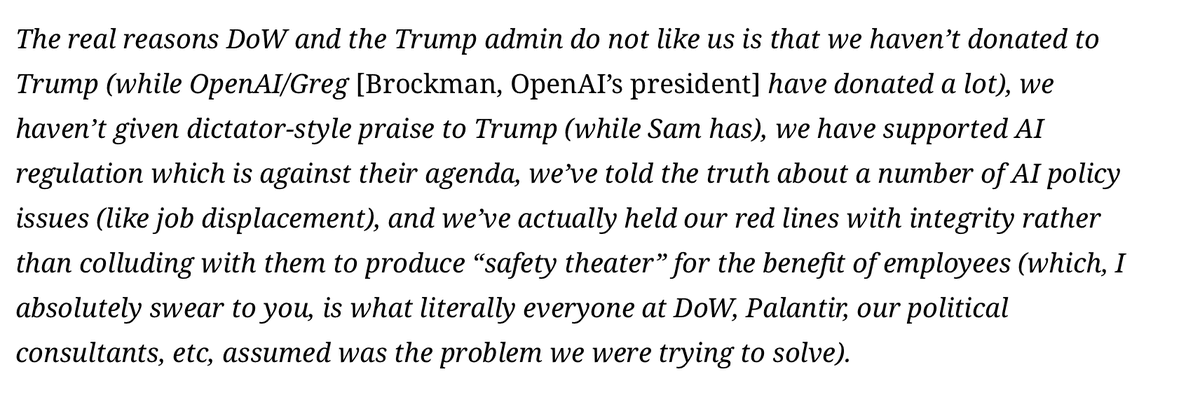
A leaked internal memo from Anthropic CEO Dario Amodei has exposed deep fractures in the AI industry's relationship with government while potentially jeopardizing one of the most anticipated public offerings in technology history. Published by The Information, the memo reveals Amodei's scathing criticism of OpenAI's Department of Defense partnership as "safety theater" and suggests the Trump administration harbored animosity toward Anthropic for refusing to offer "dictator-style praise" to the former president.
The Memo That Rocked AI Politics
The controversy centers on two explosive claims from Amodei's communication to employees. First, his characterization of OpenAI's government AI work as superficial safety performance rather than substantive protection. Second, his assertion that political dynamics—specifically Anthropic's unwillingness to flatter the Trump administration—contributed to the company's strained government relationships.
These revelations come at a critical juncture for Anthropic, which has positioned itself as the ethical alternative to OpenAI's more commercially aggressive approach. Founded by former OpenAI researchers concerned about AI safety, Anthropic has built its brand around responsible development principles. Now, that carefully cultivated image faces its most serious test.
The IPO Imperative
Anthropic's planned initial public offering represents more than just a financial milestone—it's a validation of the company's safety-first philosophy in a market increasingly dominated by rapid deployment strategies. With backing from Amazon and Google reportedly valuing the company at $15-30 billion, the IPO was expected to provide the capital necessary to compete with OpenAI's massive Microsoft-backed war chest.
Industry analysts suggest the memo leak could not have come at a worse time. "Going public requires regulatory approval, investor confidence, and predictable government relations," explains Dr. Elena Rodriguez, a Stanford technology policy researcher. "Amodei's comments potentially undermine all three simultaneously."
The Government Contract Conundrum
The immediate practical consequence involves Anthropic's ability to secure government contracts. While OpenAI has successfully navigated Pentagon partnerships through what it describes as "rigorous ethical frameworks," Anthropic now faces questions about its capacity to work with administrations across the political spectrum.
This isn't merely about current contracts but future opportunities. The U.S. government represents one of the largest potential customers for AI systems, with applications ranging from cybersecurity to logistics optimization. By publicly questioning both a competitor's government work and implying political bias in contract awards, Anthropic risks alienating the very institutions it might need to sustain growth.
Legal Ramifications and Competitive Dynamics
If the situation escalates to litigation—whether from business partners, government entities, or even defamation claims—the consequences could be severe. Court proceedings would force transparency Anthropic might prefer to avoid during IPO preparations, potentially revealing internal discussions about competitors, government relations, and strategic vulnerabilities.
Meanwhile, OpenAI stands to gain from the controversy. Sam Altman's company has consistently demonstrated an ability to balance ethical concerns with commercial and government partnerships. The contrast between OpenAI's working government relationships and Anthropic's apparent struggles creates a powerful narrative for customers and investors alike.
The Safety Philosophy Under Pressure
At its core, this controversy tests whether Anthropic's safety-focused approach can survive in the real world of politics and competition. The company's constitutional AI framework and commitment to responsible development now face practical challenges: How does a safety-first company work with government agencies? How does it compete with less constrained rivals? How does it navigate political administrations with different values?
Amodei's memo suggests these tensions have been brewing internally. His frustration with what he perceives as OpenAI's superficial safety measures versus Anthropic's more substantive approach reflects a fundamental philosophical divide in how AI companies engage with power structures.
The Path Forward
Anthropic now faces several difficult choices. The company could attempt to walk back Amodei's comments, though this risks appearing inconsistent on principles. Alternatively, it could double down on its criticism of government AI partnerships, positioning itself as the pure alternative—but potentially sacrificing significant market opportunities.
A middle path might involve clarifying its position while emphasizing its willingness to work with any administration under the right ethical conditions. This would require careful messaging and possibly structural changes to its government engagement strategy.
What's clear is that the leaked memo has transformed Anthropic's challenges from technical and commercial to political and reputational. How the company navigates this crisis will determine not only its IPO prospects but the viability of its entire safety-focused business model in an increasingly competitive and politicized AI landscape.
Source: The Information report on leaked Anthropic memo, October 2024