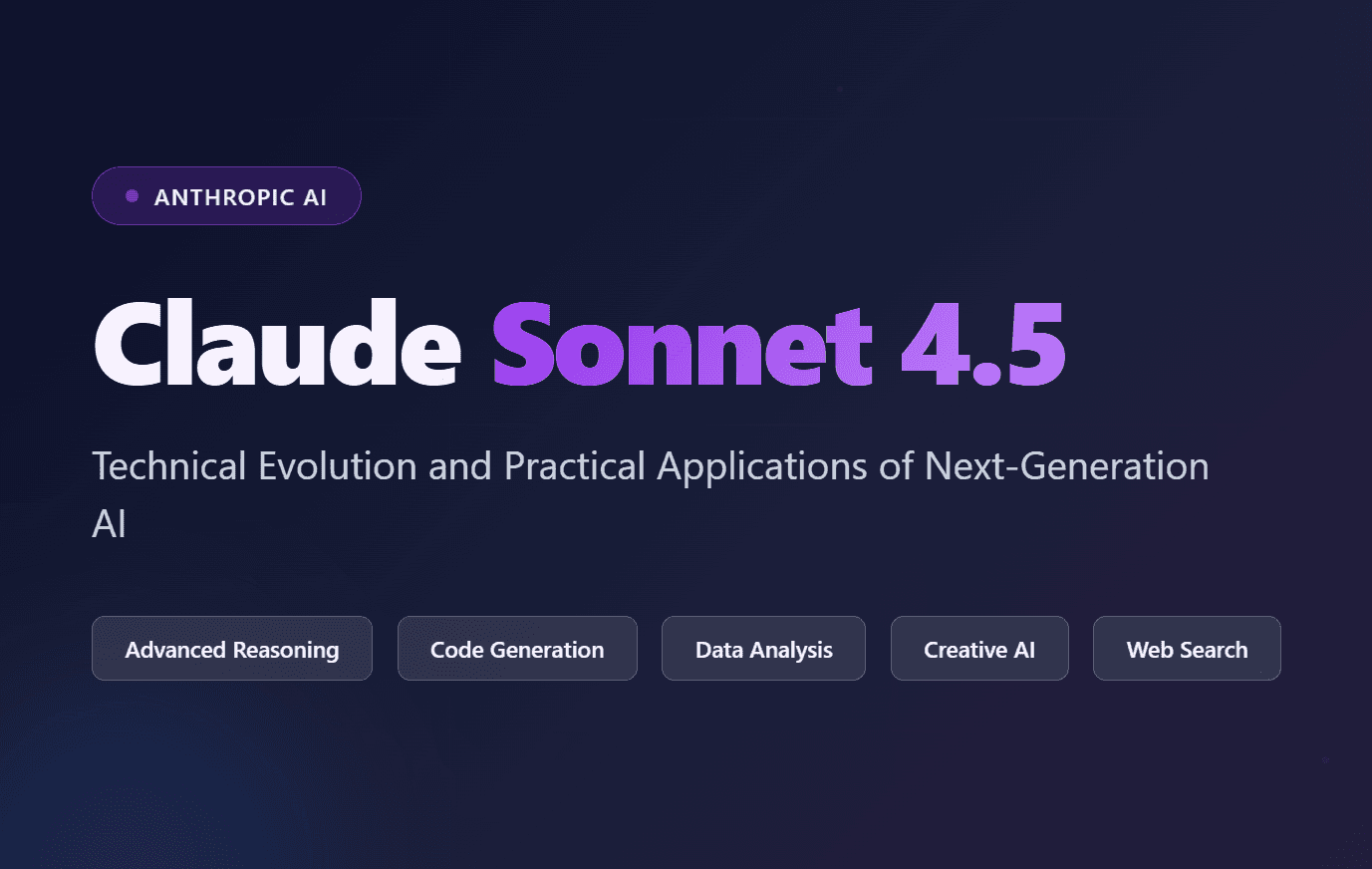
Anthropic has signaled the upcoming release of Claude Sonnet 4.6 through social media channels, with developer Kimmo (@kimmonismus) sharing the announcement that simply stated: "Sonnet 4.6 incoming! Let's go!" While details remain limited, this announcement follows Anthropic's established pattern of incremental model improvements that have consistently pushed the boundaries of AI capabilities.
The Claude Model Family: Context and Evolution
Anthropic's Claude models operate on a tiered system with three primary variants: Haiku (fastest and most cost-effective), Sonnet (balanced performance), and Opus (most capable). Sonnet occupies the crucial middle ground, offering strong performance at reasonable cost, making it particularly popular for enterprise applications and developers seeking a balance between capability and efficiency.
The progression from Sonnet 3.5 to the current Sonnet 4 series represented significant leaps in reasoning, coding, and multimodal capabilities. Each point release (4.1, 4.2, etc.) has brought measurable improvements, typically focusing on specific areas like mathematical reasoning, code generation, or safety enhancements.
What to Expect from Sonnet 4.6
Based on Anthropic's release patterns and the competitive AI landscape, Sonnet 4.6 will likely focus on several key areas:
Enhanced Reasoning Capabilities: Previous Sonnet updates have consistently improved logical reasoning, particularly in complex problem-solving scenarios. Version 4.6 will likely continue this trend, potentially closing the gap with Opus in specific reasoning tasks.
Coding and Technical Improvements: Sonnet has established itself as a strong coding assistant, and 4.6 may bring better understanding of complex codebases, improved debugging capabilities, and enhanced support for newer programming frameworks and languages.
Efficiency Optimizations: Each Sonnet update typically includes optimizations that improve token efficiency or reduce latency. Given the intense competition around inference costs, 4.6 may offer better performance per dollar than its predecessors.
Safety and Alignment Refinements: As a company founded with strong safety principles, Anthropic consistently enhances constitutional AI techniques with each release, likely making 4.6 more resistant to jailbreaks and better aligned with human values.
The Competitive Context: Why Incremental Updates Matter
The AI landscape has shifted from revolutionary model releases to consistent, incremental improvements. While flashy new model announcements capture headlines, it's these steady updates that determine which AI providers maintain competitive advantages in real-world applications.
Anthropic's approach contrasts with some competitors who favor larger, less frequent releases. The Sonnet 4.x series demonstrates a commitment to continuous improvement that enterprise customers particularly value, as it allows for smoother integration and more predictable evolution of capabilities.
OpenAI's GPT-4 series, Google's Gemini updates, and emerging open-source models create constant pressure for improvement. Sonnet 4.6 represents Anthropic's response to this competitive environment, ensuring Claude remains at the forefront of capable, safe AI assistants.
Implications for Developers and Enterprises
For developers currently using Claude Sonnet, version 4.6 represents an opportunity to enhance applications without significant architectural changes. The backward compatibility typically maintained in these updates allows for relatively seamless transitions.
Enterprise users will be particularly interested in any efficiency improvements, as reduced inference costs directly impact operational expenses. Additionally, enhanced reasoning capabilities could unlock new automation possibilities in fields like data analysis, technical documentation, and customer support.
The timing of this announcement suggests Anthropic is maintaining its aggressive development schedule despite increasing regulatory scrutiny and technical challenges in advancing frontier models.
Looking Ahead: The Future of Claude Models
Sonnet 4.6 fits into Anthropic's broader roadmap, which likely includes eventual Claude 4.7 releases and preparations for Claude 5. The consistent improvement pattern suggests Anthropic is building toward significant architectural advances while maintaining stability for current users.
The AI community will be watching closely for the official release notes and benchmark results, which typically follow shortly after these social media announcements. Early adopters will provide crucial feedback about real-world performance improvements and any unexpected limitations.
As with previous releases, Sonnet 4.6 will likely be available through Anthropic's API first, followed by integration into the Claude web interface and mobile applications. Pricing is expected to remain consistent with previous Sonnet 4.x models, maintaining Anthropic's value proposition in the competitive AI market.
Source: Announcement via @kimmonismus on Twitter/X