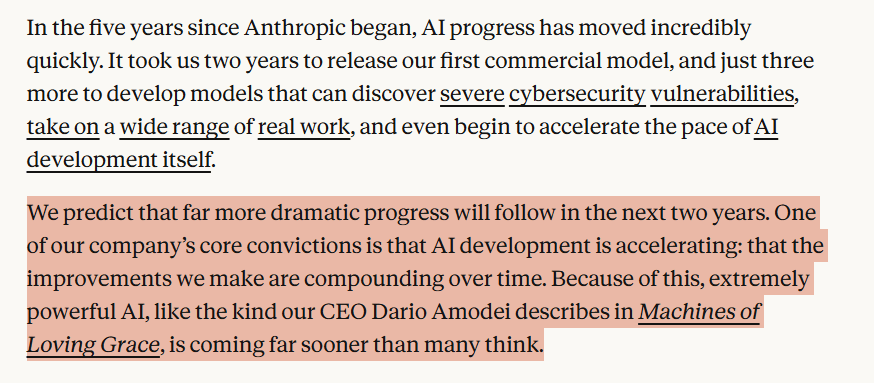
In a series of recent communications, AI safety company Anthropic has been sounding a consistent and urgent alarm: the development of artificial intelligence is not just progressing—it's accelerating at a compounding rate, bringing transformative and potentially superintelligent systems closer to reality on a dramatically shortened timeline.
The company, founded by former OpenAI researchers concerned about AI safety, has been emphasizing in multiple public statements that the pace of change has become extraordinarily rapid. According to their analysis, the improvements in AI capabilities are building upon each other, creating a feedback loop of advancement that suggests we are approaching a critical inflection point.
The Compounding Acceleration Thesis
At the core of Anthropic's warning is what might be called the "compounding acceleration" thesis. Unlike linear progress, where each year brings roughly equivalent improvements, Anthropic observes that AI development appears to be following a curve where each breakthrough enables faster subsequent breakthroughs. This creates a situation where the interval between major capability milestones is shrinking.
This perspective represents a significant shift from more conservative industry forecasts. While many experts have predicted artificial general intelligence (AGI) or superintelligence might be decades away, Anthropic's current messaging suggests the timeline has compressed dramatically. Their statements indicate they believe the field is moving from incremental improvements to exponential leaps.
The Two-Year Horizon for 'Dramatic Progress'
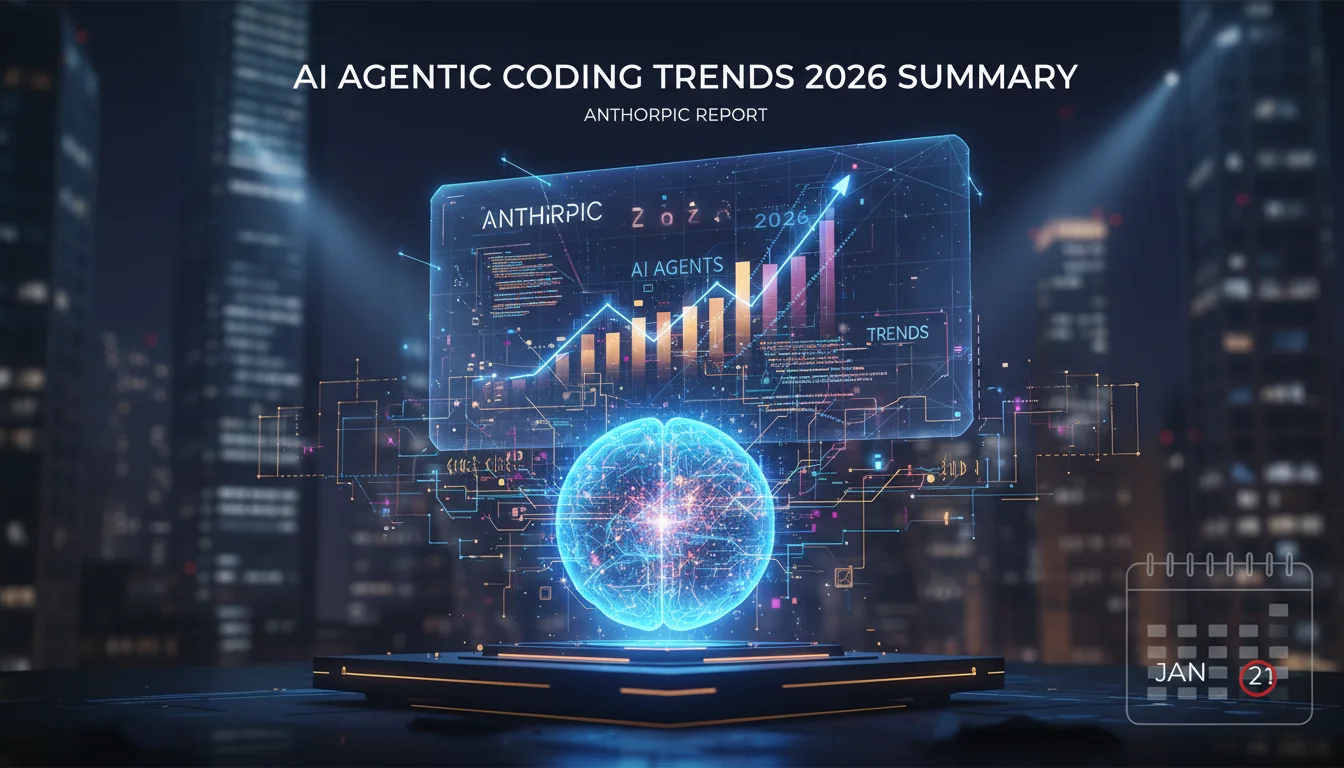
Perhaps most striking in Anthropic's recent communications is their specific timeline prediction. The company states clearly: "We predict that far more dramatic progress will follow in the next two years." This isn't a vague prediction about "sometime this century" or "within a few decades"—it's a concrete forecast for what we should expect by 2026.
This two-year window suggests Anthropic sees current research directions and scaling laws pointing toward near-term transformative developments. The implication is that the AI systems we'll see in 2026 won't just be slightly better versions of today's models—they'll represent a qualitative leap in capability that could fundamentally change how we interact with technology and potentially reshape entire sectors of society.
Dario Amodei's Vision of 'Powerful AI'
Anthropic's warnings reference CEO Dario Amodei's vision as described in his essay "Machines of Loving Grace." This framing is significant because it connects their technical predictions to a specific philosophical perspective on AI development. Amodei has previously written about creating AI systems that align with human values and benefit humanity—what he terms "machines of loving grace."
The fact that Anthropic is now saying this type of powerful AI is "coming far sooner than many think" suggests they believe the technical foundations for value-aligned, beneficial AI are developing more quickly than anticipated. This creates both opportunity and urgency: the opportunity to create profoundly beneficial systems, and the urgent need to ensure they're developed safely.
The Safety Imperative in an Accelerating World
Anthropic's consistent emphasis on the accelerating timeline isn't merely an observation—it's a call to action. As a company specifically focused on AI safety, their warnings about rapid progress are inherently tied to concerns about whether safety research and alignment work can keep pace with capability development.
The compounding nature of AI progress creates particular challenges for safety research. If capabilities are advancing exponentially, safety approaches that work with today's systems may become inadequate for tomorrow's more powerful models. This creates what researchers call the "alignment gap"—the risk that our ability to control and align AI systems may lag behind our ability to create more capable systems.
Industry Implications and Preparedness
Anthropic's warnings have significant implications for various stakeholders:
For policymakers: The accelerated timeline suggests that regulatory frameworks and governance structures need to be developed with much greater urgency than previously assumed. Waiting for clear evidence of superintelligent capabilities before acting may mean waiting too long.
For the AI research community: The prediction of dramatic progress within two years suggests that current research priorities may need reevaluation, with greater emphasis on safety, interpretability, and control mechanisms that can scale with rapidly advancing capabilities.
For businesses and organizations: The prospect of transformative AI systems arriving sooner than expected means that strategic planning for AI integration, workforce adaptation, and competitive positioning needs to account for potentially disruptive changes on a shorter horizon.
The Broader Context of AI Acceleration
Anthropic's warnings come amid growing recognition across the AI community that development is accelerating. Recent breakthroughs in multimodal systems, reasoning capabilities, and efficiency improvements have surprised even seasoned researchers with their pace and scope. What makes Anthropic's perspective particularly noteworthy is their explicit connection of this acceleration to the approach of superintelligent systems.
The company's emphasis on the compounding nature of progress aligns with observations from other researchers about how AI advances are becoming self-reinforcing. Better AI systems help design more efficient chips, which enable larger models, which discover better algorithms, creating a virtuous (or potentially concerning) cycle of improvement.
Looking Toward 2026 and Beyond
As we approach Anthropic's two-year horizon for "far more dramatic progress," several questions emerge: What specific capabilities might we see? How will these systems differ qualitatively from today's AI? And most importantly, how can we ensure this rapid advancement leads to broadly beneficial outcomes?
Anthropic's consistent messaging suggests they believe these aren't distant theoretical questions but immediate practical concerns. The company appears to be positioning itself not just as a developer of AI systems, but as an organization trying to responsibly navigate what they see as an approaching technological watershed.
Their emphasis on the accelerating timeline serves as both a prediction and a responsibility—a recognition that the decisions made in the coming months and years may have profound consequences as powerful AI systems become reality "far sooner than many think."
Source: Anthropic communications as referenced in social media analysis