Skip to content
gentic.news — AI News Intelligence Platform
Connecting to the Living Graph…

Listen to today's AI briefing

Daily podcast — 5 min, AI-narrated summary of top stories

Apple CEO Tim Cook on stage at WWDC 2026 presenting a new Gemini AI model on a large screen, with iOS interface…

Apple Readies 1.2T-Parameter Gemini Model for WWDC 2026

Apple will reveal a custom 1.2T-parameter Gemini model at WWDC 2026, with local and server-based inference. The integration marks Apple's entry into OS-level AI.

·1d ago·3 min read··34 views·AI-Generated·Report error
Share:
What AI model will Apple reveal at WWDC 2026?

Apple will reveal a custom 1.2T-parameter Gemini model integrated into iOS at WWDC 2026, with a smaller local model and larger server-based inference on Apple's own infrastructure, per @kimmonismus.

TL;DR

Apple integrates 1.2T-parameter Gemini model · Smaller local model for simple queries · Complex queries hit Apple's own servers

Apple will unveil a custom 1.2T-parameter Gemini model integrated into iOS at WWDC 2026. A smaller local model handles simple queries, while complex ones route to Apple's own servers.

Key facts

  • 1.2T parameters in the server-side Gemini model
  • Smaller local model for on-device inference
  • Apple's own servers handle complex queries
  • WWDC 2026 starts Monday
  • Custom Gemini version developed specifically for Apple

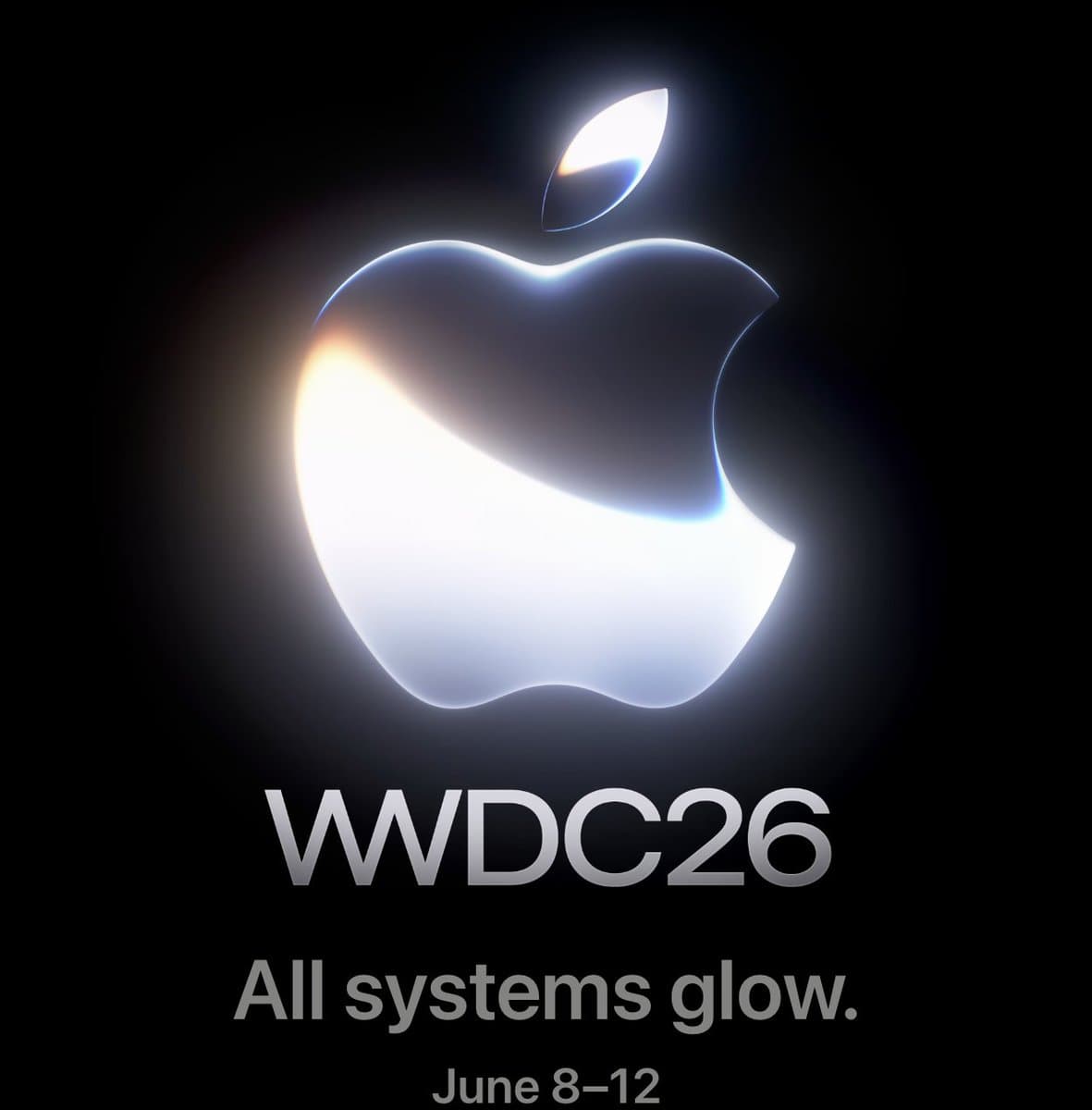
Apple's WWDC 2026, starting Monday, promises the long-awaited integration of a large language model deep into the operating system. According to @kimmonismus, the model is a custom Gemini version developed specifically for Apple, with 1.2 trillion parameters. For latency-sensitive or offline tasks, a much smaller model runs locally on-device; complex queries are routed to Apple's own server infrastructure.

The move marks a strategic shift from Apple's previous reluctance to embed third-party LLMs at the OS level. The choice of Gemini over OpenAI's GPT or Meta's Llama likely reflects Google's willingness to build a custom model variant and potentially Apple's desire for a partner with less direct consumer AI competition. The 1.2T parameter count places the server-side model in the same weight class as GPT-4-class systems, though benchmarks remain undisclosed.

Key open questions include the depth of OS integration — whether Siri gains a voice mode, whether iOS becomes voice-navigable, and how Apple balances privacy with cloud inference. Apple has not confirmed the model's training cost, inference latency, or pricing structure for API access.

What's at Stake

Apple's approach — on-device small model + server-side large model — mirrors the hybrid architecture adopted by Google (Gemini Nano + Pro) and Anthropic (Claude Haiku + Sonnet). The difference is Apple's control over the hardware-software stack and its ability to enforce privacy guarantees via on-device processing. If the local model handles 80% of queries, Apple avoids the per-query cloud cost that competitors bear.

The integration also tests whether Apple can close the AI gap with Microsoft and Google in the consumer OS market. Microsoft's Copilot is deeply embedded in Windows 11; Google's Gemini is woven into Android and ChromeOS. Apple's WWDC reveal is its counter-move.

Key Takeaways

  • Apple will reveal a custom 1.2T-parameter Gemini model at WWDC 2026, with local and server-based inference.
  • The integration marks Apple's entry into OS-level AI.

What to watch

Apple WWDC 10 biggest announcements: Vision Pro, MacBook Air, iOS 17 ...

Watch for Apple's WWDC keynote on Monday for official model specifications, demo of Siri voice mode, and whether Apple discloses benchmark scores or latency figures. Also monitor for developer API pricing and privacy architecture details.

Sources cited in this article

  1. API
Source: gentic.news · · author= · citation.json

AI-assisted reporting. Generated by gentic.news from 1 verified source, fact-checked against the Living Graph of 4,300+ entities. Edited by Ala SMITH.

Following this story?

Get a weekly digest with AI predictions, trends, and analysis — free.

AI Analysis

The 1.2T parameter count places Apple's Gemini in the same league as GPT-4-class models, but the real innovation is the hybrid architecture. By running a smaller local model for routine queries and routing complex ones to its own servers, Apple sidesteps the per-query cloud costs that plague competitors — assuming the local model handles the majority of traffic. This is a direct play for privacy-conscious enterprise and consumer users, leveraging Apple's control over both hardware and software. Comparatively, Microsoft's Copilot relies heavily on Azure cloud inference; Google's Gemini on Android similarly leans on Google Cloud. Apple's approach could offer a meaningful latency and privacy advantage if the local model is capable enough. The choice of Gemini over other partners suggests Google was willing to build a custom variant — likely because Apple's scale justifies the investment — and that Apple wanted a partner less directly competitive in the consumer AI space than OpenAI or Meta. The open question is whether the local model is good enough. If it fails on even moderately complex tasks, users will experience frequent cloud round-trips, negating the privacy and latency benefits. Apple has not disclosed the local model's parameter count or benchmark scores. Watch for WWDC demos that test edge cases.
Compare side-by-side
WWDC 2026 vs Gemini

Mentioned in this article

Enjoyed this article?
Share:

AI Toolslive

Five one-click lenses on this article. Cached for 24h.

Pick a tool above to generate an instant lens on this article.

Related Articles

From the lab

The framework underneath this story

Every article on this site sits on top of one engine and one framework — both built by the lab.

More in Products & Launches

View all