Avoko AI has announced the launch of a new platform, Avoko, which it describes as "the world's first behavioral lab for the Agent World." The announcement, made via social media, positions the platform as a foundational tool for the emerging "Agent-Native" era of AI development.
The core premise is to create a controlled, structured environment where developers can test, observe, and refine the behavior of autonomous AI agents. Unlike benchmarking a model's knowledge with multiple-choice questions, agent evaluation requires assessing complex, sequential decision-making in interactive environments.
Key Takeaways
- Avoko AI announced 'Avoko,' a platform described as a behavioral lab for AI agents.
- It aims to provide structured environments for testing, evaluating, and improving agent performance and reliability.
What Avoko Aims to Provide

Based on the announcement, Avoko is positioned as a lab for agent behavior. This suggests a platform offering:
- Standardized Testing Environments: Likely a suite of simulated digital worlds or tasks where agents can operate.
- Behavioral Metrics & Evaluation: Tools to measure an agent's success, efficiency, reliability, and safety beyond simple task completion.
- Observability & Debugging: Capabilities to trace an agent's decision-making process, identify failure points, and understand its "chain of thought" in action.
The announcement frames this as a necessary infrastructure shift. As AI models become agents that take actions, the development cycle moves from static model training to dynamic behavior tuning.
The Need for Agent Evaluation
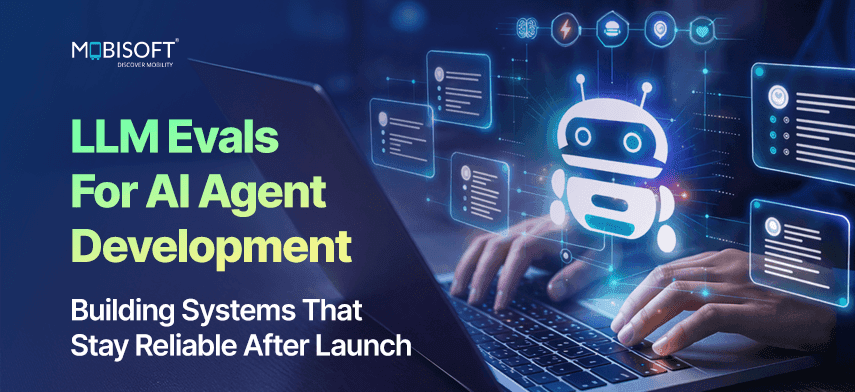
The development of capable AI agents is a primary focus for major labs and startups. However, consistent evaluation remains a significant challenge. Current methods often rely on custom-built simulations or limited human-in-the-loop testing, which is difficult to scale and standardize.
A dedicated behavioral lab could, in theory, provide reproducible benchmarks for agent capabilities, similar to how SWE-Bench evaluates coding agents or WebArena evaluates web navigation. The value proposition is reducing the time and cost for teams to validate that their agents operate reliably and safely before deployment.
What We Don't Know Yet
The announcement is high-level. Critical technical and business details are absent, including:
- The specific types of environments or tasks available.
- The evaluation frameworks and metrics used.
- Integration with popular agent frameworks (e.g., LangChain, LlamaIndex, AutoGen).
- Pricing, availability, and API access.
gentic.news Analysis
The announcement of Avoko taps directly into the most pressing bottleneck in applied AI for 2026: moving from powerful chat models to reliable, autonomous agents. As we covered in our analysis of OpenAI's o1 agent system and Google's Astra Pro, the industry is in a frantic race to productize agentic workflows. However, as these systems grow more complex, their brittleness and unpredictability in real-world scenarios become major roadblocks. A standardized testing suite is not a luxury; it's a prerequisite for enterprise adoption.
This move aligns with a clear trend we've tracked: the rise of the AI evaluation infrastructure layer. Companies like Scale AI and Weights & Biases have launched agent evaluation products, while open-source projects like AgentBench and AgentBoard are gaining traction. Avoko is entering a nascent but rapidly consolidating space. Its success will hinge on the depth and realism of its simulated environments and its ability to attract developer mindshare away from incumbents' tooling.
Furthermore, the term "Agent-Native era" suggests a philosophical shift. It implies building products and infrastructure for agents first, rather than retrofitting human-centric software. If Avoko's lab can effectively simulate the messy, unstructured digital environments where agents must eventually operate, it could become a critical piece of infrastructure, much like cloud GPU providers were for the model training boom.
Frequently Asked Questions
What is an AI agent behavioral lab?
An AI agent behavioral lab is a platform that provides simulated digital environments where autonomous AI agents can be tested. It allows developers to run agents through tasks, observe their decision-making sequences, measure performance with standardized metrics, and identify failures in a controlled, reproducible setting before real-world deployment.
How is testing an agent different from testing a language model?
Testing a language model typically involves evaluating its knowledge, reasoning, or code generation on static datasets (e.g., MMLU, HumanEval). Testing an agent involves evaluating its ability to perform actions over time in an interactive environment. This includes planning, using tools (APIs, browsers), recovering from errors, and completing multi-step workflows—all of which require dynamic, stateful evaluation.
Who would use a platform like Avoko?
Primary users would be AI engineers and researchers at companies building agentic applications. This includes teams developing customer support agents, coding assistants, data analysis bots, or any AI system designed to operate software and complete tasks autonomously. It would be used during the development and QA cycles to improve agent reliability.
What are the alternatives to a dedicated platform like Avoko?
Alternatives include building custom simulation environments in-house, using general-purpose game engines, leveraging open-source evaluation frameworks (e.g., AgentBench), or relying on the limited evaluation tools provided by major cloud AI platforms (AWS Bedrock Agents, Google Vertex AI Agent Builder). These approaches often require significant engineering effort and lack standardization.