Beijing approved its Space Computing Industry Innovation Center in early June, a week before Elon Musk's AI1 satellite reveal. The state-chartered initiative forces chipmakers, satellite builders, and AI labs to collaborate on grid-free orbiting data centers.
Key facts
- Space Computing Industry Innovation Center approved early June 2026.
- Launched one week before Elon Musk's AI1 satellite reveal.
- Six research areas include space-native chips and constrained-power LLMs.
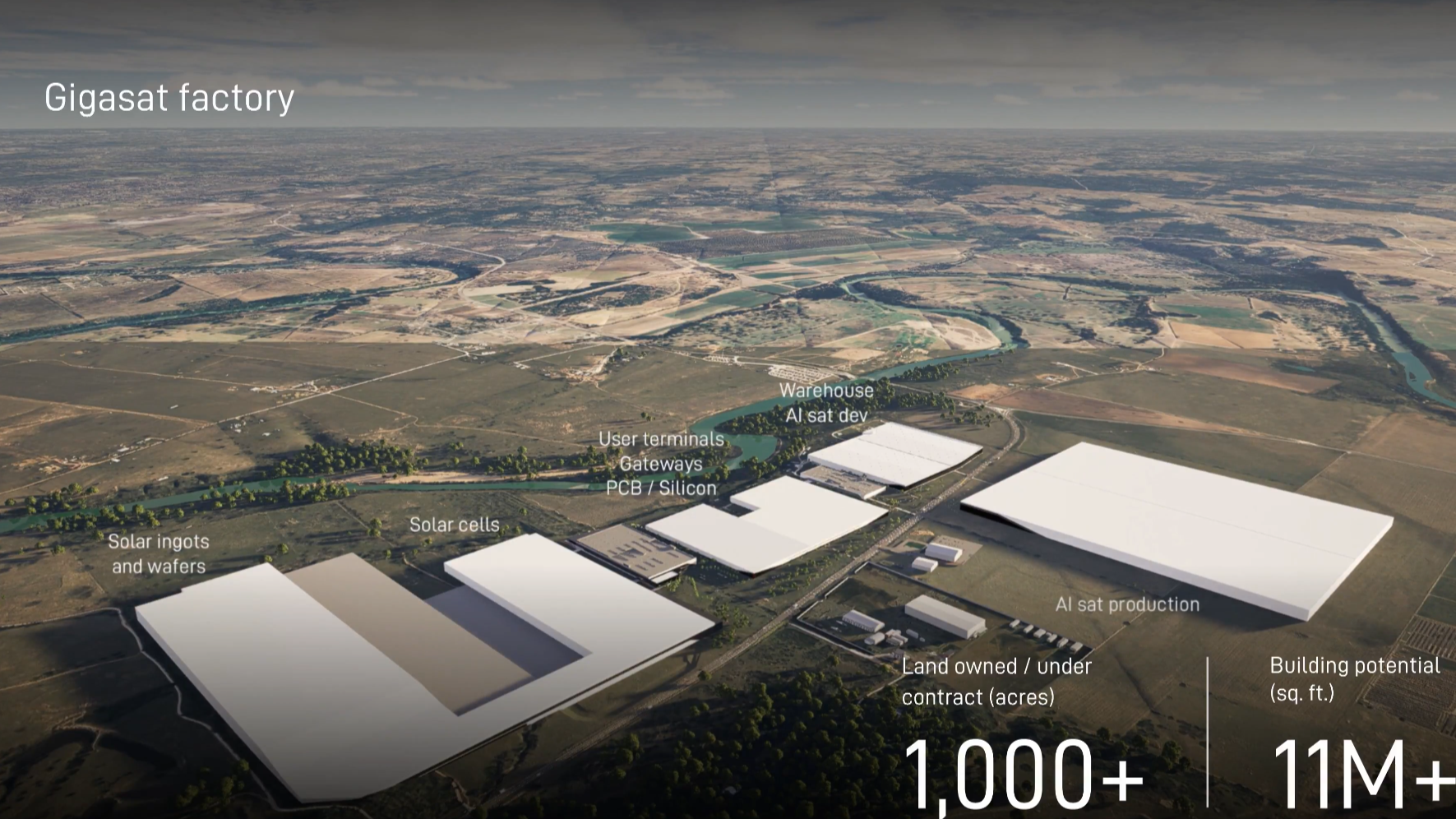
- SpaceX's Gigasat factory spans 11 million square feet.
- Blue Origin's Project Sunrise targets 51,600 satellites.
China is building AI data centers in orbit, and it started before Elon Musk's much-hyped AI1 satellite announcement.
According to Tom's Hardware, the Chinese government quietly approved the Space Computing Industry Innovation Center in early June. The center brings together rocket manufacturers, satellite builders, semiconductor fabs, and AI tech companies under one government-chartered umbrella. Research firm SemiAnalysis noted on X that the move came a week before Musk's AI1 reveal, though Musk has been discussing space compute since November 2025 and filed for a one-million-satellite Orbital Data Center System with the FCC in February 2026.
Key Takeaways
- China approved a state-directed space AI data center initiative in early June, a week before Musk's AI1 reveal.
- The center forces chip, satellite, and AI companies to collaborate on grid-free orbiting compute.
Six Research Pillars for Orbital Compute
The center, set to officially launch later this month, will focus on six research areas: highly reliable heat-resistant space-native computing chips, high-performance hyper-interconnected space computing payloads, space computing satellite platforms and standard systems, space-based large models under constrained power conditions, integrated space-ground cloud-based measurement and control networking, and space computing power service-oriented and tokenized operations. The goal is an orbiting AI data center that avoids Earth-bound energy constraints and grid bottlenecks.
Central Planning vs. Vertical Integration
What makes Beijing's approach distinct is its forced cooperation. SpaceX and Blue Origin are pursuing space compute independently — SpaceX through vertical integration at its 11-million-square-foot Gigasat factory and Musk's TeraFab megaproject, Blue Origin through its 51,600-satellite Project Sunrise. China's model mirrors its terrestrial AI strategy: state-directed alliances that can move faster than market-driven competitors but risk coordination overhead.
The Strategic Timing
The announcement's timing is telling. It lands amid a broader U.S.-China AI infrastructure race: the U.S. government recently directed Anthropic to shut down strongest Claude models via export controls, and AI infrastructure hit $300B in 2025, forecast to exceed $520B by 2030. Space-based compute offers both nations an escape from terrestrial power constraints and export-control vulnerabilities.
Bezos is also in the game with Project Sunrise's 51,600 satellites in sun-synchronous orbit. But only China is forcing its entire tech sector to cooperate on the problem.
What to watch
Watch for the center's official launch later this month and its first concrete milestones — a prototype chip tape-out or satellite launch contract. Also track whether Musk's AI1 reveal includes technical specs that challenge China's timeline, and whether the U.S. government responds with its own space compute initiative.

Source: tomshardware.com