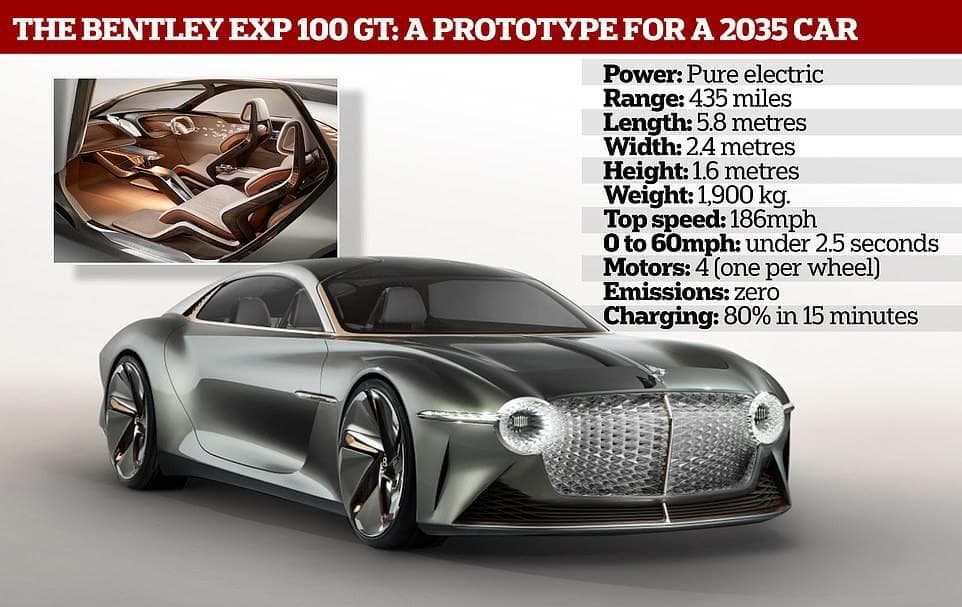
For decades, the design of ultra-luxury automobiles has been a painstakingly physical craft, centered around full-scale clay models and hand-sketched renderings. Bentley Motors, a pinnacle of this tradition, is now orchestrating a fundamental shift. The marque is publicly detailing its move toward a "phygital" future—a seamless integration of physical and digital workflows—powered by real-time 3D visualization and artificial intelligence. This isn't about replacing craftsmen with algorithms; it's about arming them with superpowers to explore, validate, and perfect designs at unprecedented speed.
Key Takeaways
- Bentley Motors is pioneering a 'phygital' design approach, merging physical and digital processes.
- The automaker is deploying real-time 3D visualization and AI-assisted tools to enable faster, more collaborative, and data-informed design decisions for its luxury vehicles.
The Innovation: A New Digital Design Backbone

While the source article's full text is not provided, the headline and framing from Car Design News point to a significant operational evolution. Bentley is implementing advanced real-time visualization technology. This likely involves game-engine-powered software (like Unreal Engine or Unity) that allows designers and engineers to interact with photorealistic, fully detailed 3D models of a car in a virtual environment.
The "phygital" concept suggests a two-way street:
- Digital Informing Physical: Virtual models are used to make critical decisions about proportions, surface reflections, material interactions, and even interior ergonomics long before costly physical prototypes are built. Designers can change paint colors, wheel designs, or trim in real-time during a review session.
- Physical Informing Digital: Data from physical models, perhaps captured via 3D scanners, is fed back into the digital twin to ensure absolute fidelity. The craft of the physical modeller is thus captured and enhanced digitally.
The role of AI in this process, as indicated, is likely multifaceted. It could involve:
- Generative Design: AI algorithms proposing optimized design variations within set parameters (e.g., aerodynamics, structural integrity, brand DNA).
- Simulation & Prediction: Using machine learning to predict how a design will perform in crash tests, wind tunnels, or thermal management, accelerating validation.
- Workflow Automation: AI-assisted tools for tedious tasks like converting 2D sketches into 3D surface data or generating complex, organic patterns for interior inlays.
Why This Matters for Luxury & Retail
The implications extend far beyond the automotive design studio. Bentley's journey is a masterclass in digital transformation for any luxury brand where product is king.
1. Compressing the Innovation Timeline: The traditional automotive design cycle is measured in years. Real-time visualization and AI-powered simulation can collapse this timeline dramatically. For luxury fashion, this translates to faster iteration on handbag silhouettes, shoe lasts, or fragrance bottle designs. Brands can explore more creative avenues without the prohibitive cost and time of physical sampling.
2. Hyper-Personalization at Scale: A perfect digital twin is the foundation for bespoke and customization services. Imagine a client configuring their future Bentley in VR, seeing a photorealistic render instantly. For luxury retail, this is the ultimate extension of "configure-your-own" platforms. Clients could design a unique watch, piece of jewelry, or even a garment in a virtual space, with AI ensuring the technical feasibility of their choices.
3. Enhancing Collaborative Creativity: The "phygital" bridge connects siloed departments. Design, engineering, marketing, and even finance can review the same immersive, data-rich model simultaneously, regardless of location. For a luxury house, this means the creative director, the head of métiers d'art, and the supply chain lead can align on a product's vision and execution earlier, reducing costly mid-stream changes.
4. Sustainability Through Digital Precision: Every physical prototype avoided represents significant savings in materials, energy, and shipping. AI-driven optimization can also lead to material efficiency in the final product. This aligns perfectly with the growing ESG mandates of luxury conglomerates and their discerning clientele.
Business Impact: From Cost Center to Value Accelerator
The business case is compelling, though specific ROI metrics from Bentley are not disclosed in the available source. The impact is qualitative and strategic:
- Risk Mitigation: Major design flaws are caught in the virtual world, not on the production line.
- Cost Avoidance: Reduction in physical prototyping and tooling changes saves millions.
- Revenue Enablement: Faster time-to-market for new models and more compelling, feasible customization options directly drive sales.
- Brand Equity: Demonstrating technological leadership in the design process reinforces a brand's image as both timeless and cutting-edge.
Implementation Approach: A Strategic Evolution

Adopting this "phygital" model is not a simple software purchase. It requires:
- Technology Stack: Investment in high-performance computing, VR/AR hardware, real-time rendering software, and AI/ML platforms.
- Data Foundation: Creating and maintaining a unified, authoritative 3D asset for each product—a "digital twin"—that is continuously updated.
- Cultural Shift: Training traditionally analog craftsmen and designers to work fluently with digital tools. This is a change management challenge as significant as the technical one.
- Process Re-engineering: Redesigning stage-gate processes to incorporate digital validation milestones alongside physical ones.
Governance & Risk Assessment
- IP Protection: The digital twin is a crown jewel of IP. Security protocols for these assets are paramount.
- AI Governance: Any generative AI used must be guided by strong brand guardrails to ensure outputs align with the brand's heritage and aesthetic codes. The "Bentley-ness" of a design cannot be left to an unconstrained algorithm.
- Technology Maturity: While real-time viz is proven, some AI applications in creative design are still emergent. A phased, pilot-based approach is prudent.
gentic.news Analysis
Bentley's move is a significant data point in a clear industry trend. This follows a pattern of high-end brands leveraging advanced digital tools for core creative functions. We've seen similar pivots in fashion, such as Moncler's use of digital design and AI for collection development and the broader adoption of 3D design suites like CLO 3D and Browzwear across apparel. Bentley's announcement is notable because it comes from the ultra-luxury automotive sector, where the perceived value of handcrafted physical models is exceptionally high. Their public embrace of "phygital" legitimizes this approach for the entire luxury domain.
This aligns with our previous analysis on how AI is transforming creative direction, moving from a purely analytical tool to a collaborative partner in the design process. The key relationship here is between traditional craftsmanship (the "phygi") and computational power (the "digital"). Bentley isn't choosing one over the other; it's building a symbiotic relationship. For AI leaders at LVMH, Kering, or Richemont, the lesson is clear: the next competitive edge in luxury lies not in digitizing the backend alone, but in digitally augmenting the very front-end of creativity and client personalization. The race is on to build the most fluent, secure, and brand-true "phygital" pipeline.