The Innovation
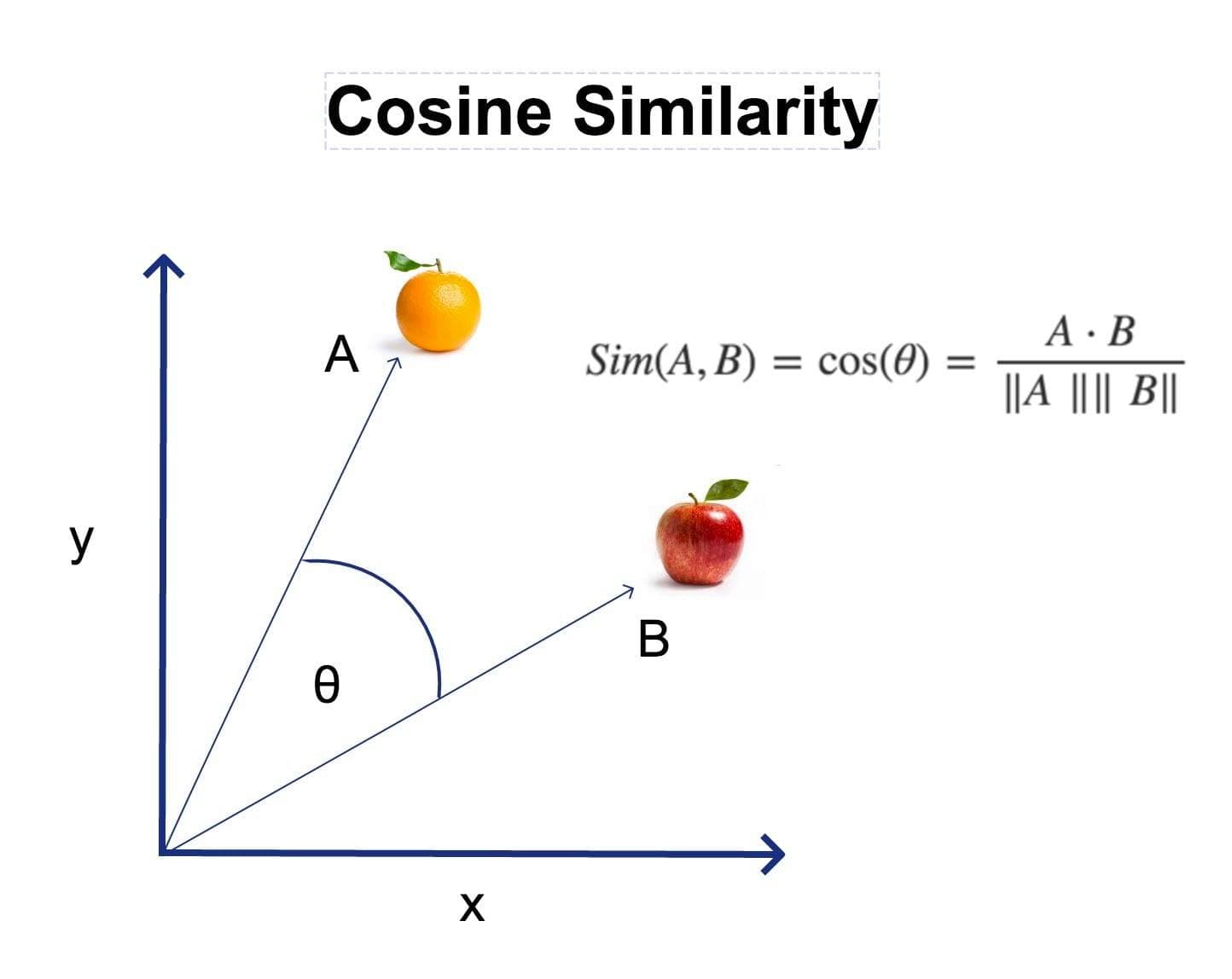
Traditional contrastive learning methods—used to train AI models for tasks like search, recommendation, and image-text matching—typically rely on cosine similarity. This metric compares the direction of embedding vectors in a high-dimensional space, implicitly treating the magnitude (or length) of these vectors as irrelevant noise. The research paper "Beyond the Unit Hypersphere: Embedding Magnitude in Contrastive Learning" systematically challenges this assumption.
The authors introduce a novel framework that independently controls normalization on the query side and the document (or key) side during training. This allows the model to learn meaningful information in the vector magnitudes, rather than discarding it. Their key findings are:
- Task-Specific Benefit: Magnitude learning provides substantial gains in asymmetric retrieval tasks (like search, where a user query retrieves a product document) and Retrieval-Augmented Generation (RAG). It shows little to no benefit in symmetric tasks like Semantic Textual Similarity (STS) or CLIP-style image-text alignment, where inputs are interchangeable.
- Dual Role of Magnitude: The magnitude of a document embedding acts as a learnable relevance score, directly scaling the inference output. The magnitude of a query embedding modulates the training gradients, influencing how the model learns. The research provides a principled method (analyzing the Fisher Information Matrix condition number) to decide whether to normalize the query side, document side, or neither for optimal performance.
- Generalization Power: Perhaps most critically, the gains from magnitude learning are most pronounced for out-of-domain generalization—improving performance on unseen data or novel categories. The paper reports out-of-domain gains of up to +72%, dramatically outpacing in-domain improvements (+7%). This requires either retrieval-specialized pre-training or sufficient training data.
In essence, this is not a new AI model, but a refinement of the training objective and inference process for existing embedding models (like those powering vector search databases) that unlocks significantly better retrieval accuracy.
Why This Matters for Retail & Luxury
For luxury brands, the customer journey is built on precision, personalization, and discovery. Inefficient or inaccurate search and recommendation systems directly undermine the luxury experience. This research has direct applications across key functions:
- E-commerce & Digital Discovery: A customer searching for a "small, structured, black leather handbag for evening" is issuing a complex, asymmetric query against a catalog of product documents. Magnitude-aware embeddings can more accurately capture the nuanced importance of terms like "structured" and "for evening," retrieving the Saint Laurent Sac de Jour Nano over a generic black tote. This improves search-to-browse conversion.
- Personalized Recommendations & Clienteling: In a RAG-powered clienteling assistant, a sales associate might ask, "What items would complement my client's recent purchase of a navy double-breasted blazer?" The system retrieves relevant product information (documents) to generate a response. Better retrieval via magnitude learning means more contextually perfect suggestions—like a silk scarf with a nautical motif or tailored cream trousers—driving cross-selling and average order value (AOV).
- Content & Lookbook Search: Marketing teams creating digital lookbooks or social content can use magnitude-optimized search to find past campaign imagery or product shots that semantically match a new creative theme (e.g., "effortless Riviera chic"), even if those keywords weren't in the original metadata.
- Supply Chain & Merchandising: Analyzing unstructured data, like buyer notes or trend reports, against a product attribute database becomes more robust. A buyer's note describing "fabrics with a heavy, sculptural drape" can better match technical material documents, aiding in assortment planning and trend alignment.
The core value is moving from a generic "similarity" match to a contextually weighted relevance match, which is paramount in a high-consideration, high-value retail environment.
Business Impact & Expected Uplift
The research provides clear, quantified performance deltas in the ML domain, but translating these to business metrics requires mapping to retail KPIs.
- Quantified Technical Impact: The paper demonstrates retrieval accuracy gains of up to +72% in out-of-domain generalization tasks (measured by metrics like Recall@K). For in-domain performance, gains are more modest but still positive (+7%). In a RAG pipeline, superior retrieval is the primary bottleneck for answer quality; thus, these gains directly translate to more useful AI assistant outputs.
- Retail Business Impact: Industry benchmarks for improving search relevance are well-established. A 2024 Baymard Institute study found the average e-commerce site has a baseline product findability of only 70%. Improvements in semantic search relevance typically yield:
- Search Conversion Rate Uplift: 5-15% (Source: Econsultancy/Search Node benchmarks)
- Revenue from Search Uplift: 10-25% (Source: Groupby Inc. retail case studies)
- Reduction in Zero-Result Searches: Significant decrease, improving user experience.
- Time to Value: Once implemented, improvements in search result ranking are immediately visible to users. The model training/fine-tuning phase itself could take weeks to a few months depending on data readiness. The primary business impact (improved conversion) can be measured within one full business quarter post-deployment.
- Strategic Value: The massive boost in out-of-domain generalization is a hidden strategic advantage. It means a system trained on existing ready-to-wear catalogs will perform significantly better when the brand launches a new category (e.g., fine jewelry or homeware) or needs to retrieve products based on emerging, previously unseen trend descriptors.
Implementation Approach
Implementing this research involves modifying the training loop of your embedding models, not replacing your entire search infrastructure.
- Technical Requirements:
- Data: High-quality, labeled query-document pairs. For luxury, this is clickstream data (search queries paired with purchased/viewed products), clienteling logs, or manually curated training sets linking descriptive language to SKUs.
- Infrastructure: Existing MLOps pipeline for training contrastive learning models (e.g., using frameworks like PyTorch, TensorFlow, or Hugging Face
sentence-transformers). - Team Skills: Machine Learning Engineers with expertise in contrastive learning, loss functions, and embedding model fine-tuning. Strong collaboration with Data Engineers (for pipelines) and Search/Recommendation platform teams is essential.
- Complexity Level: Medium to High. This is not a plug-and-play API. It requires integrating the novel normalization framework into the model training code. The paper provides the theoretical framework and experimental validation, but engineering a production-ready, stable training pipeline requires significant expertise.
- Integration Points: The trained embedding model slots directly into your existing vector search database (e.g., Pinecone, Weaviate, Vespa, Milvus) or search engine (Elasticsearch with k-NN, OpenSearch). It should be downstream of your Product Information Management (PIM) system for document encoding and your Customer Data Platform (CDP) or search analytics for query understanding.
- Estimated Effort: 2-4 Quarters for a robust, A/B tested implementation. This includes: data collection/curation (1-2 months), experimental training and validation (1-2 months), production integration and canary testing (1 month), and full rollout with measurement (ongoing).
Governance & Risk Assessment
- Data Privacy & GDPR: The training process uses query and interaction data. This must be anonymized or aggregated to avoid linking embeddings directly to identifiable individuals without consent. Inference uses real-time queries, which should be handled under existing privacy policies for search functionality.
- Model Bias Risks: The model will learn relevance from historical data. If past purchases or search clicks reflect societal biases (e.g., certain styles predominantly associated with one demographic), the magnitude scores could inadvertently amplify these biases in rankings. Continuous auditing of search results for fairness across diverse product categories and descriptive languages is required. This is especially sensitive in fashion/beauty.
- Maturity Level: Research / Prototype. This is a peer-reviewed (via arXiv) research paper presenting a novel framework with strong empirical results. It is not yet a production-ready library or service. Early adopters would be implementing based on the paper's specifications, accepting some level of R&D risk.
- Honest Assessment: This is a high-potential, medium-risk innovation for luxury retailers with advanced AI/ML teams. The theoretical foundations are sound, and the performance gains, particularly for generalization, are compelling. However, it is still experimental. The recommendation is for brands with established search/recsys teams to allocate research sprints to replicate and validate the paper's findings on their own proprietary data before committing to a full production roadmap. For others, it is a critical trend to monitor as the technique is adopted by cloud AI service providers (e.g., AWS, Google Cloud) and embedding model vendors.