A collaborative research team from Georgia Tech and Microsoft Research has unveiled a significant advancement in how artificial intelligence interacts with graphical user interfaces (GUIs). Their work addresses a fundamental limitation in current GUI automation systems: the reactive, step-by-step approach that requires constant consultation with large language models (LLMs).
The Problem with Reactive GUI Agents
Today's GUI automation agents typically operate in a reactive manner. When faced with a task like "book a flight from New York to London," the agent must make individual decisions at each step: find the search box, click it, type the departure city, select the destination, choose dates, etc. Each of these micro-decisions requires a separate call to an LLM to interpret the screen and determine the next action.
This approach has several critical limitations:
- High computational cost: Every interaction requires an LLM call, which becomes expensive at scale
- Slow execution: Sequential decision-making creates latency in task completion
- Fragile performance: Minor interface changes can break the entire workflow
- Limited complexity: Complex multi-step tasks become impractical due to error accumulation
The New Approach: Planning Before Acting
The Georgia Tech and Microsoft team has developed a paradigm shift in GUI automation. Instead of making decisions reactively at each step, their system creates a comprehensive plan before any interaction occurs. This "plan-first" approach allows the agent to:
- Analyze the entire task requirements upfront
- Map out the complete sequence of actions needed
- Identify potential obstacles and alternative paths
- Execute the plan with minimal LLM consultation during runtime
Technical Architecture and Implementation
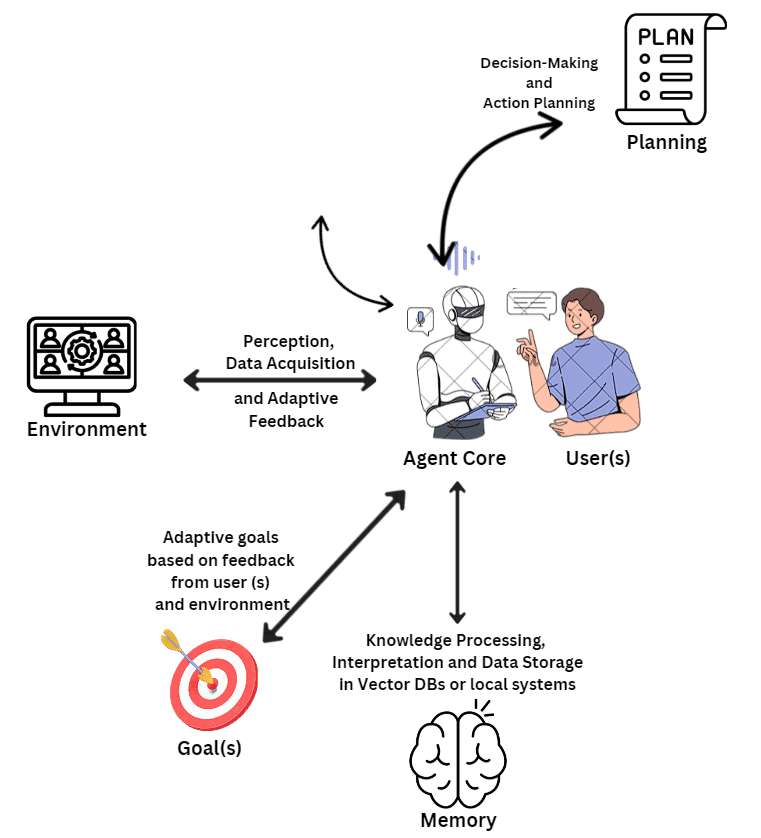
The researchers' system employs a multi-stage architecture that separates planning from execution. First, a planning module analyzes the task description and interface structure to create a detailed action plan. This plan includes not just what actions to take, but also how to recover from potential failures.
During execution, a lightweight verification system monitors progress against the plan, only consulting the LLM when unexpected situations arise. This dramatically reduces the number of required LLM calls while maintaining robustness.
Key technical innovations include:
- Hierarchical task decomposition: Breaking complex tasks into manageable subtasks
- Interface understanding models: Specialized models for interpreting GUI structures
- Plan validation mechanisms: Systems to verify plan feasibility before execution
- Adaptive recovery protocols: Intelligent responses to unexpected interface changes
Real-World Applications and Implications
This advancement has significant implications across multiple domains:
Enterprise Automation: Businesses could automate complex workflows across multiple applications without the performance overhead of current solutions.
Accessibility Technology: More sophisticated GUI agents could provide better assistance for users with disabilities, handling complex digital tasks with greater reliability.
Software Testing: Automated testing could become more comprehensive and efficient, with agents able to execute complex test scenarios with minimal supervision.
Personal Productivity: Individuals could automate repetitive digital tasks across their various applications with a single instruction.
Challenges and Future Directions
While promising, this approach faces several challenges:
- Planning accuracy: Creating reliable plans for unfamiliar interfaces
- Exception handling: Managing edge cases not anticipated during planning
- Cross-application coordination: Seamlessly operating across different software ecosystems
- Security considerations: Ensuring automated agents don't compromise system integrity
The researchers note that future work will focus on improving plan generalization, reducing planning time, and enhancing the system's ability to learn from execution feedback.
The Broader AI Landscape Context
This research represents part of a larger trend in AI toward more deliberate, planned behavior rather than reactive responses. Similar approaches are emerging in robotics, conversational AI, and autonomous systems. The shift from reactive to planned interaction reflects the maturation of AI systems from simple pattern matchers to strategic decision-makers.
As noted in the original research shared by Omar Sar via DAIR AI, this work bridges the gap between high-level task understanding and low-level interface interaction, creating a more efficient and capable form of digital automation.
Source: Research from Georgia Tech and Microsoft Research, shared via @omarsar0 and @dair_ai on Twitter