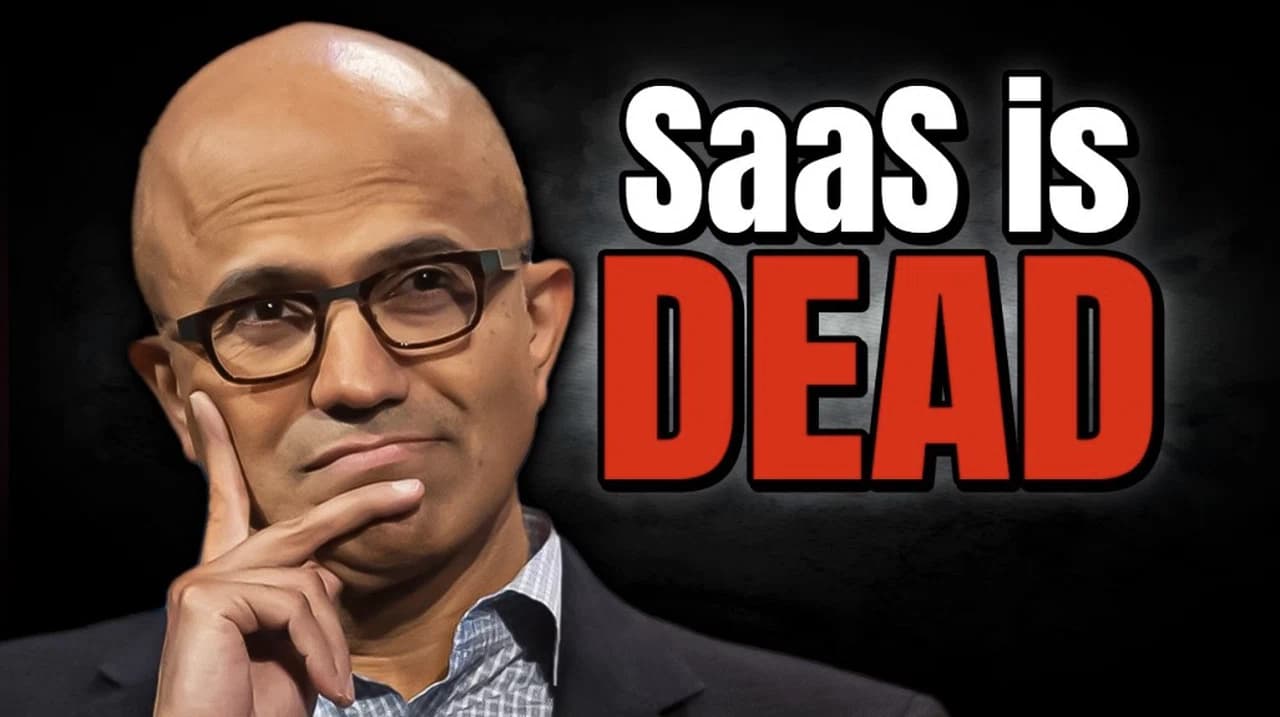
In a recent discussion highlighted by AI commentator Rohan Paul, Microsoft CEO Satya Nadella articulated a vision that fundamentally challenges the traditional software-as-a-service (SaaS) business model. Nadella's central thesis: the intelligence and business logic that currently reside within individual software applications will migrate to AI agents, reducing the applications themselves to commoditized data layers.
What Nadella Argued: The "Dumb Database" Future
According to the summary of Nadella's comments, the Microsoft CEO described a future where the current paradigm of purchasing software for its specific features and encoded business rules is overturned. Instead, he posits that software applications will devolve into simple, "dumb" databases or CRUD (Create, Read, Update, Delete) tools.
The value and intelligence would shift to AI agents that sit above these applications. These agents would hold the reasoning, orchestration, and decision-making capabilities. They would interact with multiple, simplified software tools—now essentially commodities—to execute tasks, update records, and generate outcomes. In this model, the software is no longer the "brain"; it becomes the hands, while the AI agent becomes the central nervous system and worker.
The Implicit Shift in Value Capture
This perspective, as framed by Paul, suggests the "death of the traditional SaaS model." The economic value in enterprise technology would no longer be captured primarily by the application vendor whose software contains proprietary workflows. Instead, value would accrue to the platform or layer that provides the most capable, reliable, and efficient AI agents capable of orchestrating across a landscape of commoditized tools.
For businesses, this implies a future where competitive advantage comes less from which CRM or ERP system they license and more from the sophistication of the AI agent layer that can unify and act upon data across all systems.
Context: Microsoft's Strategic Position
Nadella's comments are not merely theoretical. They reflect the strategic direction of Microsoft, which has aggressively positioned itself at both the infrastructure layer (Azure, OpenAI partnership) and the application layer (Microsoft 365 Copilot, Dynamics 365 Copilot). The company's heavy investment in AI agents, including recent initiatives like AutoGen and TaskWeaver frameworks from Microsoft Research, demonstrates a concrete push to own the orchestration intelligence Nadella describes.
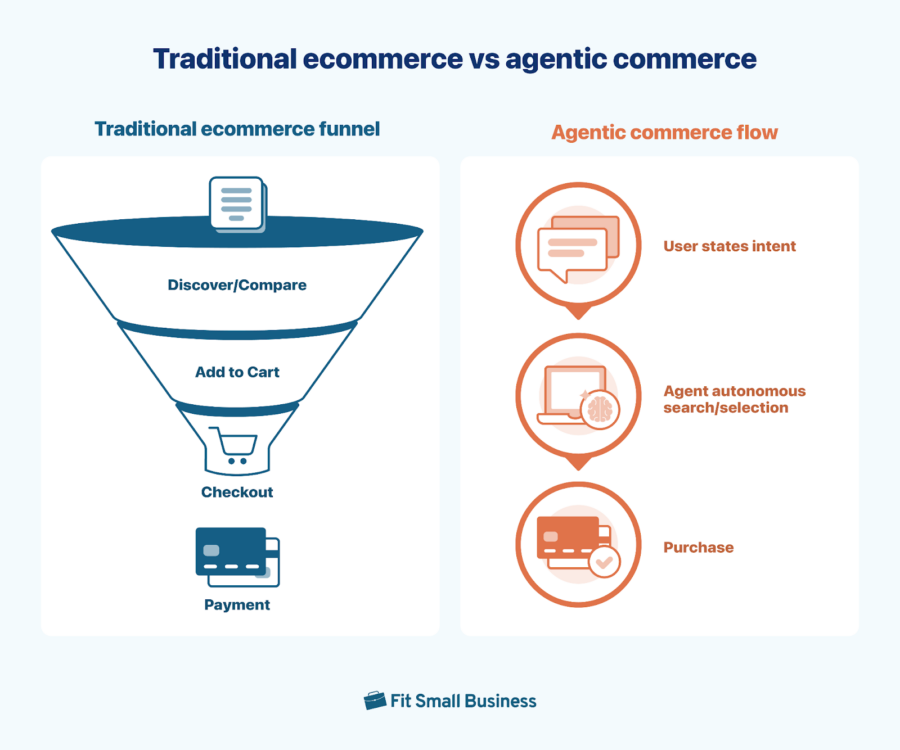
This vision aligns with the industry-wide pivot toward agentic workflows, where AI doesn't just answer questions but takes multi-step actions across software boundaries. The race is on to build the foundational models and platforms that will power these agents.
gentic.news Analysis
Nadella's framing is a direct articulation of the strategic bet behind Microsoft's $10 billion investment in OpenAI and its full-stack AI integration across Azure, GitHub, and Office. It contextualizes why Microsoft is embedding Copilot into every product: to ensure its applications are the first and best-integrated "dumb databases" for its own future AI agents. This follows a clear pattern of Microsoft using its application suite as a moat for its higher-value platform services, a strategy seen previously with Windows and Internet Explorer.
This vision directly challenges pure-play SaaS vendors like Salesforce, ServiceNow, and Workday, whose valuations are heavily tied to proprietary business logic locked within their platforms. If intelligence moves to an external agent layer, the defensibility of their moats weakens significantly. We've covered this tension before in our analysis of SaaS Vendors Scrambling to Add AI Copilots—what seemed like an additive feature may now be a defensive necessity for survival.
Furthermore, Nadella's comments highlight the emerging battleground in AI orchestration. This aligns with increased activity from other giants: Google's Vertex AI Agent Builder, Amazon's AWS Agent Hub, and a flurry of startups like Cognition Labs (Devon) and Magic.dev. The trend is clear: after the foundational model wars, the next major fight is for the agent framework that will sit atop all enterprise software. Our previous reporting on the Funding Surge for AI Agent Startups noted this shift in venture capital focus toward tools that enable reasoning and action.
The major unresolved question is interoperability. For Nadella's vision to materialize, AI agents need standardized ways to connect to and manipulate all those "dumb" applications. This creates an enormous opportunity for APIs, authentication protocols, and perhaps a new layer of middleware—a space where companies like Zapier and Make are already operating, but which may need radical evolution to handle agentic, reasoning-driven workflows instead of simple trigger-action automation.
Frequently Asked Questions
What is an AI agent?
An AI agent is an artificial intelligence system that can perceive its environment, make decisions, and take actions to achieve specific goals autonomously. Unlike a chatbot that only generates text, an agent can execute tasks across software applications, such as booking a flight, analyzing a spreadsheet, and then emailing a summary—all in a single, reasoned workflow.
How would AI agents kill the traditional SaaS model?
In the traditional SaaS model, companies pay for software that contains valuable, proprietary business logic and workflows (e.g., Salesforce's sales process automation). If AI agents externalize that intelligence, the software is reduced to a simple data store. The value—and the pricing power—shifts from the application vendor to the provider of the most capable AI agent platform, commoditizing the underlying software.
Is Microsoft well-positioned for this AI agent future?
Yes, strategically. Microsoft controls a dominant enterprise application suite (Microsoft 365, Dynamics), the second-largest cloud platform (Azure), and has a deep partnership with a leading AI model provider (OpenAI). This full-stack control allows it to tightly integrate AI agents across infrastructure, platforms, and applications, potentially creating a more seamless and effective agentic system than competitors who only control one part of the stack.
What should SaaS companies do in response to this trend?
SaaS companies must accelerate the exposure of their core functionality via robust, agent-friendly APIs. They should also consider developing their own specialized agents that understand their domain deeply, aiming to become the indispensable "brain" for their vertical rather than a replaceable "database." Partnering with or building on top of major agent platforms will also be critical to remain in the workflow.