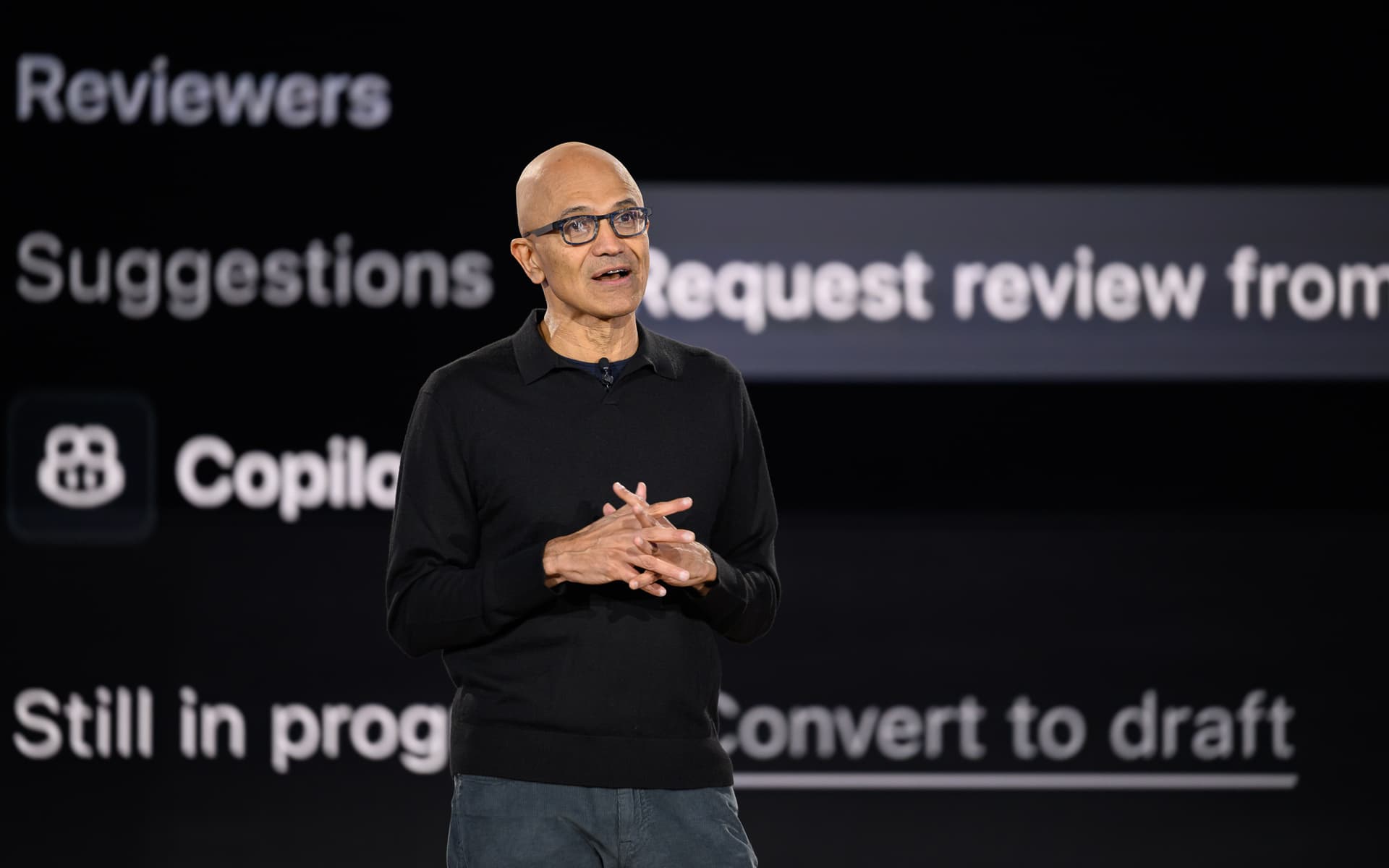
In a recent discussion, Microsoft CEO Satya Nadella outlined how the company is applying principles of "Lean" manufacturing—traditionally used to eliminate waste in physical production—to knowledge work internally, using AI as the primary enabling technology.
What Happened
Nadella revealed that Microsoft is running an internal initiative focused on "Lean for knowledge work." The core concept involves using artificial intelligence to identify and reduce inefficiencies, friction, and non-value-added steps in the cognitive and collaborative processes that constitute modern corporate work. This is not a customer-facing product announcement but an internal operational strategy.
Context
The "Lean" methodology, pioneered by Toyota in manufacturing, is centered on continuous improvement and the elimination of waste (or "muda") to create more value with fewer resources. Applying this philosophy to knowledge work—which includes activities like communication, analysis, decision-making, and content creation—has been a long-standing challenge. Nadella's comments position AI, particularly the generative and copilot-style tools Microsoft has heavily invested in, as the key mechanism to achieve this at scale.
This internal focus aligns with Microsoft's broader "Copilot" ecosystem, which includes GitHub Copilot, Microsoft 365 Copilot, and Azure AI services. The internal initiative likely serves as a large-scale testing ground, dogfooding AI tools to refine them before wider enterprise release. It also represents a strategic effort to improve Microsoft's own operational efficiency, potentially yielding significant cost savings and productivity gains that could be showcased to customers.
gentic.news Analysis
Nadella's framing of AI as a "Lean" tool for knowledge work is a significant rhetorical and strategic shift. It moves the conversation beyond mere productivity enhancement ("work faster") to systemic process optimization ("work smarter with less waste"). This aligns with Microsoft's enterprise-first approach, where ROI is measured in business outcomes, not just individual task completion. It directly connects to the value proposition of their Microsoft 365 Copilot, which aims to streamline workflows across Word, Excel, Teams, and Outlook.
This internal push follows a clear pattern of Microsoft using itself as the first and largest test case for its AI stack, a strategy we've observed since the initial integration of GPT models into Bing and the subsequent company-wide rollout of Copilots. The "Lean" analogy is strategically clever for the C-suite audience; it translates the abstract potential of AI into the familiar, proven language of operational excellence and continuous improvement (Kaizen).
However, the success of this initiative hinges on more than just tool deployment. True "Lean" transformation requires deep cultural and process change. The critical question is whether Microsoft's AI tools can reliably identify genuine waste versus necessary process steps, and whether employees will adopt and trust AI-driven suggestions for changing their work patterns. This internal experiment will provide crucial data on the real-world barriers to AI-driven organizational change.
Frequently Asked Questions
What is "Lean for knowledge work"?
"Lean for knowledge work" is the application of Lean manufacturing principles—which focus on eliminating waste and optimizing value streams—to cognitive, information-based tasks. In this context, AI is used as the tool to identify inefficiencies in processes like communication, reporting, analysis, and decision-making, aiming to streamline them and reduce time spent on low-value activities.
Is Microsoft releasing a "Lean AI" product?
No. Based on Nadella's comments, this is an internal operational initiative, not a new product announcement. The capabilities being developed and tested internally are likely to be reflected in future enhancements to existing Microsoft products like the 365 Copilot suite, Azure AI, and Dynamics 365, but not as a standalone "Lean AI" offering.
How does this relate to Microsoft Copilot?
Microsoft's various Copilots (for 365, GitHub, Security, etc.) are the likely technological backbone of this internal "Lean" initiative. These AI assistants are designed to integrate into workflows to automate tasks, summarize information, and generate content—all activities that directly target "waste" in knowledge work, such as manual data gathering, lengthy email threading, and report drafting.
Why is this approach significant for enterprises?
It reframes AI investment from a general productivity play to a targeted operational excellence program with a familiar management philosophy (Lean). For enterprise leaders, this creates a clearer framework for measuring AI ROI: not just hours saved, but processes simplified, cycle times reduced, and decision quality improved. It positions AI as a strategic tool for business process re-engineering, not just an assistant for individual employees.