The Innovation
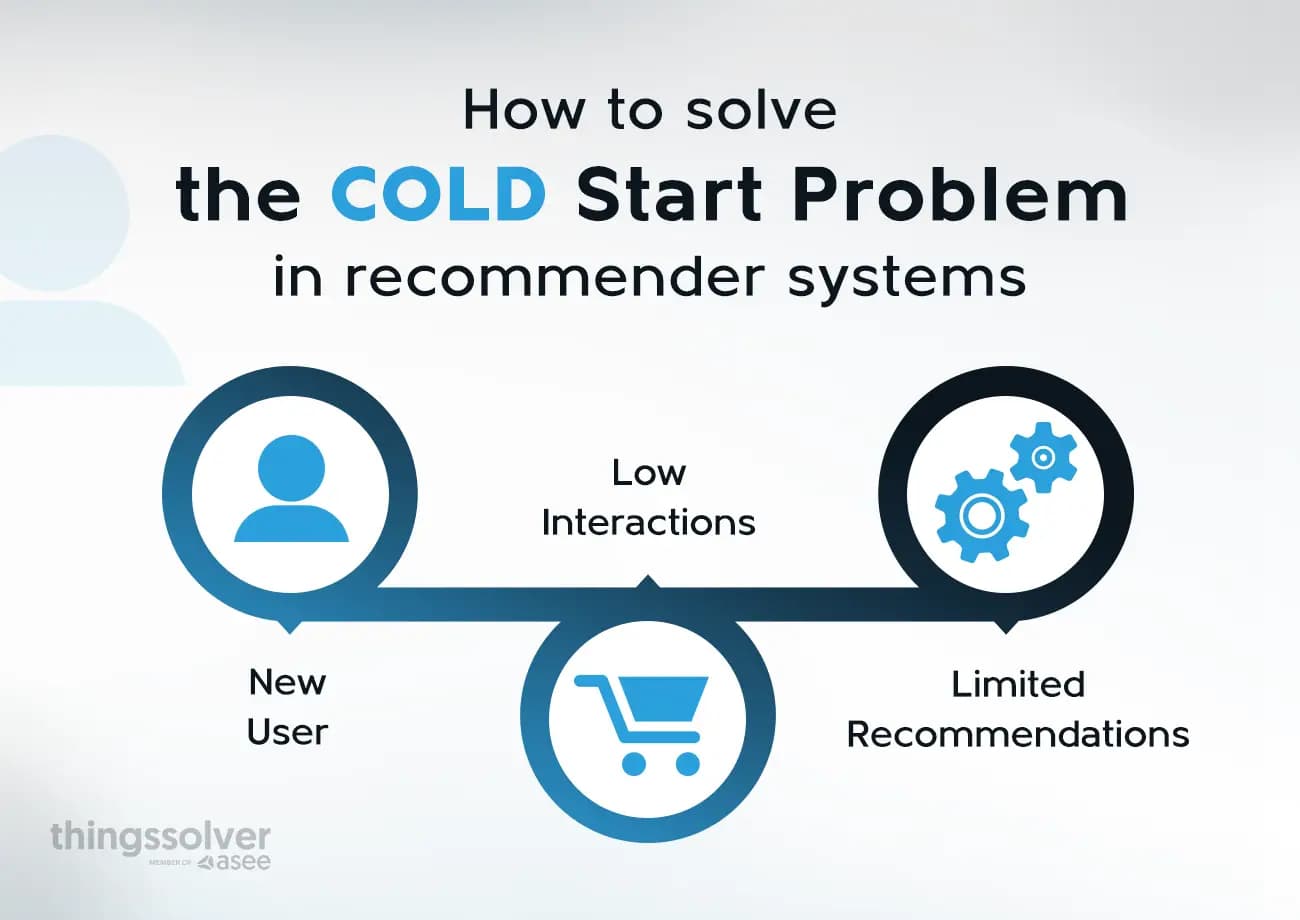
This research proposes a novel hybrid AI framework designed to solve the pervasive "cold start" problem in recommendation systems. The cold start occurs when a system lacks sufficient data to make accurate predictions—common with new customers (no interaction history) or new products (sparse metadata). The framework integrates two core technologies: Large Language Models (LLMs) and cognitive profiling based on the VARK model (Visual, Auditory, Reading/Writing, Kinesthetic).
The system operates through six integrated components:
- Semantic Metadata Enhancement: LLMs analyze and enrich sparse product descriptions, generating rich, contextual attributes.
- Dynamic Knowledge Graph Construction: These enriched attributes are used to build a connected graph of items and concepts.
- VARK-Based Cognitive Profiling: The system infers a user's preferred mode of information intake (e.g., visual learner, textual learner) from minimal initial signals.
- Mental State Estimation: Attempts to gauge user intent or receptiveness.
- Graph-Enhanced Retrieval with LLM-Powered Ranking: Candidate items are retrieved from the knowledge graph and then re-ranked by an LLM for contextual relevance.
- Adaptive Interface & Iterative Learning: The presentation of recommendations (e.g., image-heavy vs. detailed text) adapts to the user's VARK profile, and the system learns from subsequent interactions.
Validated on the MovieLens-1M dataset, the research demonstrates the system's ability to generate personalized recommendations from limited initial data by combining semantic understanding with a model of human cognitive preference.
Why This Matters for Retail & Luxury
For luxury retail, the cold start is a multi-billion dollar problem. It directly impacts key departments and use cases:
- Clienteling & CRM: A high-net-worth individual visits your online boutique for the first time. Traditional systems see an anonymous user. This framework can instantly profile their cognitive style based on browsing behavior (e.g., lingering on videos vs. zooming on detail shots) and tailor the discovery journey.
- E-commerce & Merchandising: A new, limited-edition handbag launches with only a name, an image, and a short press release. The LLM component can semantically enrich this by linking it to design heritage, artisan techniques, and comparable items, making it immediately recommendable.
- Marketing & Personalization: Campaigns and content can be dynamically adapted. A "Visual" profile might receive a lookbook video; a "Reading/Writing" profile might receive an essay on the craftsmanship. This moves personalization beyond past purchases to cognitive alignment.
- Supply Chain & Inventory: For new product categories, better early recommendation accuracy improves demand forecasting and reduces the risk of dead stock.
Business Impact & Expected Uplift
Cold starts directly suppress conversion rates and customer lifetime value. While the paper does not provide commercial revenue figures, the impact of solving this problem can be inferred from industry benchmarks.
- Conversion Uplift: According to a 2023 report by McKinsey & Company, advanced personalization can drive a 10-15% revenue uplift in retail. Solving the cold start is a key enabler of this, potentially capturing 2-5% of that uplift by effectively personalizing the first interaction.
- Customer Acquisition Cost (CAC): Reducing bounce rates and increasing engagement for new visitors improves marketing efficiency. A study by Epsilon indicates 80% of consumers are more likely to make a purchase when brands offer personalized experiences, starting from the first touchpoint.
- Sell-Through Rate: For new products, being accurately recommended from day one can improve early sell-through rates by an estimated 5-10%, based on analyses from retail AI vendors like Syte and Vue.ai.
- Time to Value: Initial lift in new user engagement can be measured within weeks of deployment. Full optimization and learning across the customer base may take 2-3 quarters.
Implementation Approach
- Technical Requirements:
- Data: Initial user interaction logs (clickstream, dwell time), basic product metadata, access to a foundational LLM API (e.g., GPT-4, Claude, or an open-source model like Llama 3).
- Infrastructure: Vector database (e.g., Pinecone, Weaviate) for semantic search, graph database (e.g., Neo4j) for knowledge relationships, and standard MLOps pipelines.
- Team Skills: Data scientists with NLP/LLM experience, backend engineers for system integration, and UX researchers to validate the VARK-based interface adaptations.
- Complexity Level: Medium-High. It involves custom orchestration of multiple AI components (LLM APIs, graph algorithms, ranking models) rather than using a single plug-and-play service.
- Integration Points: Must connect to the CDP (for user event streaming), PIM (for product metadata), e-commerce platform (for recommendation serving), and CMS/DAM (for adaptive content presentation).
- Estimated Effort: A pilot implementation for a single channel (e.g., web onboarding) would be a 3-6 month project for a dedicated team.
Governance & Risk Assessment
- Data Privacy & Consent: Profiling cognitive styles using behavioral data treads close to processing special category data under GDPR. It is imperative to have a clear lawful basis (e.g., legitimate interest) and provide transparent opt-outs. User data used for LLM enrichment must be anonymized and should not leave sovereign cloud regions if required.
- Model Bias & Sensitivity: The VARK model, while useful, is a simplification. There is a risk of stereotyping (e.g., assuming all luxury clients are "Visual") or creating a narrow experience. The system must allow for hybrid profiles and user correction. For fashion/beauty, the LLM's semantic enrichment must be carefully audited for cultural sensitivity and inclusivity.
- Maturity Level: Prototype/Research. The framework is proven in a controlled academic setting (MovieLens). Its application in complex, high-stakes luxury retail with nuanced products and clientele is unproven. The "mental state estimation" component is particularly nascent.
- Strategic Recommendation: Luxury brands should treat this as a strategic R&D initiative, not a ready-to-deploy solution. A recommended path is to deconstruct the framework and implement its most mature components sequentially:
- Phase 1 (Now): Use LLMs for semantic enrichment of new product catalogs in the PIM. This is low-risk and has immediate value.
- Phase 2 (6-12 months): Pilot VARK-inspired adaptive content modules on a dedicated landing page or in a 1:1 clienteling app, with explicit user consent and control.
- Phase 3 (Future): Explore the integrated graph-based recommendation engine for a specific cold-start scenario, like post-gifting engagement.
Honest Assessment: The core idea is powerful and addresses a genuine pain point. However, the integrated system is not production-ready for luxury. The priority should be on controlled experimentation with its constituent parts, placing ethics and client trust at the forefront of any cognitive profiling effort.