In the high-stakes race to develop more capable artificial intelligence systems, the most important competition might not be happening in the training clusters or research papers, but in the evaluation frameworks that determine what "better" actually means. As OpenAI recently announced reaching 900 million weekly ChatGPT users and secured a staggering $110 billion investment at a $730 billion valuation, and Google continues to advance its Gemini models, both companies—along with the broader research community—are fundamentally rethinking how we measure AI progress.
The Four Pillars of Modern AI Evaluation
1. EleutherAI Harness: The Open-Source Standard
Developed by the non-profit research collective EleutherAI, the Harness framework represents the democratization of AI evaluation. Unlike proprietary benchmarks that might favor specific architectures or training approaches, Harness provides standardized, reproducible testing across multiple tasks including language understanding, reasoning, and knowledge retrieval. This framework has become particularly important as smaller research organizations and academic institutions seek to validate their models against the same standards used by industry giants.
2. HELM: Holistic Evaluation of Language Models
Created by researchers at Stanford's Center for Research on Foundation Models, HELM (Holistic Evaluation of Language Models) takes a comprehensive approach that goes beyond single-number metrics. The framework evaluates models across multiple dimensions including accuracy, calibration, robustness, fairness, and efficiency. This multi-faceted approach recognizes that real-world AI deployment requires balancing numerous considerations beyond raw performance.
3. BIG-bench: The Community-Driven Benchmark
The Beyond the Imitation Game benchmark (BIG-bench) represents a massive collaborative effort involving hundreds of researchers contributing tasks that test increasingly sophisticated capabilities. With over 200 diverse tasks ranging from logical reasoning to cultural understanding, BIG-bench pushes models beyond standard NLP tasks toward more human-like intelligence. The scale and diversity of this benchmark make it particularly challenging for current models, revealing important gaps in capability.
4. Domain-Specific Evaluations: Real-World Relevance
Perhaps the most significant shift in AI evaluation has been the move toward domain-specific testing frameworks. Rather than relying solely on general benchmarks, researchers are developing specialized evaluations for fields like medicine, law, coding, and scientific research. These domain-specific frameworks better reflect how AI systems will actually be used and provide more meaningful performance indicators for enterprise applications.
Why Evaluation Matters More Than Ever
As AI systems become more integrated into critical infrastructure and decision-making processes, the frameworks we use to evaluate them take on new importance. Recent developments at OpenAI—including their exclusive cloud partnership with AWS and deployment of the 5GW Vera Rubin supercomputer—demonstrate the massive resources being poured into AI development. Without robust evaluation standards, comparing these increasingly sophisticated systems becomes nearly impossible.
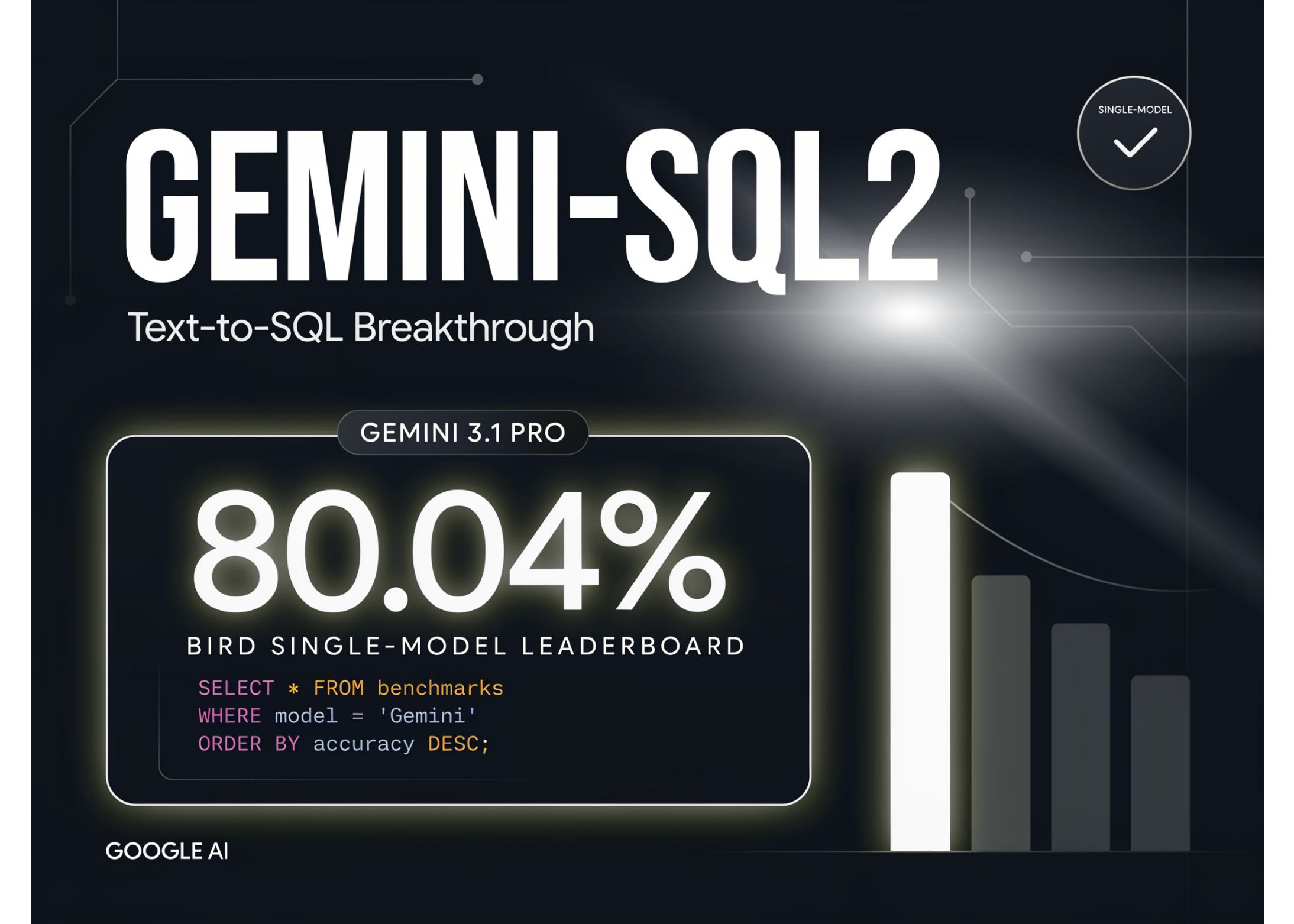
The competitive landscape between OpenAI, Google, Anthropic, and other major players has intensified the need for transparent, comprehensive evaluation. When Google announces improvements to Gemini or OpenAI releases new GPT capabilities, stakeholders need reliable ways to assess these claims beyond marketing language.
The Business Implications of Better Benchmarks
For enterprise users considering AI adoption—whether through OpenAI's partnerships with consulting giants like Accenture, McKinsey, and Boston Consulting Group, or Google's enterprise offerings—evaluation frameworks provide crucial decision-making tools. Companies can now assess which models perform best on their specific use cases rather than relying on general performance claims.
This shift toward specialized evaluation has also created new business opportunities. Tools like SkillsBench and GT-HarmBench (mentioned in our knowledge graph) represent emerging products focused on specific evaluation domains, suggesting a growing market for specialized assessment tools.
Challenges and Future Directions
Despite these advances, significant challenges remain in AI evaluation. Current frameworks struggle to measure:
- True understanding vs. pattern matching: Distinguishing between genuine comprehension and statistical correlation
- Long-term reasoning: Evaluating capabilities that require extended chains of thought
- Ethical alignment: Assessing whether models behave in accordance with human values
- Adaptability: Measuring how well models can apply knowledge to novel situations
Future evaluation frameworks will likely incorporate more interactive testing, real-world deployment metrics, and longitudinal studies of model behavior over time.
The Path Forward
As AI continues its rapid advancement, the frameworks we use to evaluate progress will shape not only which technologies succeed commercially but also how safely and beneficially these systems develop. The move toward more holistic, domain-specific, and transparent evaluation represents a maturing of the field—one that recognizes that measuring intelligence is nearly as complex as creating it.
The collaboration between academic institutions, non-profits like EleutherAI, and industry giants suggests a growing consensus that robust evaluation benefits everyone in the ecosystem. As these frameworks continue to evolve, they'll play a crucial role in ensuring that AI progress translates into real-world value while managing the risks of increasingly powerful systems.
Source: Based on analysis of evaluation frameworks discussed in Towards AI and contextual information about current AI industry developments.