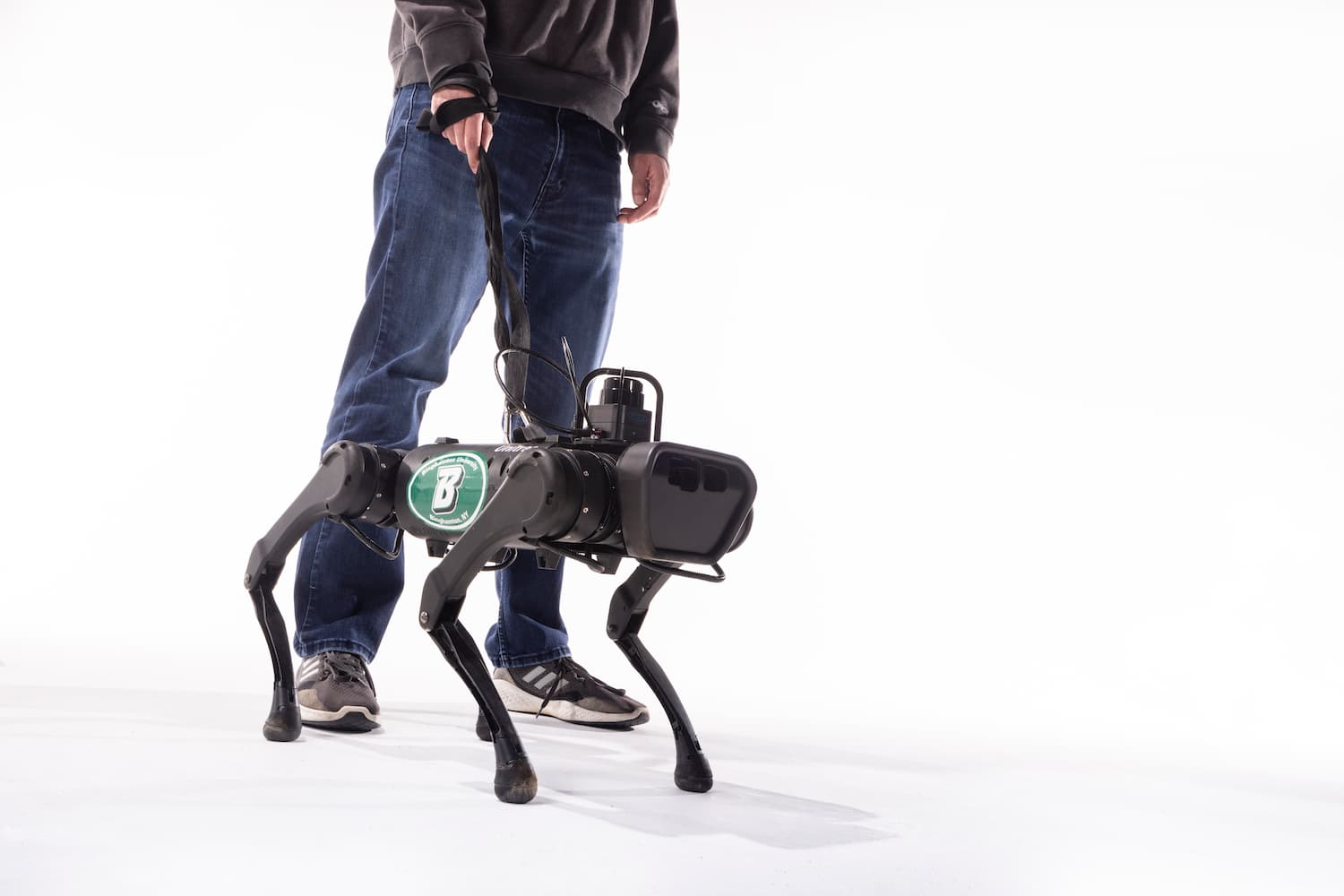
Researchers at Binghamton University have demonstrated a prototype for a robotic guide dog designed to assist visually impaired individuals. The system is built on a Unitree Go2 quadruped robot base and is distinguished by its ability to communicate with users using natural, spoken language.
Key Takeaways
- Researchers at Binghamton University have developed a robotic guide dog prototype that communicates with users using natural language.
- The system, built on a Unitree Go2 platform, was demonstrated navigating a user through a test environment.
What Happened
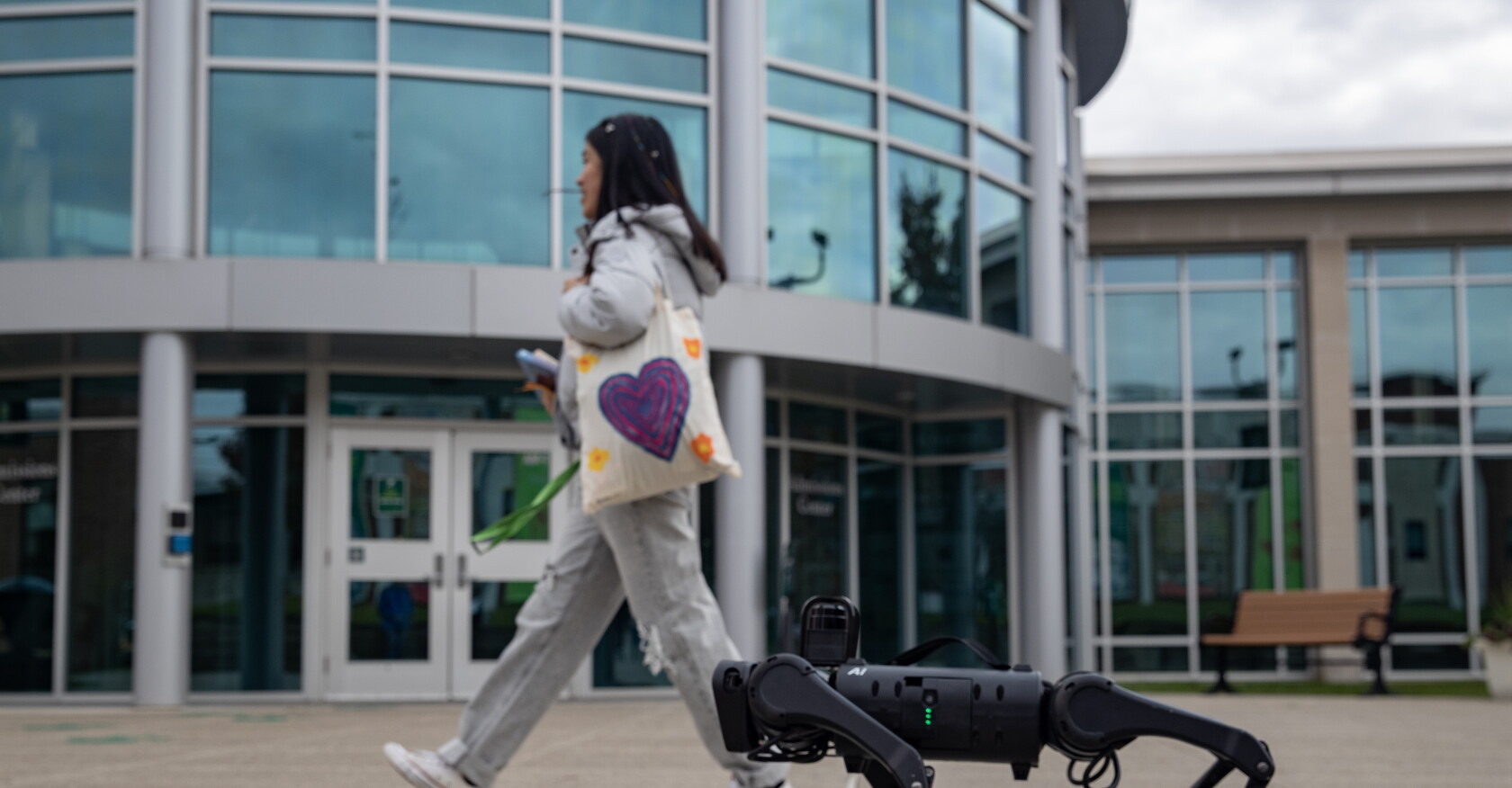
A demonstration video shared by researcher Rohan Paul shows the robotic platform navigating a user through an indoor test environment. Unlike traditional, non-verbal guide dogs or previous robotic aids that rely on simple auditory cues, this prototype engages in two-way verbal communication. The robot can provide contextual navigation instructions, respond to user queries, and likely confirm environmental hazards or path choices through dialogue.
Technical Details & Context
The choice of the Unitree Go2 as a hardware base is significant. Unitree Robotics is a leading manufacturer of consumer and research-grade quadruped robots, known for their robust locomotion, programmability, and relatively accessible price point compared to platforms like Boston Dynamics' Spot. Using a commercial off-the-shelf (COTS) robot accelerates development by allowing researchers to focus on the specialized assistive AI and human-robot interaction (HRI) software stack.
The core innovation appears to lie in the integration of a large language model (LLM) or a sophisticated speech interaction system. This allows the robot to parse user speech, understand intent within the context of navigation (e.g., "find the door," "is there a chair ahead?"), and generate appropriate, natural-language responses while executing physical guidance maneuvers.
Robotic alternatives to guide dogs have been an active research area for years, aiming to address challenges like the limited supply, long training times, and high cost of real animal guides. However, most prior systems have focused on autonomy and obstacle avoidance, with communication limited to simple harness tugs or synthesized directional commands (e.g., "left," "stop"). Binghamton's approach of layering a conversational AI agent on top of a capable mobile platform represents a shift towards more intuitive and informative assistance.
Challenges & The Road Ahead

This is a research prototype, and significant hurdles remain before such a system could be deployed in the complex, unstructured real world. Key challenges include:
- Robustness & Safety: The system must achieve near-perfect reliability in obstacle detection and avoidance on varied terrain (curbs, stairs, uneven pavement) under all weather conditions.
- Contextual Understanding: The AI must deeply understand the nuanced semantics of urban navigation ("cross at the crosswalk," "avoid that puddle," "the store is next to the pharmacy").
- Battery Life & Practicality: Operating for a full day on a single charge is a non-negotiable requirement for a practical mobility aid.
- Social Acceptance & Trust: Building user trust in a robotic entity for a critical safety task is a profound HRI challenge.
The demonstration is a proof-of-concept step. The next stages will involve more rigorous testing in increasingly complex environments, user studies with visually impaired participants, and iterative improvements to the AI's reasoning and dialogue capabilities.
gentic.news Analysis
This development sits at the convergence of two rapidly advancing fields: embodied AI and accessible robotics. It's a tangible application of the "LLM as a robot's brain" paradigm, where a language model handles high-level task planning and communication, while traditional robotics stacks manage perception and low-level control. We've seen this pattern emerge in labs worldwide, from Google's RT-2 to startups like Covariant, but applying it to assistive technology is a compelling and socially impactful direction.
The use of a Unitree platform is pragmatic and reflects a trend we've noted: the democratization of advanced robotic hardware. Just as cloud APIs lowered the barrier to AI development, affordable, capable platforms like the Go2 are enabling university labs and startups to innovate in physical AI applications without a Boston Dynamics-level budget. This accelerates experimentation in niche areas like assistive tech, which may not be the primary focus of large corporate labs.
However, the gap between a compelling lab demo and a certified, reliable, daily-use medical device is enormous. The history of assistive robotics is littered with promising prototypes that failed to transition to products due to cost, complexity, or robustness issues. Binghamton's work is noteworthy for its focus on natural interaction—a critical usability factor—but the long-term test will be in hardening the system's safety-critical autonomy. This work contributes valuable data to the central question: can a conversational, reasoning robot become a trustworthy partner for navigation in a world built for sighted humans?
Frequently Asked Questions
What is the Unitree Go2 robot?
The Unitree Go2 is a mid-tier, commercially available quadruped (four-legged) robot designed for research, education, and development. It features robust locomotion, a range of sensors, and an open API, making it a popular hardware base for robotics projects that require mobile manipulation or navigation.
How is this different from other robotic guides?
Most previous robotic guide systems communicate through simple auditory tones, vibrations, or basic pre-recorded commands. The key differentiator of the Binghamton prototype is its integration of natural language processing, allowing for two-way, conversational interaction. This could make the robot more intuitive to use and capable of providing richer contextual information.
Is this robot available to buy as a guide dog replacement?
No. This is a university research prototype. It is not a commercial product, nor is it certified as a medical device. It represents early-stage exploration of the concept. Transitioning such a system to a safe, reliable, and affordable product would likely take many more years of development and regulatory approval.
What are the biggest challenges for robotic guide dogs?
The primary challenges are safety and reliability in unpredictable real-world environments (e.g., traffic, crowds, weather), achieving all-day battery life, managing high costs for capable hardware and sensors, and navigating liability and certification pathways required for a device that is responsible for a user's physical safety.