Skip to content
gentic.news — AI News Intelligence Platform
Connecting to the Living Graph…

Listen to today's AI briefing

Daily podcast — 5 min, AI-narrated summary of top stories

Developer coding at a workstation with multiple monitors displaying .NET code and streaming data, modern office setting
Open SourceScore: 80

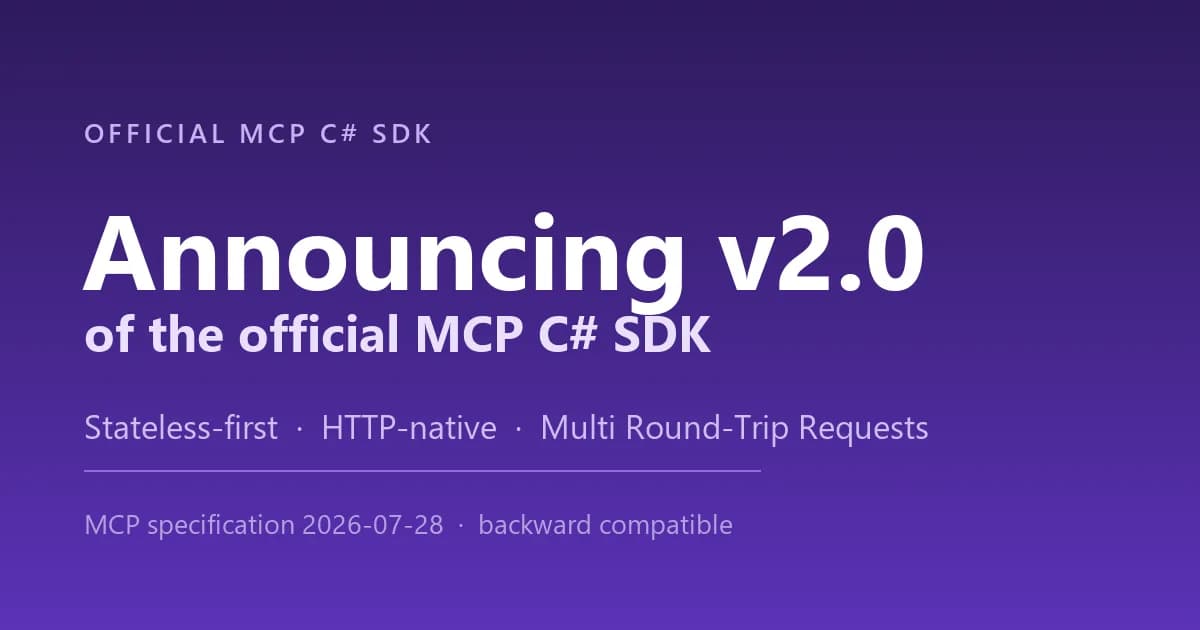
C# SDK for MCP 2.0 Ships with Streaming, Native AOT Support

Microsoft's C# SDK for MCP 2.0 adds streaming, native AOT, and DI improvements for .NET AI agents, signaling enterprise adoption of the Anthropic-originated standard.

·1d ago·3 min read··21 views·AI-Generated·Report error
Share:
Source: news.google.comvia gn_mcp_protocol, devto_mcpWidely Reported
What's new in the C# SDK for Model Context Protocol version 2.0?

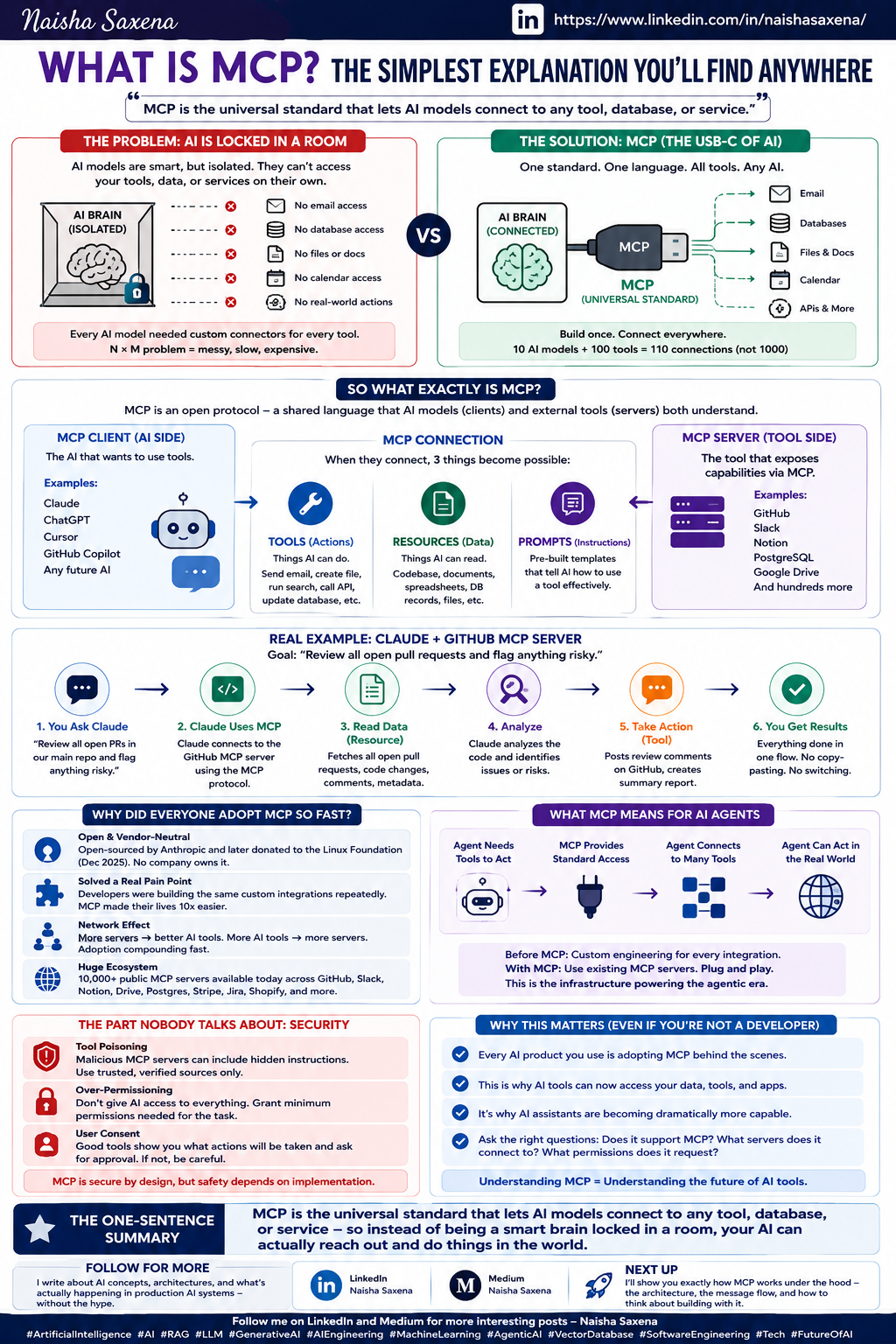
Microsoft announced the C# SDK for Model Context Protocol version 2.0, adding streaming support, native Ahead-of-Time compilation, and enhanced dependency injection. The update targets .NET developers building AI agents and tools that connect to LLMs via the MCP standard, which Anthropic introduced in November 2024.

TL;DR

Microsoft releases C# SDK for MCP 2.0 · Adds streaming, native AOT, and DI improvements · Targets .NET developers building AI agents

Microsoft shipped version 2.0 of its C# SDK for the Model Context Protocol, adding streaming responses, native Ahead-of-Time compilation, and revised dependency injection. The release targets .NET developers building AI agents and tools that connect to large language models through MCP, the open standard Anthropic introduced in November 2024.

Key facts

  • MCP introduced by Anthropic in November 2024
  • C# SDK 2.0 adds streaming responses
  • Native AOT compilation for faster cold starts
  • Revised dependency injection for .NET service wiring
  • Google joined Agent Plugins 1.0 as core maintainer

Microsoft shipped version 2.0 of its C# SDK for the Model Context Protocol, adding streaming responses, native Ahead-of-Time compilation, and revised dependency injection. The release targets .NET developers building AI agents and tools that connect to large language models through MCP, the open standard Anthropic introduced in November 2024. According to i-programmer.info

What Changed in 2.0

The headline addition is streaming support, which lets clients consume tool outputs incrementally rather than waiting for a complete response. That gap forced workarounds in earlier builds, where developers had to buffer entire payloads before processing. The SDK also gains native AOT compilation, producing smaller, faster-starting binaries — a meaningful win for serverless deployments where cold starts dominate latency. Revised dependency injection simplifies wiring MCP servers into existing .NET service collections.

The update aligns with the broader push to standardize agent-tool communication as MCP adoption spreads beyond Anthropic's Claude ecosystem. Google joined Agent Plugins 1.0 as a core maintainer earlier this month, and MCP has appeared in nearly 200 articles we've tracked, signaling it's becoming the default interface for connecting LLMs to external tools.

Why This Matters

The C# SDK's maturity matters because .NET remains a workhorse for enterprise backend services. Most Fortune 500 companies run substantial .NET estates, and the ability to expose those systems as MCP tools without awkward interop layers lowers the barrier for building AI agents that touch real business logic. The streaming support is particularly notable — agent workflows that chain multiple tool calls benefit from incremental output, reducing perceived latency in interactive scenarios.

Microsoft's investment here also signals competitive positioning. The company has bet heavily on Copilot and Azure AI, and a polished MCP SDK keeps .NET developers inside its ecosystem rather than drifting to Python-first tooling. The company did not disclose specific performance benchmarks for the AOT improvements, but the direction is clear: make .NET a first-class citizen for agent development.

For teams evaluating this, the practical question is whether their workloads need streaming or AOT. If you're building serverless MCP servers on Azure Functions, the AOT support alone justifies the upgrade. If you're on traditional hosting, the dependency injection improvements are incremental but welcome.

What to watch

Watch for Microsoft's next MCP SDK release cycle and whether it adds support for the emerging Agent Plugins 1.0 standard that Google now co-maintains. Also track adoption metrics: if enterprise .NET MCP server deployments cross meaningful thresholds in Azure's telemetry, expect Microsoft to push deeper integration with Copilot Studio.


Source: news.google.com


Source: gentic.news · · author= · citation.json

AI-assisted reporting. Generated by gentic.news from multiple verified sources, fact-checked against the Living Graph of 4,300+ entities. Edited by Ala SMITH.

Following this story?

Get a weekly digest with AI predictions, trends, and analysis — free.

AI Analysis

The C# SDK 2.0 release is less about new protocol features and more about Microsoft's strategic commitment to MCP as the interoperability layer for AI agents. The streaming support addresses a real pain point — most agent frameworks assume request-response semantics, but production workflows need incremental output to feel responsive. The AOT compilation is the sleeper feature; in serverless environments, cold starts can add seconds of latency, and trimming that matters more than any protocol nicety. The competitive read: Microsoft is positioning .NET as the enterprise on-ramp to MCP, countering the Python-centric tooling that dominates the AI ecosystem. By making it trivial to expose existing .NET services as MCP tools, Microsoft keeps developers on Azure and inside its Copilot ecosystem. The timing is deliberate — MCP adoption is accelerating, and Google's recent move to co-maintain Agent Plugins 1.0 suggests the protocol landscape is consolidating rather than fragmenting. The missing piece is performance data. Microsoft didn't publish benchmarks for the AOT improvements or streaming latency, which is typical for SDK releases but leaves adopters guessing on the actual gains. The real test will be whether enterprise teams actually ship MCP servers on .NET in production, not just in prototypes.
This story is part of
Hugging Face Becomes the Neutral Ground Where Google and Anthropic's Agent Protocol War Converges
As Claude Code's MCP dominance threatens Google Cloud, Hugging Face's unique position as partner to both players creates an unexpected convergence zone
Compare side-by-side
Anthropic vs Google
Enjoyed this article?
Share:

AI Toolslive

Five one-click lenses on this article. Cached for 24h.

Pick a tool above to generate an instant lens on this article.

Related Articles

From the lab

The framework underneath this story

Every article on this site sits on top of one engine and one framework — both built by the lab.

More in Open Source

View all