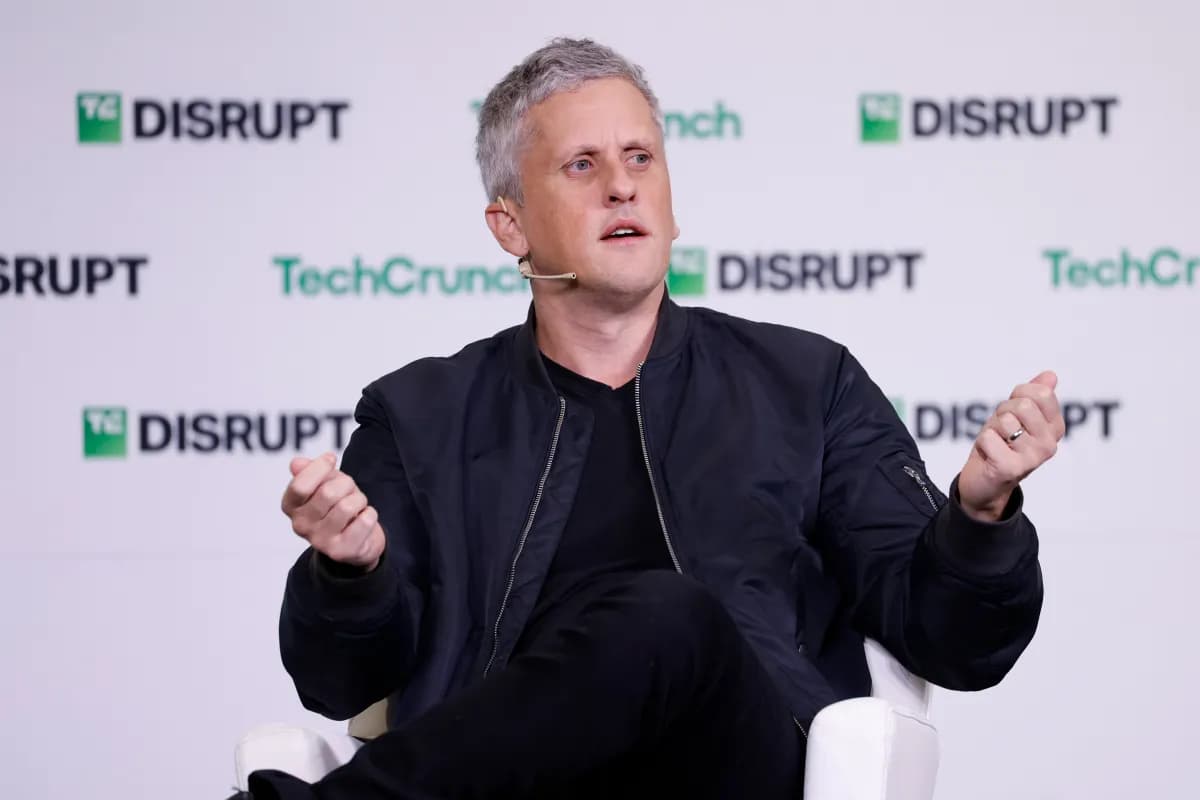
The CEO of the most valuable AI company admitted publicly: 'All day long I call people and beg them for their GPUs.' The confession, reported by @TheGeorgePu, reveals the GPU shortage is a structural market condition, not a temporary bottleneck.
Key facts
- CEO spends all day begging for GPUs
- H100 hunt in Canada lasted two months
- Most valuable AI company still supply-constrained
- Shortage described as structural, not temporary
The CEO of the most valuable AI company — whose identity is not disclosed in the source but contextually the highest-valued private or public AI firm — said according to @TheGeorgePu that he spends his days calling people and begging them for GPUs. The admission came alongside a personal anecdote: 'Not me hunting H100s in Canada for two months.'
The statement is a stark contrast to the narrative that leading AI companies have secured ample supply through massive capital raises and long-term contracts. If the CEO of the market leader is reduced to pleading for individual GPUs, it suggests that even the most well-funded players face acute scarcity. The source frames this as a structural shift: 'If he's begging, the shortage isn't a phase. It's the structure.'
The H100 — NVIDIA's Hopper-generation GPU — remains the gold standard for training large models, with demand far outstripping supply despite NVIDIA's efforts to ramp production. The two-month hunt in Canada underscores geographic dispersion: AI talent and compute are not evenly distributed, and secondary markets like Canada become critical hunting grounds.
Key Takeaways
- The CEO of the most valuable AI company admitted begging for GPUs, signaling a structural shortage.
- The confession, reported by @TheGeorgePu, contradicts vendor narratives of ample supply.
What the admission reveals
The CEO's candor cuts against typical vendor messaging. Most AI companies project confidence about infrastructure access, often announcing multi-billion-dollar data-center deals. This confession, however, aligns with reports from smaller labs and independent researchers who have struggled to procure H100s for months. The market leader's begging normalizes the experience for everyone else.
The source does not name the CEO or the company, but the description 'the most valuable AI company' likely refers to OpenAI (valued at $300B+ in recent reports) or Anthropic ($61.5B post-money). Neither company has publicly confirmed this quote. The credibility of @TheGeorgePu, a known AI infrastructure commentator, lends weight to the report.
Broader market implications
If the top AI firm is GPU-constrained, the supply-demand imbalance is likely worse than public disclosures suggest. NVIDIA's earnings calls have consistently guided for supply improvement, but real-world anecdotes from builders tell a different story. The H100 shortage has persisted through 2024 and into 2025, with NVIDIA's Blackwell architecture delayed, pushing demand further onto H100s.
The admission also raises questions about capital allocation: if the most valuable AI company cannot secure enough GPUs despite presumably having the deepest pockets, what does that mean for smaller competitors? The answer is likely consolidation — only the best-funded labs will survive the compute crunch.
What to watch
Watch for NVIDIA's Q2 2026 earnings call (August 2026) for any guidance on H100 supply easing, and for any public response from OpenAI or Anthropic addressing GPU access. If another major AI CEO echoes this sentiment, the structural shortage thesis is confirmed.