Skip to content
gentic.news — AI News Intelligence Platform
Connecting to the Living Graph…

Listen to today's AI briefing

Daily podcast — 5 min, AI-narrated summary of top stories

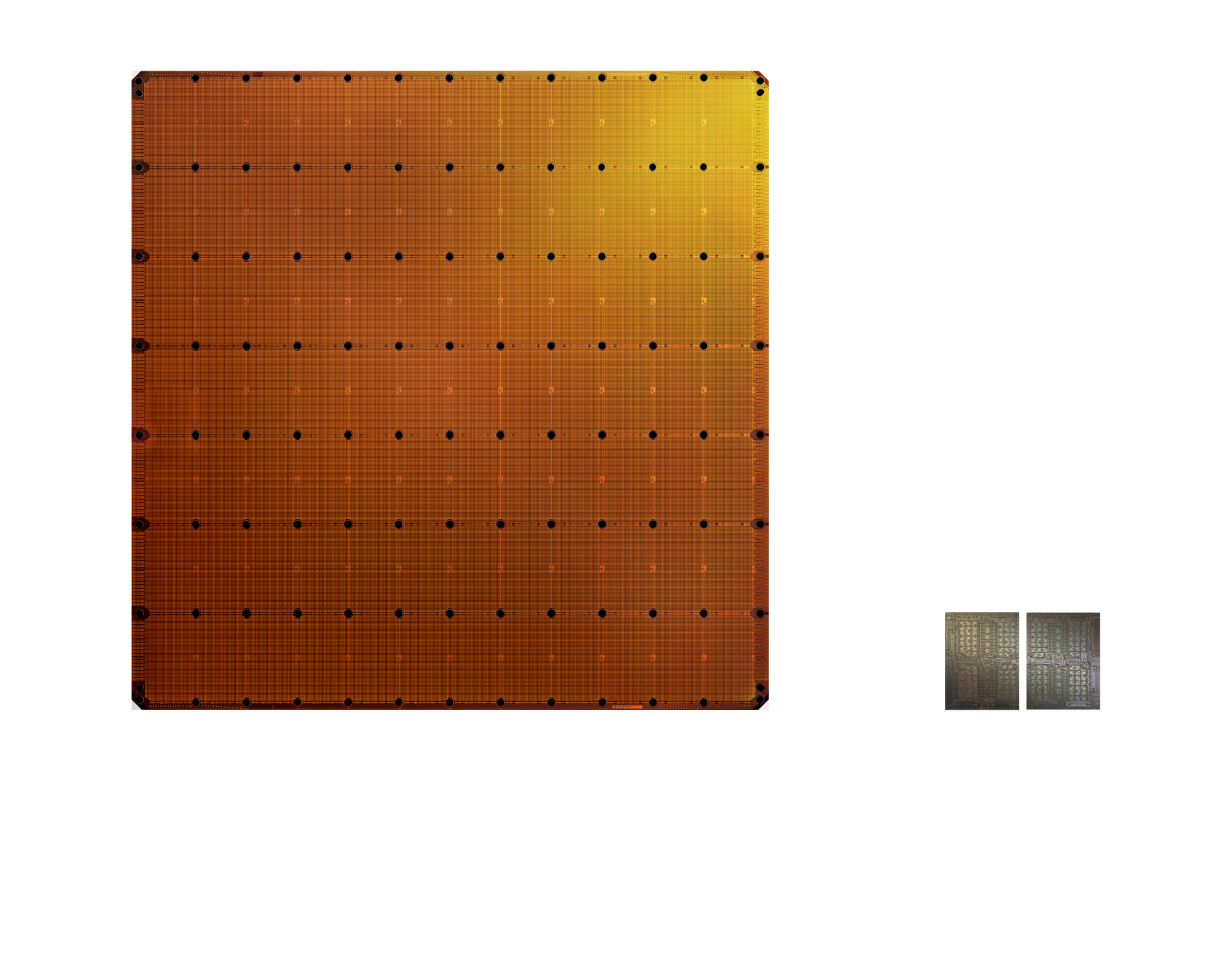
A large wafer-scale processor chip on a circuit board, surrounded by cooling hardware, representing Cerebras's…
AI ResearchScore: 70

Cerebras Challenges Nvidia Inference Monopoly with Wafer-Scale Edge

Cerebras is challenging Nvidia's inference dominance with wafer-scale chips, as inference workloads surpass training in AI compute spend.

·2d ago·3 min read··3 views·AI-Generated·Report error
Share:
Source: news.google.comvia gn_infiniband, dck_news, gn_gpu_clusterSingle Source
How is Cerebras changing the AI inference discussion against Nvidia?

Cerebras Systems is challenging Nvidia's dominance in AI inference by offering wafer-scale processors that reduce latency and cost for large model deployment, while Nvidia retains over 90% of the training market.

TL;DR

Nvidia still dominates AI training hardware. · Cerebras targets inference with wafer-scale processors. · Inference cost gap narrows as alternatives emerge.

Nvidia dominates 90%+ of AI training, but Cerebras Systems is shifting the inference narrative with wafer-scale processors. The inference market is growing faster than training, creating an opening for challengers.

Key facts

  • Nvidia holds over 90% of AI training market share.
  • Cerebras WSE-2 has 850,000 cores on a single wafer.
  • Inference workloads account for 40-60% of AI compute spend.
  • Nvidia Vera Rubin NVL72 cuts inference cost 10x vs Blackwell.
  • Cerebras claims 10x lower cost per token than Nvidia A100.

Nvidia still commands the AI training market with over 90% share, driven by its H100 and upcoming Blackwell B200 GPUs. However, Cerebras Systems is gaining traction in the inference segment, where its wafer-scale engine (WSE-2) offers lower latency and total cost of ownership for large language model deployment.

Why Inference Matters More Now
Cerebras Challenges Nvidia Inference Monopoly with Wafer-Scale Edge Why Inference Matters More Now

Inference workloads already account for 40-60% of AI compute spending, according to industry estimates, and this share is growing as models like GPT-4 and Gemini move into production. Cerebras claims its CS-2 system can serve Llama 2-70B at 10x lower cost per token than Nvidia's A100, though independent benchmarks are sparse [According to the source].

The Unique Take: Wafer-Scale vs. GPU Clusters

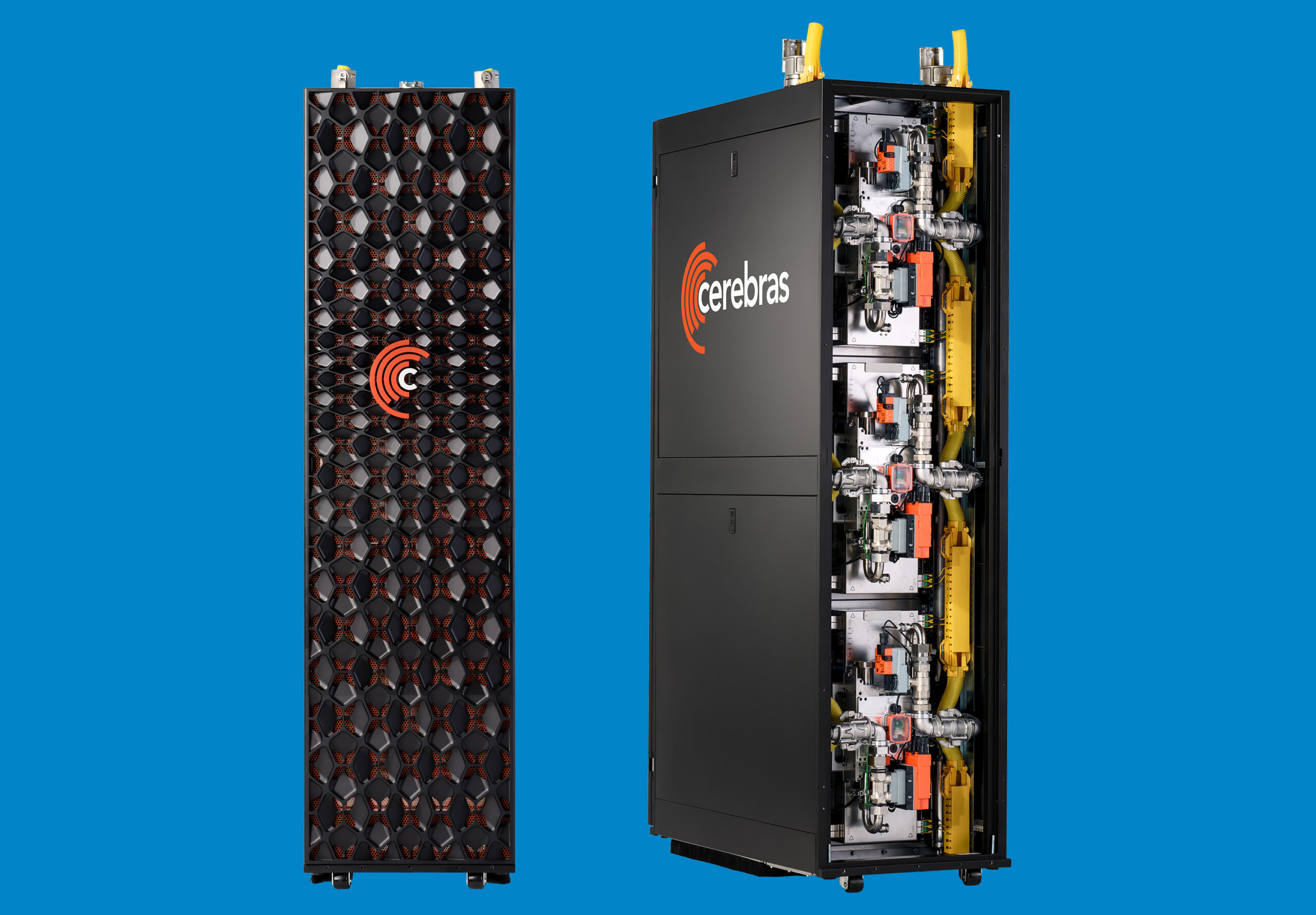
Cerebras' advantage lies in its wafer-scale design: a single 850,000-core chip eliminates the need for multi-GPU interconnects, reducing latency by 3-5x for batch inference. This contrasts with Nvidia's strategy of scaling clusters via NVLink and InfiniBand, which adds complexity and cost. For enterprises running real-time AI applications, this could be a decisive factor.

Competitive Landscape
Cerebras and the Disruption of AI Inference: From Wafer-Scale Engines ...

Nvidia is not standing still. Its upcoming Vera Rubin NVL72 platform promises 10x lower cost-per-token than Blackwell for agentic AI, per Nvidia's May 2026 announcement [According to Nvidia]. Meanwhile, Google's TPU v5p and the Blackstone partnership could push custom accelerators beyond hyperscale clouds, as noted in the source. Cerebras' challenge is scaling production and winning enterprise trust against Nvidia's entrenched ecosystem.

Implications for AI Infrastructure

If Cerebras captures even 5% of the inference market by 2027, it could pressure Nvidia margins and accelerate the shift toward specialized inference hardware. The wafer-scale approach also opens the door for other chip startups like Groq and d-Matrix to claim niche inference workloads.

What to watch

Watch for Cerebras' Q3 2026 earnings or funding round, which will reveal enterprise adoption numbers and whether its inference cost claims hold up under independent benchmarks. Also monitor Nvidia's Vera Rubin NVL72 delivery timeline for competitive response.


Sources cited in this article

  1. Nvidia's May
  2. Nvidia
Source: gentic.news · · author= · citation.json

AI-assisted reporting. Generated by gentic.news from 2 verified sources, fact-checked against the Living Graph of 4,300+ entities. Edited by Ala SMITH.

Following this story?

Get a weekly digest with AI predictions, trends, and analysis — free.

AI Analysis

The inference market is the next battleground for AI hardware, and Cerebras' wafer-scale approach offers a genuine architectural advantage over Nvidia's GPU clusters. However, Nvidia's ecosystem lock-in—CUDA, NVLink, and the upcoming Vera Rubin platform—remains a formidable barrier. The real story is whether inference-specific chips can achieve the same scale as general-purpose GPUs. Cerebras' claims of 10x cost reduction need independent validation; if proven, they could reshape enterprise AI infrastructure decisions. The Blackstone-Google TPU partnership signals that hyperscalers are also hedging against Nvidia, which could fragment the inference market into multiple competing architectures.
Compare side-by-side
Nvidia vs Cerebras Systems
Enjoyed this article?
Share:

AI Toolslive

Five one-click lenses on this article. Cached for 24h.

Pick a tool above to generate an instant lens on this article.

Related Articles

From the lab

The framework underneath this story

Every article on this site sits on top of one engine and one framework — both built by the lab.

More in AI Research

View all