Cerebras Systems unveiled the WSE-3 Turbo processor and the CS-4 rack-scale system this week, doubling WSE-3 performance via clock boosts. The company is positioning the CS-4 to rival NVIDIA and AMD in scale-up AI inference.
Key facts
- WSE-3 Turbo doubles WSE-3 sparse FP16 performance to 250 PFLOPS
- CS-4 is Cerebras's first rack-scale system, enabling multi-WSE scaling
- WSE-3 Turbo retains 900,000 cores, 44GB SRAM, 4 trillion transistors
- Fabbed on TSMC 5nm, clock-boosted vs. new process node
- Cerebras expands CS-3 production 7× at Milpitas facility
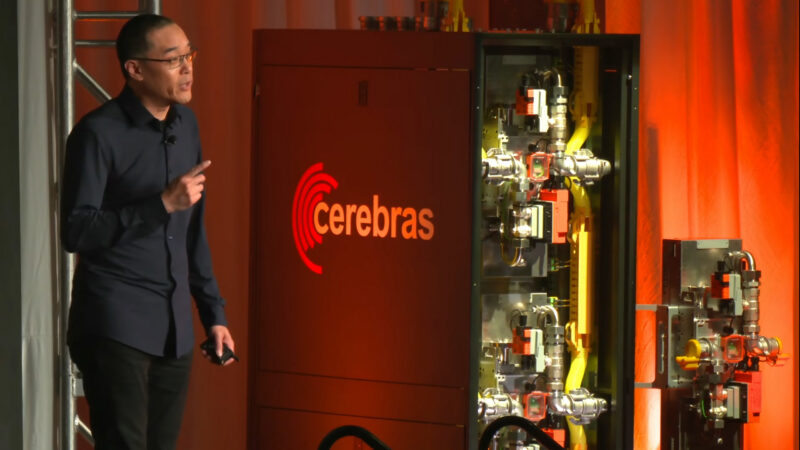
Cerebras Systems this week introduced the WSE-3 Turbo processor and the CS-4, its first rack-scale AI inference system, according to ServeTheHome. The WSE-3 Turbo is not a new wafer-scale design but a clock-boosted version of the WSE-3 launched in 2024, promising to double its predecessor's 125 PFLOPS sparse FP16 performance to 250 PFLOPS. The processor retains 900,000 AI cores, 44GB of on-processor SRAM, and 4 trillion transistors fabbed on TSMC's 5nm process, with Cerebras cranking up clock speeds across the wafer to achieve the gain.
Rack-Scale Architecture: The CS-4
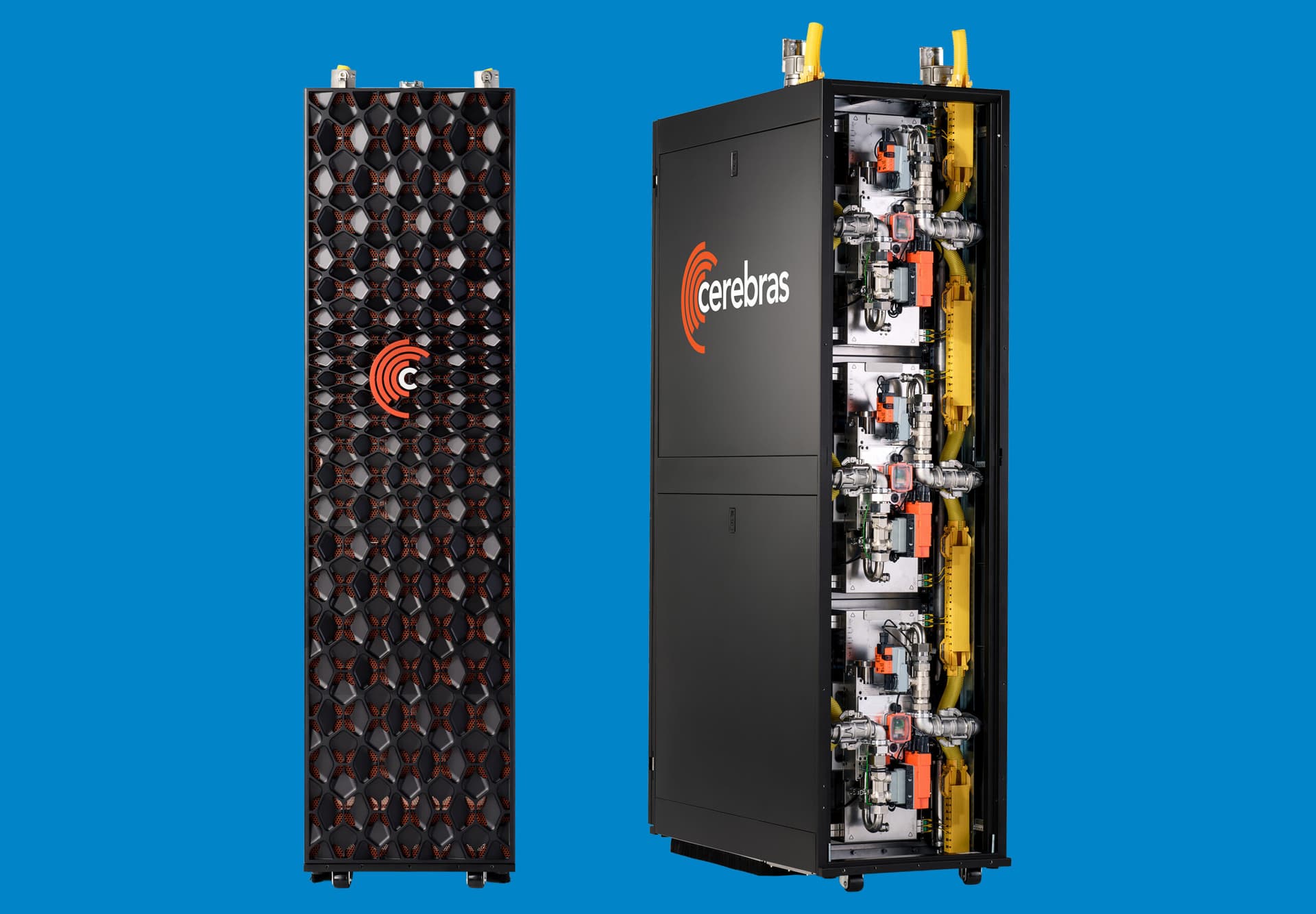
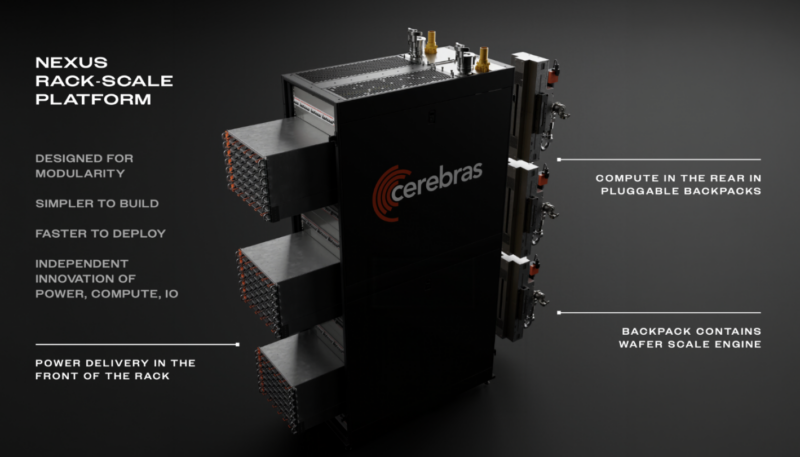
The CS-4 is Cerebras's first rack-scale system, designed to house the WSE-3 Turbo and enable multiple WSEs to work together within a single rack via a new networking architecture. This marks a strategic shift from single-processor systems to scale-up configurations, directly challenging NVIDIA's NVLink-based systems and AMD's Instinct platforms. Cerebras is betting that its wafer-scale approach, which avoids the memory bandwidth bottlenecks of multi-GPU systems, will win in inference workloads where latency and throughput matter.
Why This Matters: Doubling Without a Process Node
Unlike prior WSE generations that followed TSMC process nodes, the Turbo variant achieves its performance gain purely through clock speed increases, not architectural changes or process shrinks. This is a lower-risk, faster-to-market strategy that leverages the existing WSE-3 design, but it also signals a limit: future gains may require a new process node or architectural overhaul. The rack-scale CS-4 also positions Cerebras for disaggregated data centers, where scale-up systems are becoming the norm, as seen in NVIDIA's GB200 NVL72 and AMD's MI300X platforms.
What to watch
Watch for the first CS-4 customer benchmarks in early 2027, particularly on GPT-5.6-class models where Cerebras claims 750 token/s on its CS-3. If the CS-4 delivers linear scaling across multiple WSEs, it could challenge NVIDIA's NVLink dominance in inference. Also track whether Cerebras moves to TSMC's 3nm for a true WSE-4.
Source: servethehome.com