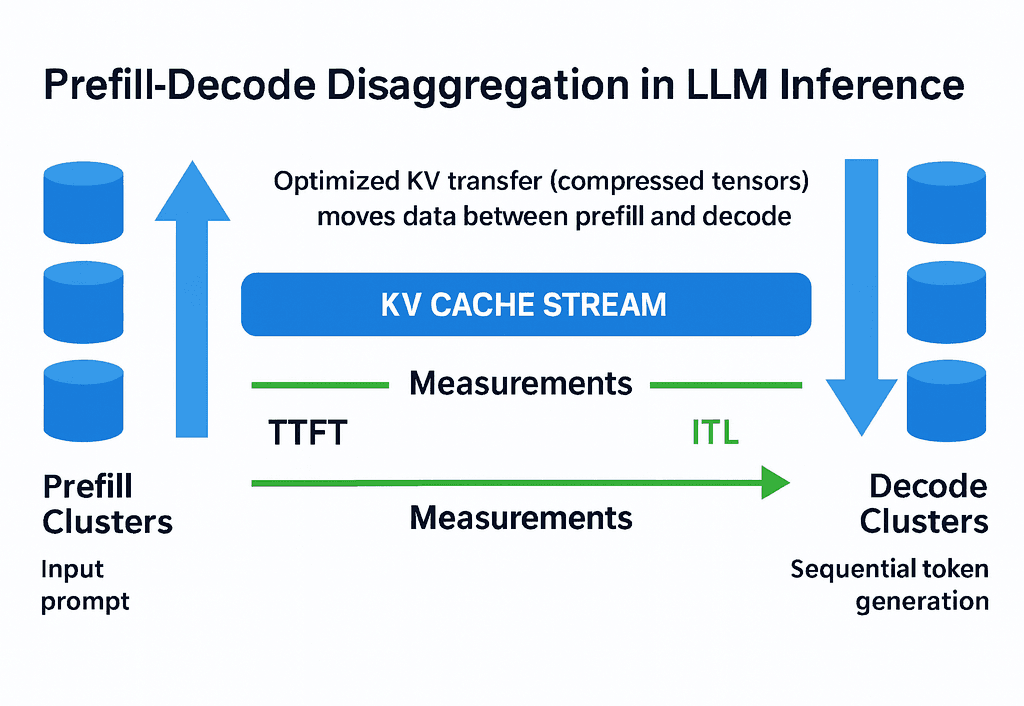
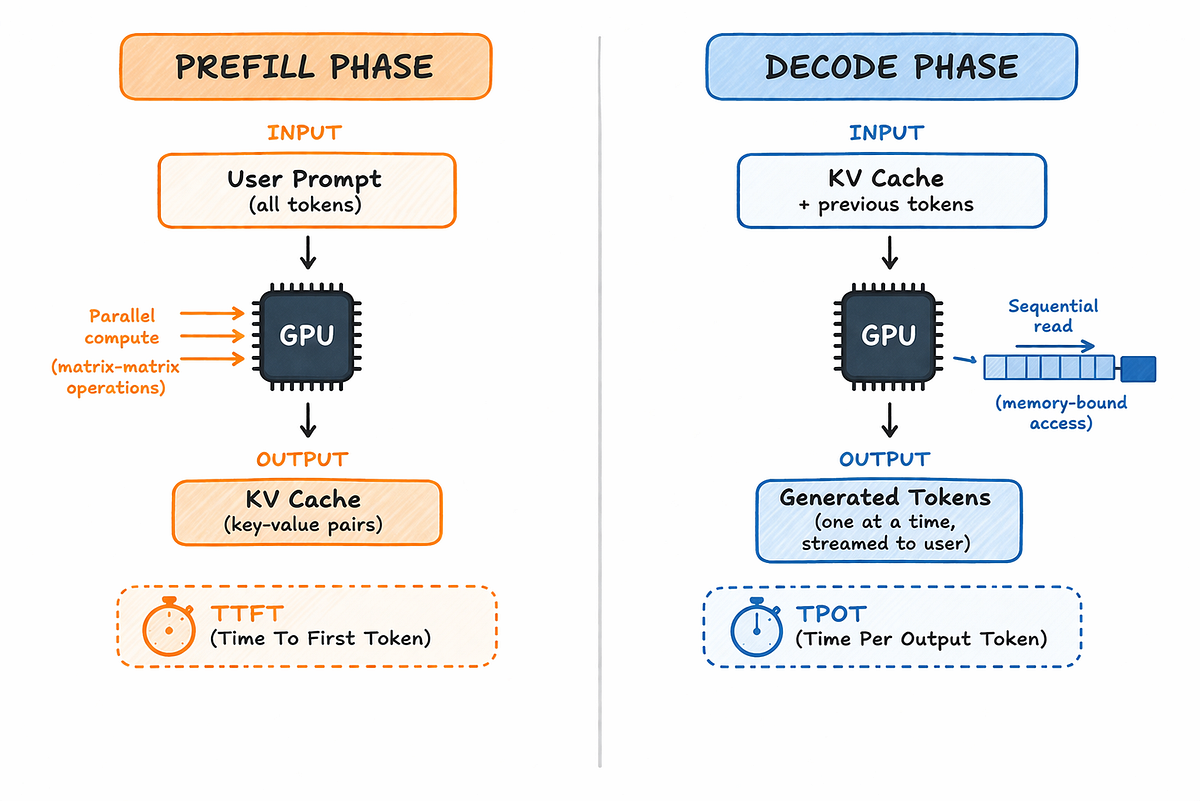
AMD and Cerebras announced a disaggregated inference platform at Advancing AI 2026 on July 24. The solution splits prompt processing on AMD Helios from token generation on Cerebras WSE, claiming up to 5× higher tokens per second per watt.
Key facts
- AMD Helios handles prompt processing; Cerebras WSE handles decode.
- Up to 5× tokens per second per watt claimed for inference.
- Announced July 24, 2026 at Advancing AI 2026.
- Cerebras recently hit 750 token/s on GPT-5.6 Sol.
- Cerebras expanded CS-3 production 7× at Milpitas facility.
The partnership, announced via press release According to HPCwire, directly addresses the widening gap in inference workload profiles. High-volume batch inference demands raw throughput, while real-time copilots and agentic workflows require sub-100ms token generation. By decoupling the two phases, AMD and Cerebras avoid the traditional compromise where a single accelerator architecture underperforms on one side of the latency-throughput curve.
Why the split matters
Most inference stacks run both prompt processing and autoregressive decode on the same GPU or ASIC. This forces operators to provision for the bottleneck: either the memory-bandwidth-hungry decode step or the compute-heavy prompt pass. The AMD-Cerebras approach routes each phase to a specialized engine. AMD Helios, already announced for Azure deployment [Microsoft to Deploy AMD Helios Rack-Scale AI at Scale on Azure, July 20], handles large context windows and batch prompt processing. Cerebras Wafer-Scale Engine, which recently delivered 750 token/s on GPT-5.6 Sol [GPT-5.6 Sol on Cerebras Hits 750 Token/s, July 18], handles the latency-critical decode stage.
Competitive context
The disaggregated inference model directly challenges Nvidia's monolithic GPU approach, where a single Blackwell B200 or Hopper H100 handles both phases. Both AMD and Cerebras compete with Nvidia [9 and 8 KG sources respectively]. The claimed 5× T/s/W improvement, if reproducible in production, would give enterprises a clear economic incentive to split their inference stack—a structural shift that Nvidia's unified architecture cannot easily match without fundamental redesign.
Token economics and agentic AI
"Fast token generation is becoming increasingly important as AI moves into software development, autonomous agents, robotics, scientific discovery," the release states. Cerebras CEO Andrew Feldman noted the partnership brings "ultra-low-latency inference to even more customers." The timing aligns with Cerebras' recent 7× production expansion at its Milpitas facility [Cerebras and Flex announce 7x production expansion, July 9], suggesting supply-side readiness for the joint platform.
The companies did not disclose pricing, deployment timelines, or reference benchmarks beyond the 5× T/s/W claim. No specific model or latency target was named—a notable omission given that Cerebras previously published 500+ token/s for Llama 2 70B on CS-3 [Cerebras CS-3 launched achieving 500+ token/s for Llama 2 70B, July 19].
What to watch
Watch for production benchmarks—specifically, whether the 5× T/s/W claim holds on Llama 3 405B or GPT-5.6 Sol under real agentic workloads, and whether Nvidia responds with a disaggregated reference architecture at GTC 2027.
Source: hpcwire.com