What Changed — The Auto-Mode Expansion
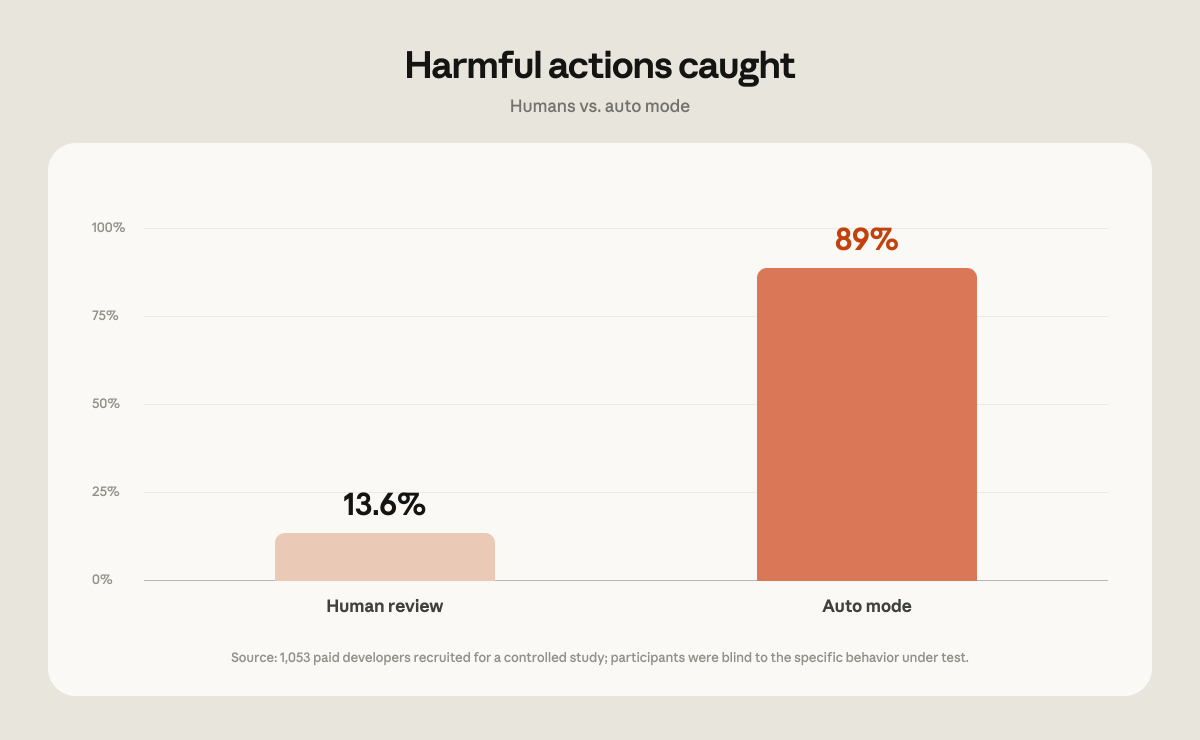
Anthropic has significantly expanded the preview of Claude Code's "auto-mode" feature, which was first announced in late March 2026. This update represents a major shift in how developers interact with Claude Code—instead of requiring approval for every action, Claude can now autonomously execute tasks it deems safe while blocking potentially risky operations.
This follows Anthropic's March 31 release of Claude Code Auto Mode and the /dream command for memory consolidation, continuing their push toward more autonomous developer tools. The company is clearly responding to developer demand for less friction in AI-assisted workflows.
What It Means For Your Daily Workflow
When you run claude code with auto-mode enabled, you'll notice immediate changes:
- Fewer interruptions: File edits, test runs, and dependency installations that Claude's safety classifier deems "safe" will execute without asking for permission
- Selective blocking: Potentially destructive actions (like
rm -rf, major refactors, or production database changes) still require explicit approval - Faster iteration cycles: You can describe a multi-step task and watch Claude execute it while you focus on higher-level thinking
This aligns with the trend we've seen in our March 25 coverage of "How to Build a Multi-Agent Dev System," where developers reported productivity gains from reducing approval loops. Claude Code now moves closer to the autonomous agent paradigm while maintaining safety guardrails.
How To Configure Auto-Mode Today
If you're in the phased preview (check your Claude Code version with claude code --version), here's how to optimize your setup:
1. Enable Auto-Mode in Your CLAUDE.md
Add this to your project's CLAUDE.md:
## Auto-Mode Configuration

- Enable auto-mode for: file edits, test execution, dependency updates, git commits with descriptive messages
- Require approval for: production deployments, database schema changes, deleting files, modifying authentication logic
- Safety threshold: medium (default)
2. Set Context-Specific Rules
Create a .claude/auto-rules.json file:
{
  "always_auto": [
    "run_tests",
    "format_code",
    "install_dev_dependencies",
    "create_new_files"
  ],
  "never_auto": [
    "deploy_to_production",
    "modify_env_files",
    "change_user_permissions",
    "delete_git_history"
  ],
  "project_specific": {
    "backend/": {"auto_approve": ["api_endpoint_changes", "database_migrations"]},
    "frontend/": {"auto_approve": ["component_updates", "style_changes"]}
  }
}
3. Use the New CLI Flags
When starting Claude Code, you can now use:
# Enable auto-mode with medium safety
claude code --auto-mode medium

# Enable auto-mode but require approval for specific actions
claude code --auto-mode --require-approval "deploy,delete,production"

# Check what actions would be auto-approved
claude code --dry-run --auto-mode
When Auto-Mode Works Best
Based on early testing, auto-mode excels in these scenarios:
- Refactoring sessions: Claude can rename variables, extract methods, and update imports without constant approval
- Test-driven development: Write a test, let Claude implement the code, run tests, and iterate
- Documentation updates: Updating comments, README files, and API docs based on code changes
- Dependency management: Keeping
package.json,requirements.txt, orCargo.tomlupdated
Be more cautious with:
- Legacy codebases with unclear patterns
- Security-critical sections
- Production configuration files
- Team projects where conventions aren't well-documented
The Safety Classifier Behind the Scenes
Anthropic's safety classifier (trained on millions of coding actions) evaluates each proposed operation on:
- Destructiveness potential: Will this delete or overwrite important data?
- Security impact: Does this touch authentication, authorization, or secrets?
- Architectural significance: Is this changing fundamental patterns?
- Test coverage: Is the affected code well-tested?
The classifier improves with usage—when it blocks something you consider safe, use claude code --feedback "that_was_safe" to help train it.
What's Still Coming
This expansion suggests Anthropic is preparing for wider auto-mode release. Watch for:
- Integration with Claude Agent for multi-agent autonomous workflows
- Custom classifier training for organization-specific rules
- Git-aware safety checks (blocking auto-actions on
mainbranch) - Performance optimizations as the classifier gets faster
Given Claude Code's recent milestone of surpassing 100,000 GitHub stars (noted in our March 25 coverage), Anthropic is clearly prioritizing features that retain their growing developer community while competing with Google's Agentic Sizing Protocol and OpenAI's autonomous coding tools.