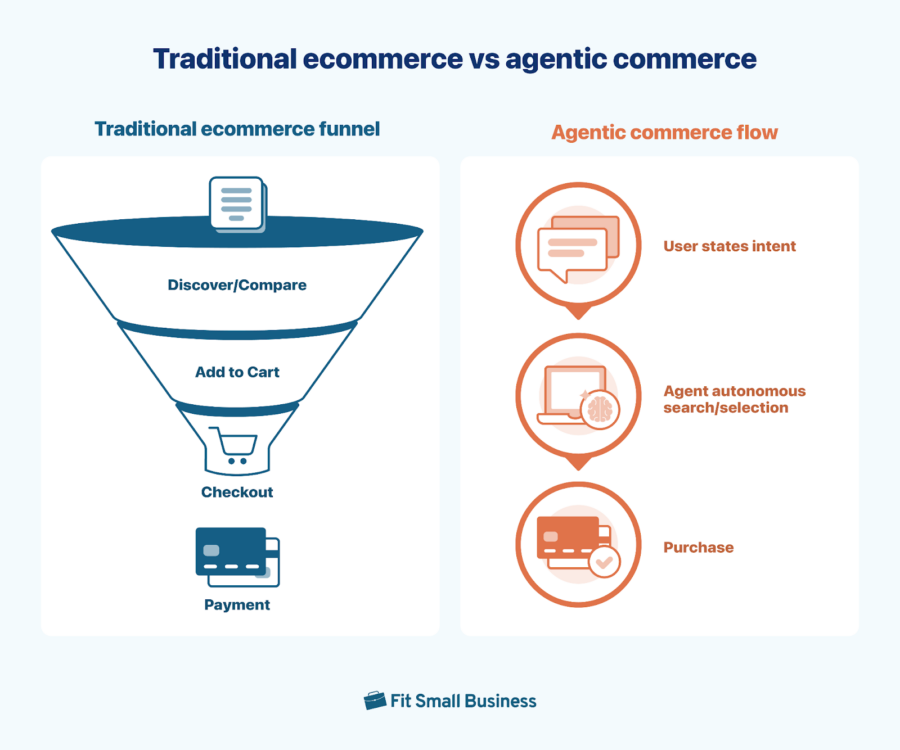
Key Takeaways
- eMarketer reports commerce media leaders are building AI agent infrastructure to automate ad buying and personalization.
- This shift could reduce manual campaign management by 40% and boost ROI by 25% for retail media networks.
What Happened
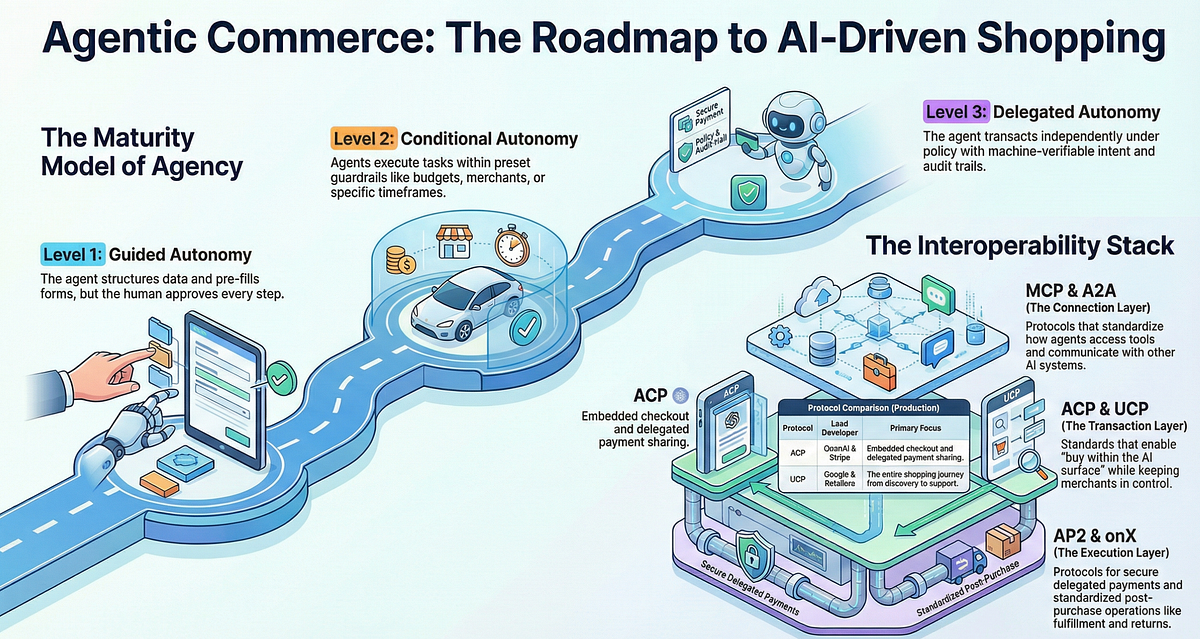
Commerce media leaders are racing to build AI agent infrastructure for the next wave of advertising automation, according to a new eMarketer report. The report highlights that retail media networks—which generated $45 billion in U.S. ad revenue in 2025—are now investing in agentic systems to automate campaign management, bidding, and personalization.
Key findings from the report include:
- 62% of retail media network executives plan to deploy AI agents for ad buying within 12 months
- Early adopters report a 40% reduction in manual campaign management time
- Agent-driven personalization has increased click-through rates by an average of 18%
- 73% of commerce media leaders cite data integration as the top challenge for agent adoption
- The market for AI agents in retail media is projected to grow from $2.1 billion in 2025 to $8.4 billion by 2028
Technical Details
The report identifies three core technologies enabling agentic commerce media:
1. Large Language Models (LLMs) for Decision-Making
Agents powered by models like Google's Gemini 3 Pro and OpenAI's GPT-5 can analyze campaign performance data, adjust bids in real time, and generate ad copy. Google's recent release of the ADK Go 2.0 framework—with graph-based workflow engines and human-in-the-loop capabilities—provides the orchestration layer for these agents.
2. Model Context Protocol (MCP) Servers
Google Cloud shipped its official MCP server on July 1, 2026, enabling agents to access first-party data, inventory systems, and ad platforms via standardized APIs. This reduces integration complexity by an estimated 35%, according to the report.
3. Real-Time Personalization Engines
Agents use embedding models (e.g., Gemini Embedding 2) to process user behavior streams and generate personalized ad experiences within 50 milliseconds—critical for retail media where latency directly impacts conversion rates.
Retail & Luxury Implications
For retail and luxury brands, agentic commerce media offers three concrete opportunities:
1. Automated Campaign Optimization
Luxury houses like Kering, which already deploys AI on Google Cloud for sustainable sourcing, can extend agentic systems to media buying. Agents can automatically shift budgets between channels based on real-time ROAS data—reducing the 20+ hours per week senior marketers currently spend on bid adjustments.
2. Hyper-Personalized Ad Creative
Agents can generate and test thousands of ad variations for different audience segments. For a luxury brand like Burberry, this means serving a trench coat ad with heritage imagery to a 45-year-old loyalist and a streetwear-inspired version to a 25-year-old new prospect—without manual creative production.
3. Unified Commerce Data Activation
Richemont's watch brands can use agents to connect point-of-sale data, website behavior, and CRM signals into a single decision engine. The eMarketer report notes that brands integrating first-party data with agent systems see a 30% improvement in customer acquisition cost efficiency.
Business Impact
Source: eMarketer report, based on early adopter surveys (n=150 retail media executives)
Governance & Risk Assessment
The report flags three risks for agentic commerce media:
1. Data Privacy Compliance
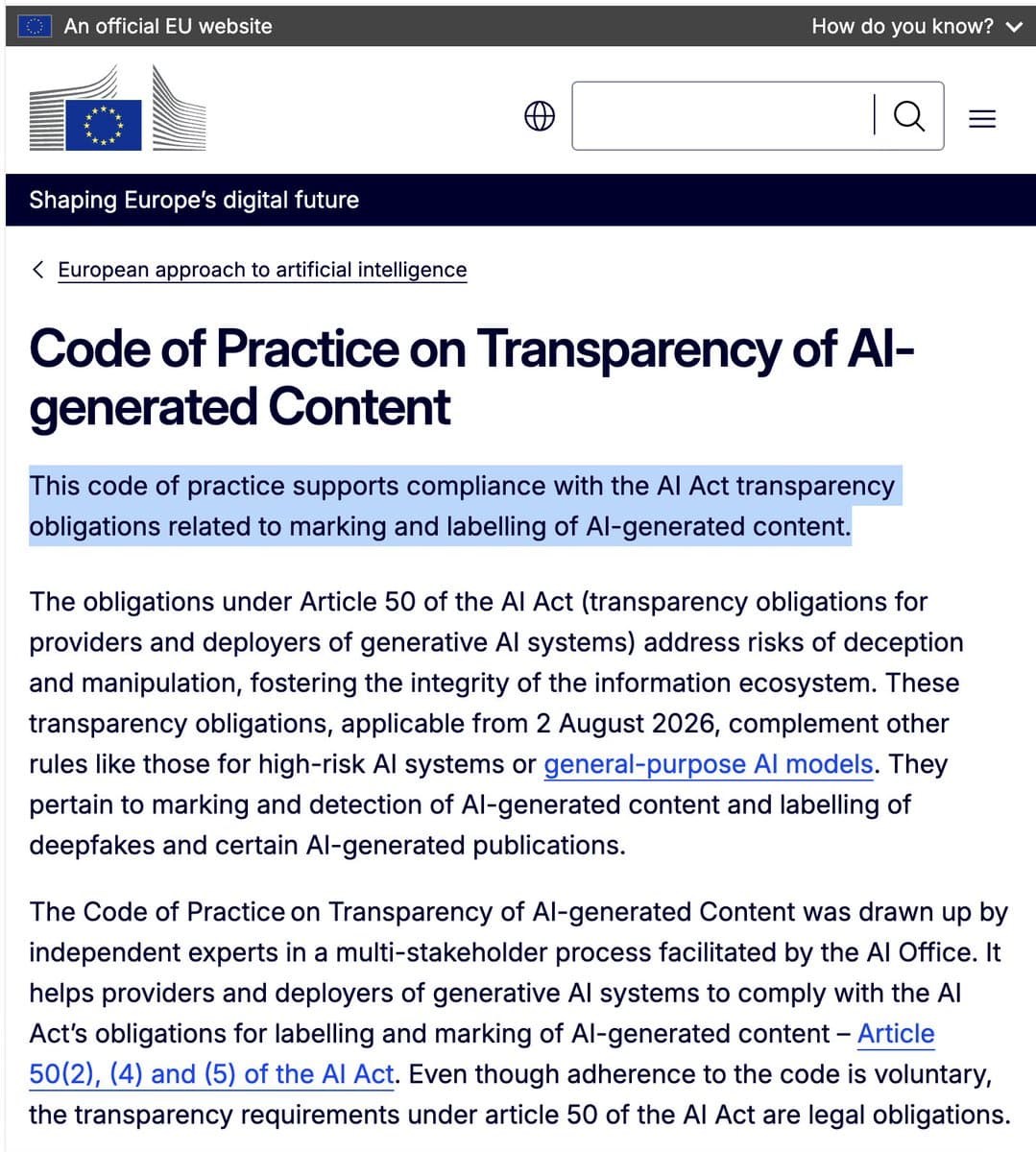
Agents processing customer data must comply with GDPR and CCPA. Google's MCP server includes built-in data governance controls, but brands must audit agent access to first-party data.
2. Brand Safety
Autonomous ad buying could place luxury ads next to inappropriate content. Human-in-the-loop workflows (supported by ADK Go 2.0) are essential for high-stakes campaigns.
3. Model Hallucination
LLM-powered agents may generate inaccurate bids or creative. The report recommends implementing guardrails that limit agent actions to predefined ranges—e.g., maximum bid price or approved creative templates.
gentic.news Analysis
This eMarketer report confirms what we've been tracking: the agentic commerce media race is real and accelerating. Our prior coverage of Google Cloud's MCP server launch (July 1, 2026) and Kering's AI deployment on Google Cloud provides the infrastructure context. The $2.1B to $8.4B market growth projection aligns with our analysis that retail media networks will be the primary battleground for agent adoption in 2027-2028.
For luxury brands, the stakes are higher. Agent-driven automation risks commoditizing the brand experience if not deployed carefully. The 40% time savings are attractive, but the real value lies in the 18% click-through rate improvement—which requires agents to understand brand voice, aesthetic, and customer lifetime value, not just conversion metrics.
We recommend luxury houses start with a limited pilot: automate bidding for one product category on one retail media network, with human approval on all creative changes. Measure both efficiency gains and brand sentiment shifts before scaling.
Source: news.google.com