CoreWeave and Nebius posted Q1 2026 earnings showing the AI infrastructure race now centers on power, networking, and cooling, not GPU supply alone. CoreWeave revenue hit $2.08B (up 112%), while Nebius revenue surged 684% to $399M.
Key facts
- CoreWeave Q1 revenue: $2.08B, up 112% YoY.
- CoreWeave crossed 1 GW active power in Q1.
- CoreWeave 2026 capex guidance raised to $35B.
- Nebius Q1 revenue: $399M, up 684% YoY.
- Nebius raised annual capex guidance to $20B-$25B.
The AI infrastructure race is starting to look less like a scramble for Nvidia GPUs and more like a fight over electricity. Earnings reports this week from CoreWeave and Nebius offered a snapshot of how rapidly the neocloud market is evolving from a niche GPU cloud segment into a capital-intensive infrastructure layer built around power, networking, cooling, and deployment scale.
Both companies posted explosive revenue growth alongside surging infrastructure spending as they expanded AI cloud platforms for hyperscalers, model developers, and enterprise inference workloads.
CoreWeave reported first-quarter revenue of $2.08 billion, up 112% year over year, while revenue backlog jumped to $99.4 billion from $25.9 billion a year earlier. Adjusted EBITDA reached $1.16 billion with a 56% margin, though net loss widened to $740 million from $315 million a year ago. The company crossed 1 GW of active power during the quarter and expanded contracted power capacity by more than 400 MW to over 3.5 GW. Capital expenditures hit $6.8 billion as the company continued building AI infrastructure at industrial scale. CoreWeave raised the low end of its projected 2026 capex range to as much as $35 billion, citing persistent infrastructure component inflation tied to AI demand. CEO Michael Intrator framed the spending surge as part of a long-term infrastructure buildout rather than a short-term market cycle, telling Reuters: “What I’m doing is I’m building a company.” The company also disclosed a new $21 billion Meta commitment tied to long-term AI deployments.
Nebius posted even steeper growth, though from a smaller base. First-quarter revenue climbed 684% year over year to $399 million, while Nebius AI revenue surged 841% to $390 million. Adjusted EBITDA swung to a $129.5 million profit from a $53.7 million loss a year earlier. The company raised annual capex guidance to between $20 billion and $25 billion.
The Unique Take: Power Becomes the New GPU
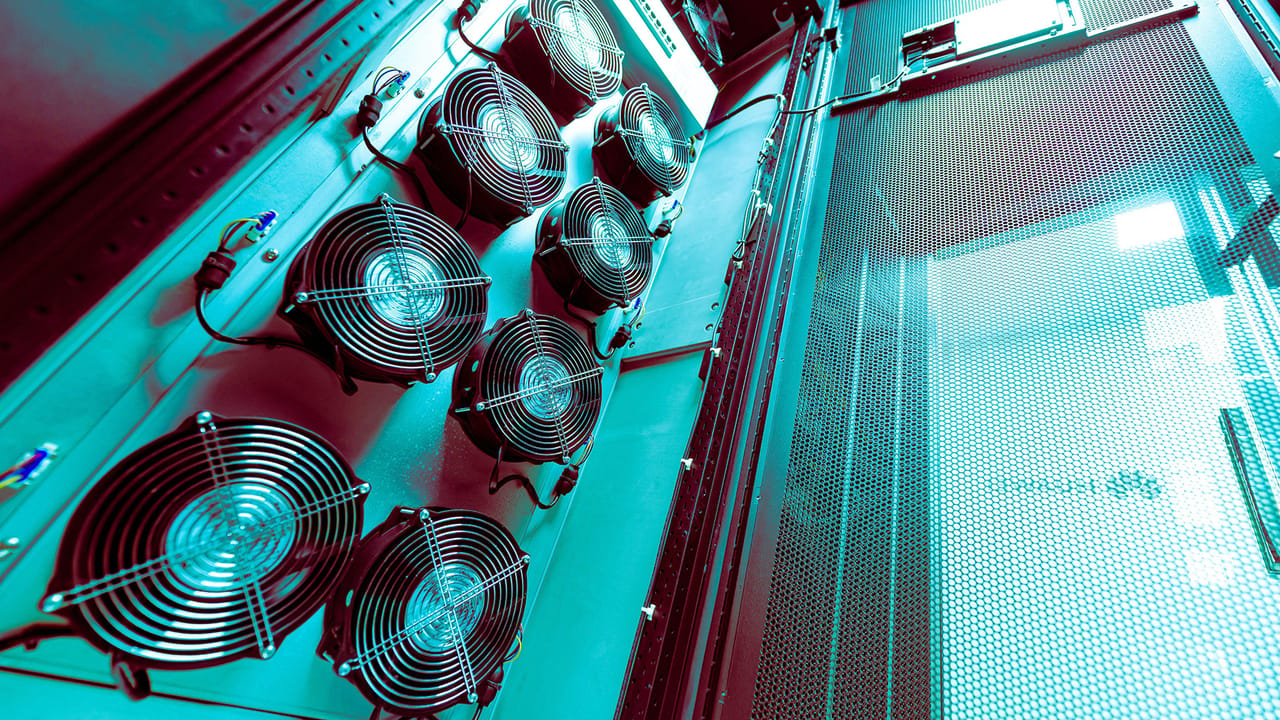
The shift from GPU scarcity to infrastructure execution is the structural story of 2026. CoreWeave and Nebius are no longer competing primarily on access to Nvidia's latest chips — they are competing on who can secure power capacity, build high-speed networking fabrics, deploy advanced cooling, and bring data centers online fastest. The capex numbers tell the story: CoreWeave guiding to $35B in 2026 capex, Nebius between $20B and $25B. These are hyperscaler-level commitments from companies that were GPU brokers two years ago.
The transition reflects how AI economics are changing as enterprises move from experimental training workloads toward persistent inference deployments that require sustained utilization, dense GPU clusters, and industrial-scale infrastructure coordination. That transition is forcing operators to compete less on raw GPU availability and more on execution — securing power capacity, building high-speed networking fabrics, deploying advanced cooling systems, and bringing infrastructure online fast enough to meet hyperscaler and enterprise demand.
What This Means for the Competitive Landscape
Nvidia remains the dominant chip supplier, but the value is shifting to the infrastructure layer. CoreWeave's $21B Meta commitment and Nebius's tripled revenue show that the neoclouds are becoming essential partners for hyperscalers and model developers — not just GPU middlemen. The question is whether their capital intensity will yield sustainable margins or create a race to the bottom on pricing.
[According to Earnings Roundup]
What to watch
Watch for CoreWeave's Q2 2026 earnings to see if active power capacity crosses 1.5 GW and whether the $21B Meta commitment translates into revenue growth. Also monitor Nebius's ability to deploy its $20B+ capex without margin compression.
[Updated 16 May via dck_news]
IDC analyst Dave McCarthy said the AI infrastructure market is bifurcating: hyperscalers dominate general-purpose cloud, but specialized providers like CoreWeave and Nebius are emerging as major suppliers of high-performance AI compute [per Data Center Knowledge]. He also noted the narrative is shifting from model training to large-scale inference, as enterprises move from pilots to production-grade agentic workflows.