What Happened
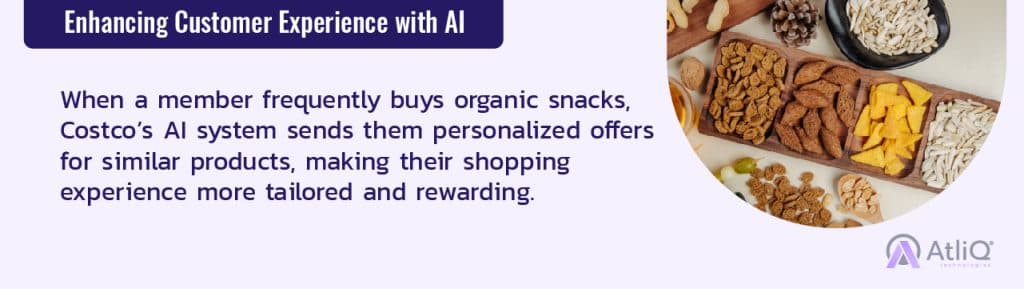
On its Q3 2026 earnings call, Costco CFO Gary Millerchip reported that personalized product recommendation carousels contributed just under $500 million in digital sales, following $470 million in the prior quarter. These carousels drove conversion rates three times higher than Costco’s typical conversion rate.
“Delivering a more personalized experience for our members is a key focus, and we continue to make progress in this area,” Millerchip said.
Traffic to Costco’s website and app was up 37% during the quarter. Multiple product categories saw double-digit digital growth, including pharmacy, home furnishings, and housewares.
Why This Matters for Retail & Luxury
Costco’s results offer concrete evidence that personalization technology—specifically recommendation systems—can directly drive measurable revenue gains in retail. For luxury and retail leaders, the key takeaway is that even a warehouse club known for low margins and in-store bulk buying can achieve significant digital ROI from personalized recommendations.
- Conversion lift: 3x higher conversion rates from personalized carousels demonstrate that relevance beats generic browsing.
- Revenue scale: Nearly $500 million per quarter is a meaningful contribution to Costco’s $69.2 billion in quarterly net sales.
- Digital-first members: Growing share of online signups initially showed lower renewal rates, but targeted digital retention strategies more than offset the negative impact.
Business Impact
Costco’s membership rose 4.1% year over year to 82.9 million total paid members. Membership fee income rose 10.7% year over year to $1.4 billion, driven by membership growth, fee increases, and upgrades to higher-tier Executive Memberships.

Comparable sales grew 9.8% year over year, and net sales rose 11.6% to $69.2 billion.
Millerchip noted that AI “has the potential to be a significant sales opportunity for Costco.” While AI search volume remains low, it saw triple-digit growth in Q3 and has the highest conversion rate of all website traffic.
Implementation Approach
Costco’s personalization effort relies on:
- Recommendation carousels: Product suggestions tailored to individual member browsing and purchase history.
- Targeted digital communications: Retention strategies for digitally acquired members, including personalized emails and in-app messaging.
- Digital wallet improvements: Quick access to membership cards and streamlined checkout.

Costco President and CEO Ron Vachris emphasized “making meaningful strides to deliver a more seamless and convenient experience for our members across the warehouse and online.”
Governance & Risk Assessment
- Privacy: Costco’s membership model provides a natural first-party data advantage, reducing reliance on third-party cookies. Personalized recommendations are based on transaction and browsing data from logged-in members.
- Bias: Recommendation systems can amplify popularity bias, but Costco’s broad product categories (including pharmacy and home furnishings) suggest diverse item coverage.
- Maturity: The personalization system is production-ready and has delivered consistent results over two quarters. AI search is still nascent but shows promise.
Retail & Luxury Implications
For luxury houses and premium retailers, Costco’s results validate that personalization drives measurable revenue—even in a non-luxury context. The key differences:
- Data richness: Luxury brands with smaller, higher-value customer bases can achieve even stronger personalization ROI per member.
- Channel integration: Costco’s hybrid online/offline model mirrors luxury’s omnichannel reality. Personalized digital experiences can drive in-store traffic and vice versa.
- AI search: Triple-digit growth in AI search traffic with highest conversion rates suggests that natural language product discovery is a growing opportunity for luxury e-commerce.
gentic.news Analysis
Costco’s personalization results are a rare example of a retailer publicly quantifying the revenue impact of AI-driven recommendations. The $500 million quarterly figure is notable not just for its scale, but because it comes from a company whose core business is in-store bulk sales—not digital commerce.
For AI practitioners in retail, the lesson is that recommendation systems remain one of the highest-ROI applications of machine learning. Costco’s approach—targeted carousels, personalized retention communications, and digital wallet improvements—is replicable with modern ML infrastructure. The 3x conversion lift is consistent with industry benchmarks for well-tuned recommenders.
The AI search finding is particularly interesting. Triple-digit growth with highest conversion rates suggests that members are actively seeking product discovery through natural language queries. This aligns with broader trends in conversational commerce and indicates that luxury retailers should invest in semantic search and LLM-powered product finders.
However, Costco’s lower renewal rates for digital-first members highlight a risk: digital acquisition can erode loyalty if not supported by personalized retention strategies. Luxury brands with high customer acquisition costs should take note—personalization must extend beyond the first purchase to sustain lifetime value.
Overall, Costco’s results provide a strong signal that personalization technology is mature enough to deliver measurable business impact. The challenge for luxury retailers is adapting these techniques to their unique product catalogs, smaller customer bases, and higher service expectations.
Source: retaildive.com