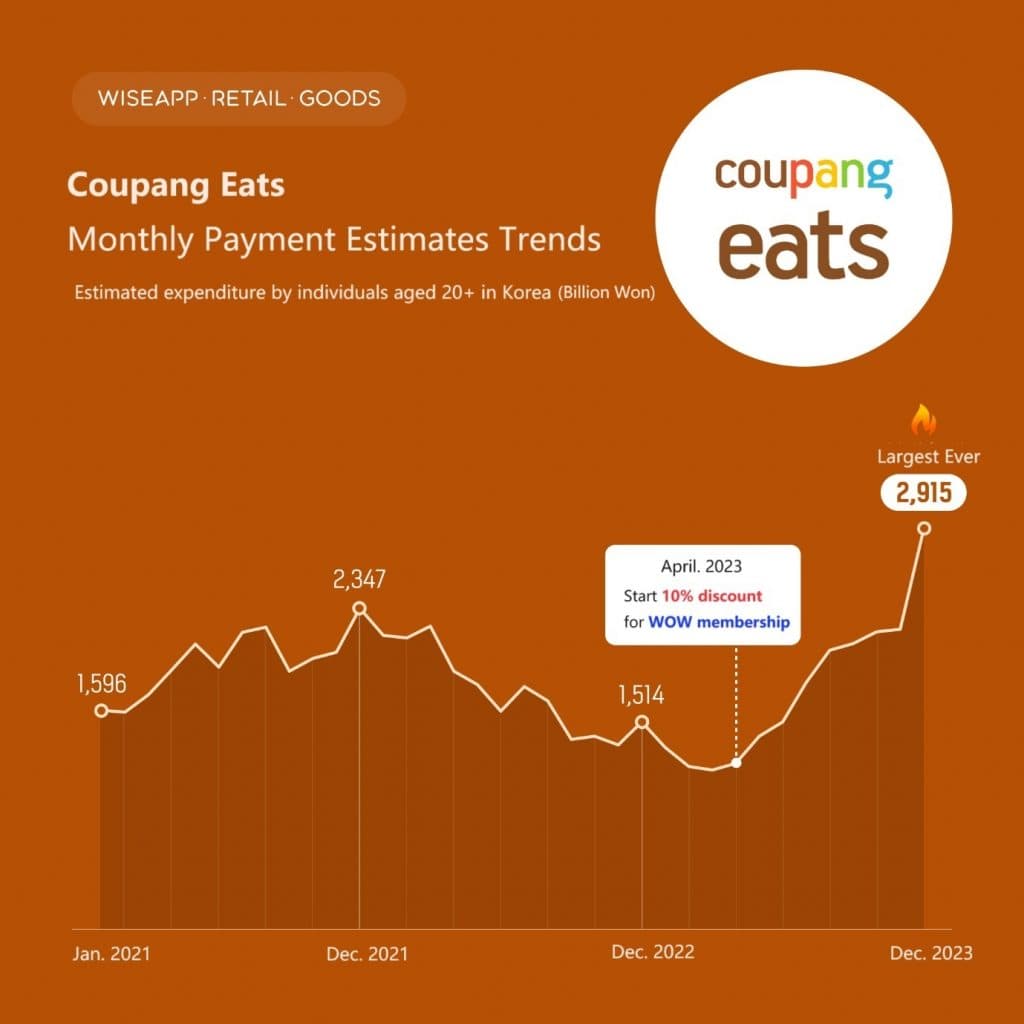
South Korean e-commerce giant Coupang continues to innovate at the intersection of commerce and AI. Its food delivery service, Coupang Eats, has recently been granted a patent for a "budget-based food recommendation system," signaling a move towards more nuanced and user-centric personalization.
The Innovation — What the Patent Covers
While the full patent document details are not provided in the source, the core concept is clear: the system is designed to recommend food options to users based on a specific budget they set. This goes beyond the standard e-commerce filter of "sort by price: low to high."
A typical implementation would involve a user interface element—likely a slider or input field—where a customer can specify their maximum desired spend for a meal. The recommendation engine then uses this budget as a primary or heavily weighted signal in its ranking algorithm. Instead of just showing all items under a certain price, it would intelligently prioritize meals that offer perceived value, relevance to user preferences, and delivery feasibility within that financial constraint. The goal is to reduce decision fatigue and increase the likelihood of a completed order by presenting a curated list of viable options that respect the user's spending intent from the outset.
Why This Matters for Retail & Luxury
Although this patent originates in the fast-moving consumer goods (FMCG) and food delivery space, its underlying principle has direct and profound implications for luxury and retail.
1. Bridging the Aspirational Gap: Luxury shopping is often aspirational. A customer might browse with a flexible budget, exploring entry-point items and dream pieces. A budget-aware recommendation system, applied sensitively, could help guide this exploration. For instance, a client configuring a custom handbag could receive suggestions for leather types or hardware that keep the total within a soft budget, enhancing the configurator experience without cheapening the brand.
2. Personalization Beyond Taste: Current retail AI heavily focuses on predicting style preference ("customers who liked this also liked..."). Integrating a budget or price sensitivity dimension creates a more holistic user profile. For a multi-brand retailer or a luxury house with wide product ranges (e.g., from fine jewelry to scarves), this allows for dynamic storefronts that can adapt to a user's current shopping mission—whether it's seeking a gift under €500 or browsing new-season collections without filter.
3. Strategic Inventory Movement: For retailers managing outlet stock, seasonal sales, or pre-collections, a budget-conscious recommender can be a powerful tool to discreetly steer interested customers towards targeted inventory. It aligns customer value-seeking behavior with business objectives for inventory turnover.
Business Impact & Competitive Context
Coupang's move is part of a broader industry trend where super-apps and integrated platforms are using granular AI to lock in user loyalty. For Coupang, this patent fortifies its "Rocket Delivery" ecosystem, making its food service stickier by solving a common pain point.
In luxury, the direct business impact is on conversion rate and average order value (AOV). By reducing friction and irrelevant suggestions, a well-tuned budget-aware system can increase the probability of purchase. More subtly, it can protect AOV by preventing high-intent customers from being overwhelmed by lower-priced alternatives when they are willing to spend more, provided the budget parameter is an optional guide, not a rigid filter.
This aligns with competitive moves we've seen across retail. Amazon has long used price as a key ranking factor in its "featured from our brands" and deal integrations. Fashion platforms like Farfetch and NET-A-PORTER employ sophisticated personalization that considers customer tier and past spend, which is a proxy for budget. Coupang's patent formalizes a method where the explicit, session-specific budget is the input, making it a more dynamic and transparent tool.
Implementation Approach for Luxury Brands
Adopting this concept in a luxury context requires careful design to maintain brand equity.
Technical Requirements: The backend requires a recommendation engine (often based on collaborative filtering, content-based filtering, or hybrid models) that can incorporate a continuous variable like user_specified_budget as a feature. This feature must be weighted against others like predicted style affinity, item popularity, and stock levels. The ranking model would need to be trained on historical data where session intent (including approximate budget) can be inferred.
UX & Brand Sensitivity: The front-end implementation is critical. A blunt "set your budget" slider may feel transactional for luxury. More elegant implementations could include:
- Gift-Finding Tools: "I'm looking for a gift for [occasion] around [price range]."
- Collection Explorers: "Explore the Winter Collection" with a subtle "Refine by Price" option in the sidebar.
- Personal Shopper Chatbots: An AI concierge that asks, "Do you have a price range in mind?" during a conversational search.
The system must be optional and feel like a helpful concierge service, not a discount bin filter.
Governance & Risk Assessment
Privacy: Explicit budget data is a sensitive new data point. Brands must be transparent about its use, store it securely, and likely treat it as session-temporal data unless explicitly saved by the user for future convenience.
Bias & Fairness: The algorithm must be designed to avoid unfairly downgrading high-value items or creating a "budget ghetto" for certain customer segments. Recommendations should still expose users to aspirational items occasionally, perhaps under a "Discover" tab.
Maturity Level: The core technology is mature. The innovation is in its application and UX design. For luxury brands, this is a medium-maturity, high-potential application. Pilots could begin on outlet sites or during sale periods where price sensitivity is expected and accepted, before rolling out to full-price main sites.
gentic.news Analysis
Coupang's patent filing is a tactical move in the high-stakes platform wars, where granular AI features are the new battleground for user retention. For our audience—AI leaders at luxury houses—this serves as a concrete case study in applying utilitarian e-commerce AI principles to the luxury domain with appropriate refinement.
The trend is clear: the next wave of retail personalization is moving from what you like to what you like within your current context—and context includes time, occasion, and financial intent. This follows the broader industry shift towards session-based intent modeling, which we covered in our analysis of Shopify's AI search updates. Coupang is applying this to price; a luxury brand must apply it to taste, occasion, and client tier.
Furthermore, this activity from Coupang, a company whose stock has been trending 📈 on strong ecosystem growth, highlights that investors reward platforms that solve discrete customer problems with AI. For luxury brands, the parallel is not in patenting a budget filter, but in demonstrating to leadership and investors how AI can directly enhance clienteling and personalization in a brand-appropriate way, leading to tangible gains in client satisfaction and lifetime value. The strategic insight is to identify the equivalent of the "budget pain point" in the luxury customer journey—perhaps it's gift-giving, size inclusivity, or sustainable sourcing—and engineer a subtle, AI-powered solution.