Key Takeaways
- DeMellier founder Mireia Llusia-Lindh explains how focusing on craftsmanship, alternative materials, and controlled growth is driving demand, with Lyst searches up 97% YoY.
- The strategy echoes broader shifts at Kering and Bottega Veneta as the luxury sector loses 70 million customers due to value concerns.
What Happened
In this week’s Luxury Briefing from Glossy, founder Mireia Llusia-Lindh shared how 9-year-old London-based bag brand DeMellier is growing by doing less — and doing it better. While many luxury players chase volume, DeMellier is doubling down on craftsmanship, alternative materials, and controlled growth.
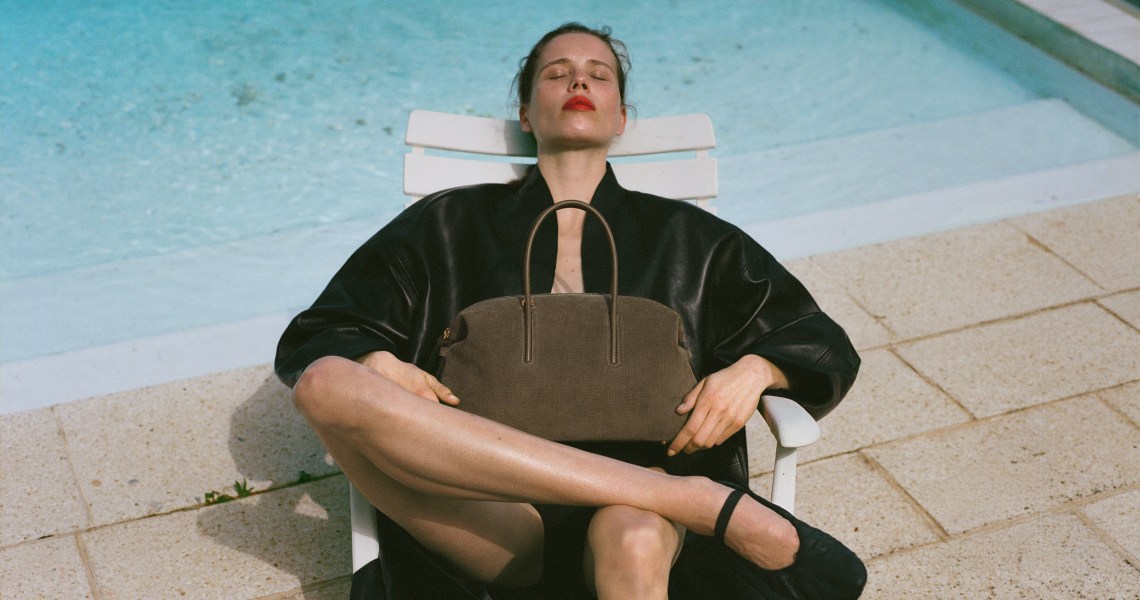
The results are tangible: according to Lyst, searches for DeMellier are up 97% year over year, with the New York Midi Leather tote emerging as its top-performing style.
“Our work has always been grounded in three pillars: ethically and sustainably made products, empowering women, and giving back,” said Llusia-Lindh. “Those principles were there from the beginning. It wasn’t about whether the market responded; it was about building the brand in the right way.”
Why This Matters for Retail & Luxury
DeMellier’s approach is especially relevant against the backdrop of a luxury market in recalibration. According to a 2025 Bain & Company report, the industry lost roughly 70 million customers over the prior two years as shoppers reassessed the relationship between price and product. Bain partner Federica Levato noted consumers are increasingly frustrated because “they don’t see anymore the equation between the creativity that these brands offer, the value that [they deliver].”
DeMellier’s strategy offers a counter-narrative: instead of positioning sustainability as a standalone marketing hook, the brand treats it as proof of quality. Each bag is produced in family-run factories across Italy and Spain, using Leather Working Group-certified tanneries, plastic-free raffia, and traceable cotton linings. A single bag can involve up to 35 artisans and more than 50 components.
“Sustainability for us is also about longevity,” Llusia-Lindh said. “There’s no point creating something responsibly if it doesn’t last. Our goal is to make pieces that people use for years.”
This philosophy echoes a broader shift at the group level. At Kering, under new CEO Luca de Meo, sustainability is increasingly treated as infrastructure rather than messaging. “Sustainability cannot be a standalone topic. It must guide every business decision — in the studio, in the manufacturing, in merchandising, in operations, sourcing, in retail and in how we allocate capital,” de Meo said during the group’s April 2026 Capital Markets Day.
Similarly, Bottega Veneta’s 2025 “Craft is Our Language” campaign signals a return to craft-led storytelling — an approach DeMellier has been practicing since its founding.
Business Impact
While DeMellier is a smaller independent brand, the 97% search growth on Lyst is a leading indicator that resonates with major luxury groups. It suggests that in a market where aspirational shoppers are pulling back, a focus on product integrity and controlled growth can drive real demand.

The Bain data on lost customers underscores the urgency: 70 million consumers have walked away from luxury, many of them from the middle market. Brands that can restore the perception of value — not through price cuts, but through demonstrable quality and durability — may be best positioned to win them back.
Implementation Approach
DeMellier’s model is not easily scalable for large conglomerates, but its principles are transferable:

- Supply chain transparency: Traceable materials and certified tanneries build trust.
- Artisan partnerships: Family-run factories in Italy and Spain provide quality control and storytelling.
- Material innovation: Plastic-free raffia and traceable cotton linings differentiate without compromising aesthetics.
- Longevity as a metric: Durability replaces disposability as a design principle.
For larger brands, this may mean investing in smaller-batch production runs, deepening relationships with existing artisan partners, and measuring success by repeat purchase rates rather than volume.
Governance & Risk Assessment
DeMellier’s approach carries relatively low risk: it is built on verifiable production practices and third-party certifications (Leather Working Group). The main challenge is scale — maintaining quality control across growth will require disciplined supplier management.
For luxury groups, the risk is less about execution and more about brand alignment. A craft-led strategy only works if the organization is willing to trade short-term volume for long-term loyalty.
gentic.news Analysis
DeMellier’s growth is a microcosm of a larger shift we’ve been tracking at gentic.news. The 2025 Bain report on 70 million lost customers aligns with our coverage of aspirational luxury’s decline. We’ve seen similar dynamics at brands like Gucci, where attempts to chase volume through accessible price points have struggled to sustain momentum.
What’s notable about DeMellier is that it offers a working model for the alternative: a brand that has stayed small, focused on product, and is now seeing demand accelerate organically. This is the kind of signal that major groups like Kering and LVMH watch closely — not because they can replicate it directly, but because it validates the thesis that craft and durability are becoming competitive advantages.
For AI practitioners in retail and luxury, the lesson is that technology can amplify craft, but it cannot replace it. The most effective AI applications in this space will be those that help brands trace materials, predict durability, and personalize the storytelling around craftsmanship — not those that try to automate the making.