A concise argument from Columbia University Computer Science Professor Vishal Misra is gaining traction on social media, positing a fundamental limitation of large language models (LLMs) in the realm of scientific innovation. In a post summarized by AI commentator Rohan Paul, Misra states that LLMs are incapable of generating genuinely new scientific ideas because their core operation is confined to the statistical manifold of their training data.
Key Takeaways
- Columbia CS Professor Vishal Misra argues LLMs cannot generate new scientific ideas because they learn structured maps of known data and fail outside those boundaries.
- True discovery requires creating new conceptual maps, a capability current architectures lack.
The Core Argument: Interpolation vs. New Map-Making
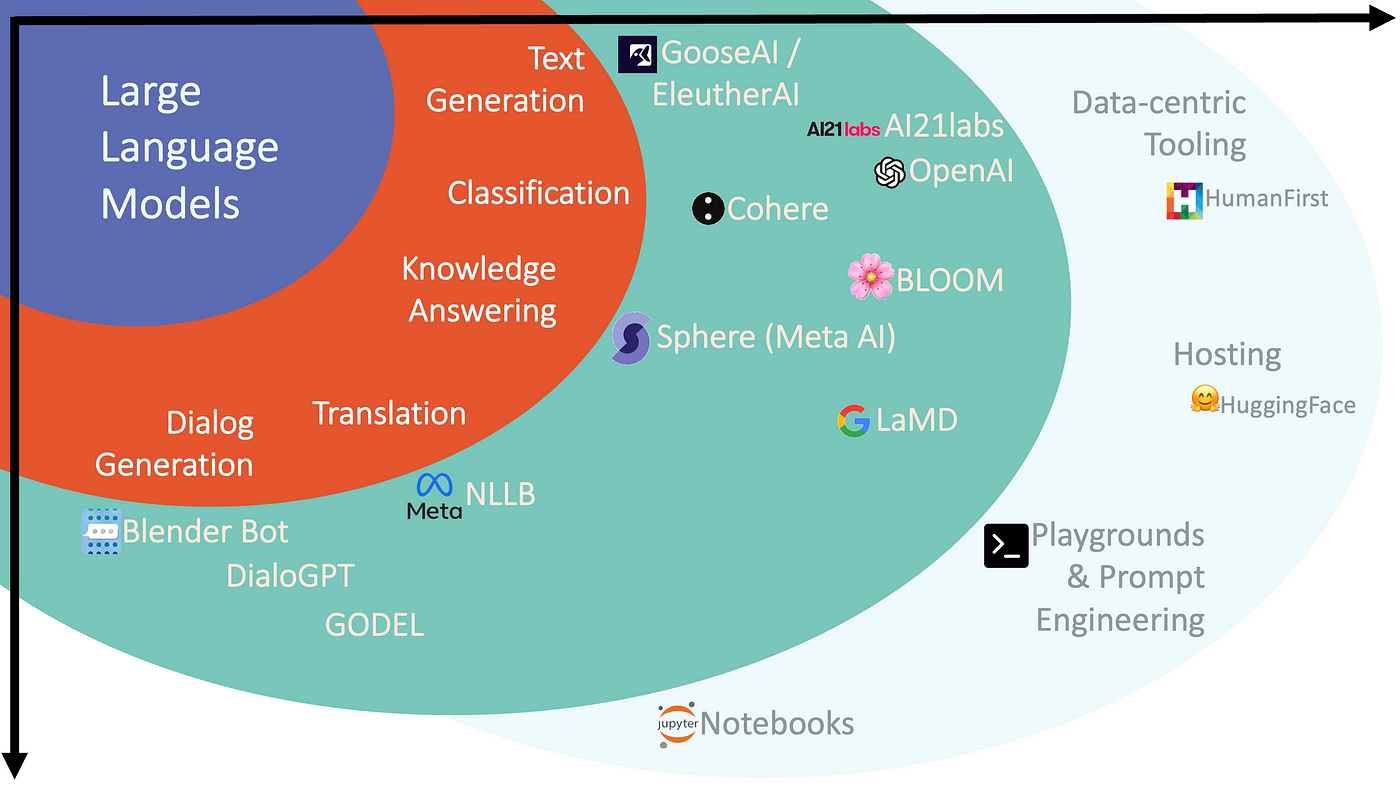
Professor Misra's thesis, as relayed, is that LLMs learn a structured, Bayesian manifold of all known data they are trained on. They perform exceptionally well at tasks that require operating within this pre-existing map—interpolating between known points, recombining concepts, and generating outputs that are plausible given the training distribution. This explains their proficiency in coding, summarizing known literature, or answering questions based on established facts.
However, true scientific discovery, Misra argues, requires stepping outside this known manifold. It involves creating entirely new conceptual maps, positing theories or relationships not implied by the existing data corpus. This act of abductive reasoning or paradigm-shifting conjecture is something current LLM architectures, which are fundamentally next-token predictors operating on historical data, cannot perform. They are tools for exploring and exploiting the known world, not for charting unknown territories.
Context and Counterpoints
This argument taps into a long-running debate in AI research about the difference between intelligence and mere pattern matching. It echoes earlier critiques from figures like Gary Marcus, who have long argued that pure statistical learning on text lacks the causal, model-based reasoning required for robust understanding and innovation.
The timing is notable, as the AI research community is intensely focused on using LLMs for scientific acceleration. Projects like Google's AlphaFold 3 and various AI-for-science initiatives demonstrate powerful applications of AI within structured scientific domains. However, these often combine LLMs with specialized symbolic reasoning, simulation, or reinforcement learning in closed environments—architectures that may circumvent the pure "manifold interpolation" limitation Misra describes.
What This Means in Practice

For AI engineers and researchers, Misra's perspective is a crucial reminder to temper expectations for autonomous AI scientists. It suggests that the most impactful near-term applications of LLMs in science will be as augmentation tools—hypothesis assistants, literature synthesizers, and experimental planners operating under human guidance and within well-defined frameworks—rather than as independent originators of novel theory.
gentic.news Analysis
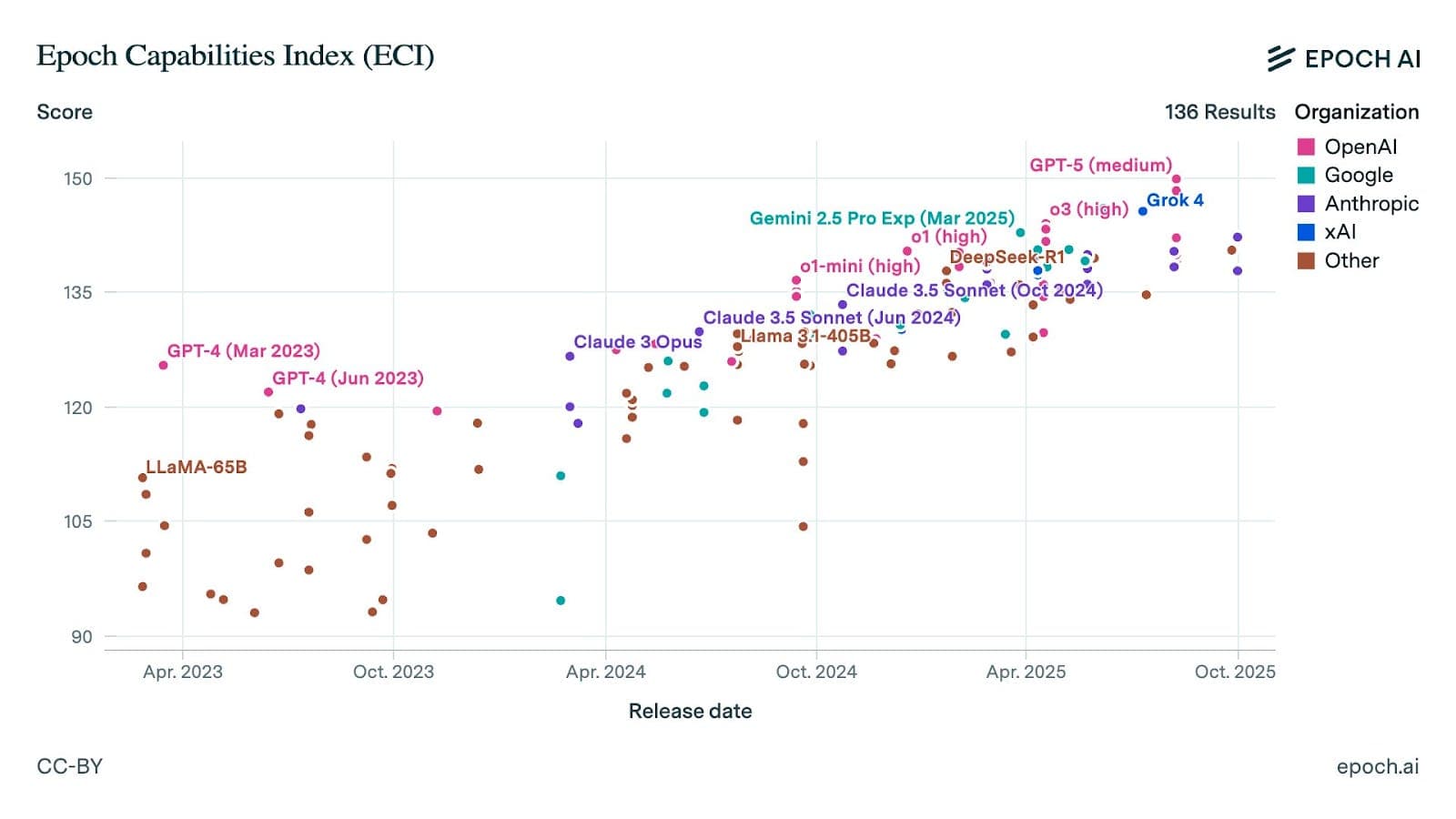
Professor Misra's critique aligns with a growing body of expert skepticism about the ultimate ceiling of autoregressive, token-prediction models. This perspective directly contrasts with the optimistic narratives from some AI labs, like Anthropic's recent claims about Claude 3.5 Sonnet demonstrating "advanced reasoning," or OpenAI's o1 model family, which aims to enhance reasoning through search and process supervision. The core question Misra raises is whether these advances represent genuine steps toward new map-making or are merely more sophisticated interpolation within a vastly expanded data manifold.
This debate is central to understanding the trajectory of AI capabilities. If Misra is correct, achieving true scientific discovery would require a fundamental architectural shift beyond the transformer-based LLM paradigm, perhaps toward hybrid neuro-symbolic systems or AI that actively engages in physical experimentation and causal world-modeling. This connects to our previous coverage on Meta's Chameleon model, which sought to blend different modalities natively, and the ongoing research into "world models" in robotics and reinforcement learning. The limitation isn't necessarily permanent for AI as a field, but it may be a defining constraint for the current LLM era.
Frequently Asked Questions
Can LLMs help with scientific discovery at all?
Yes, but primarily as powerful tools for augmentation, not as autonomous discoverers. They can review vast literatures to surface overlooked connections, generate experimental code, propose potential hypotheses within a constrained space defined by human experts, and manage complex data. They act as force multipliers for human scientists rather than replacements.
What's the difference between a "Bayesian manifold" and creating a "new map"?
A Bayesian manifold, in this context, is a probabilistic representation of all the relationships and concepts learned from training data. The LLM navigates this map. Creating a "new map" refers to conceptualizing a framework or theory that is not a probabilistic combination of existing map points—like proposing quantum mechanics when only classical physics data exists. It requires a leap not justified by the existing statistical structure.
Are there any AI systems that can create "new maps"?
There are no consensus examples of AI achieving paradigm-shifting scientific discovery akin to a human genius. However, systems like DeepMind's AlphaGo (which discovered novel Go strategies) and AlphaFold (which solved protein folding) did create new knowledge within a tightly bounded, rule-based domain. These systems often combine learning with search, simulation, and explicit objective functions, suggesting pathways that differ from pure LLM pretraining.
Does this mean LLMs will never achieve true reasoning?
Not necessarily, but it suggests that scaling current architectures with more data and compute alone may not be sufficient. Breakthroughs may require integrating LLMs with other paradigms—symbolic reasoning engines, reinforcement learning in simulated environments, or mechanisms for iterative, real-world experimentation and theory revision that go beyond text prediction.