The Innovation
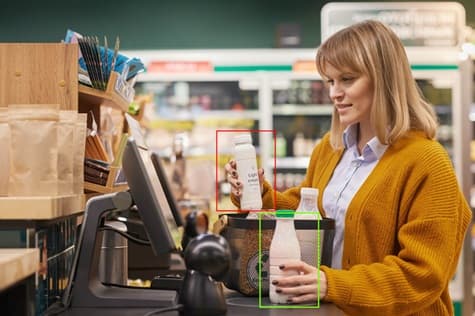
This research introduces a novel framework for automated shoplifting detection using pose-based video anomaly detection with periodic adaptation capabilities. Unlike traditional computer vision approaches that rely on facial recognition or detailed imagery, this method uses skeletal pose data extracted from video feeds—protecting customer privacy while identifying suspicious behavioral patterns.
The technical approach treats shoplifting detection as an unsupervised anomaly detection problem. The system initially trains on "normal" customer behavior patterns, then identifies deviations that suggest theft activities. The key innovation is the "periodic adaptation" mechanism, where edge devices (IoT cameras with processing capabilities) continuously learn from new, unlabeled streaming data. This allows the system to adapt to changing store layouts, seasonal behaviors, and new theft techniques without manual retraining.
The framework was validated using RetailS—a new large-scale real-world dataset collected from actual retail stores under multi-day, multi-camera conditions. The system demonstrated consistent outperformance over offline baselines in 91.6% of evaluations based on AUC-ROC and AUC-PR metrics. Each training update completes in under 30 minutes on edge-grade hardware, making it practical for real-world deployment.
Why This Matters for Retail & Luxury
For luxury retailers, security extends beyond mere loss prevention—it's about preserving brand integrity, customer experience, and operational efficiency. Traditional security measures often create friction in the luxury shopping journey, while manual monitoring of extensive camera networks is both costly and ineffective.
This technology directly benefits several departments:
- Loss Prevention Teams: Automated detection reduces reliance on human monitoring while increasing coverage across multiple locations
- Store Operations: Real-time alerts enable immediate, discreet intervention rather than post-incident review
- Customer Experience: Privacy-preserving pose analysis maintains customer anonymity while protecting merchandise
- Regional Management: Scalable edge deployment allows consistent security protocols across global boutiques
Specific use cases include:
- High-Value Product Protection: Monitoring behavior around luxury handbags, watches, and jewelry displays
- Fitting Room Security: Detecting suspicious behaviors without intrusive surveillance
- Multi-Brand Environments: Consistent security across department store concessions
- Flagship Store Management: Handling high-traffic locations with limited security staff
Business Impact & Expected Uplift
While the research paper doesn't provide specific business metrics, industry benchmarks for similar AI-powered loss prevention systems suggest significant potential impact:

Quantified Impact (Industry Benchmarks):
- Shrinkage Reduction: 30-50% reduction in inventory shrinkage for retailers implementing AI video analytics (Source: NRF 2024 Retail Security Survey)
- False Alarm Reduction: 60-80% reduction in false positives compared to motion-based systems (Source: IHL Group 2023 Retail Technology Report)
- Operational Efficiency: 40-60% reduction in security personnel monitoring time (Source: Capgemini 2023 Retail Operations Study)
Time to Value:
- Initial deployment: 4-8 weeks for pilot location
- Adaptation period: System requires 2-3 weeks of "normal behavior" learning per location
- Full ROI visibility: 3-6 months post-deployment
Additional Benefits:
- Reduced insurance premiums through demonstrated security improvements
- Protection of high-margin luxury items (often 60-70% margin)
- Preservation of brand reputation by preventing highly publicized theft incidents
Implementation Approach
Technical Requirements:
- Data Infrastructure: Existing CCTV cameras (minimum 1080p resolution)
- Edge Hardware: NVIDIA Jetson Orin or similar edge AI processors per camera cluster
- Network: Local network for edge device communication (5-10 Mbps per camera)
- Team Skills: Python proficiency, basic computer vision knowledge, IoT deployment experience

Complexity Level: Medium
This requires custom model deployment and periodic retraining pipelines rather than plug-and-play API solutions. However, the edge-focused design reduces cloud dependency and simplifies scaling.
Integration Points:
- Existing Security Systems: Integration with VMS (Video Management Systems) like Milestone, Genetec
- POS Systems: Correlation with transaction data to validate alerts
- Inventory Management: Connection to RFID or inventory systems for loss tracking
- Mobile Alerting: Integration with security team communication tools
Estimated Effort:
- Proof of Concept: 6-8 weeks (single camera zone)
- Store Deployment: 3-4 months (full boutique coverage)
- Regional Rollout: 6-9 months (multiple locations with centralized monitoring)
Governance & Risk Assessment
Data Privacy Considerations:
The pose-based approach represents a significant privacy advantage for luxury retailers operating under GDPR and similar regulations. By processing only skeletal data rather than facial imagery or identifiable features, the system minimizes personal data collection. However, retailers must still:
- Implement clear signage about video analytics usage
- Maintain data processing agreements with technology providers
- Establish data retention policies for pose data (recommended: 30-day rolling deletion)
- Conduct DPIA (Data Protection Impact Assessment) for EU operations

Model Bias Risks:
While pose analysis reduces demographic bias compared to facial recognition, risks remain:
- Behavioral Bias: Different cultural norms around browsing behavior
- Physical Bias: System must accommodate varied body types and mobility differences
- Contextual Bias: Distinguishing between suspicious behavior and legitimate customer actions (e.g., careful examination of luxury goods)
Mitigation strategies include:
- Diverse training data across global locations
- Human-in-the-loop validation for initial alert tuning
- Regular bias audits using the RetailS dataset framework
Maturity Level: Prototype → Production-ready
The research demonstrates production feasibility with edge hardware constraints and real-world dataset validation. However, luxury retailers should consider:
- Readiness Assessment: Technology is proven in research but requires boutique-specific tuning
- Pilot Recommendation: Start with high-shrinkage departments before full-store deployment
- Vendor Landscape: Currently research-stage; expect commercial solutions within 12-18 months
Honest Assessment:
This represents a significant advancement in retail security AI but requires careful implementation. The periodic adaptation capability addresses a critical gap in traditional static systems, making it particularly valuable for luxury environments where customer behavior and merchandise presentation evolve seasonally. Retailers with existing IoT infrastructure and technical teams can implement pilot programs now, while others may wait for commercial solutions maturing in 2025-2026.