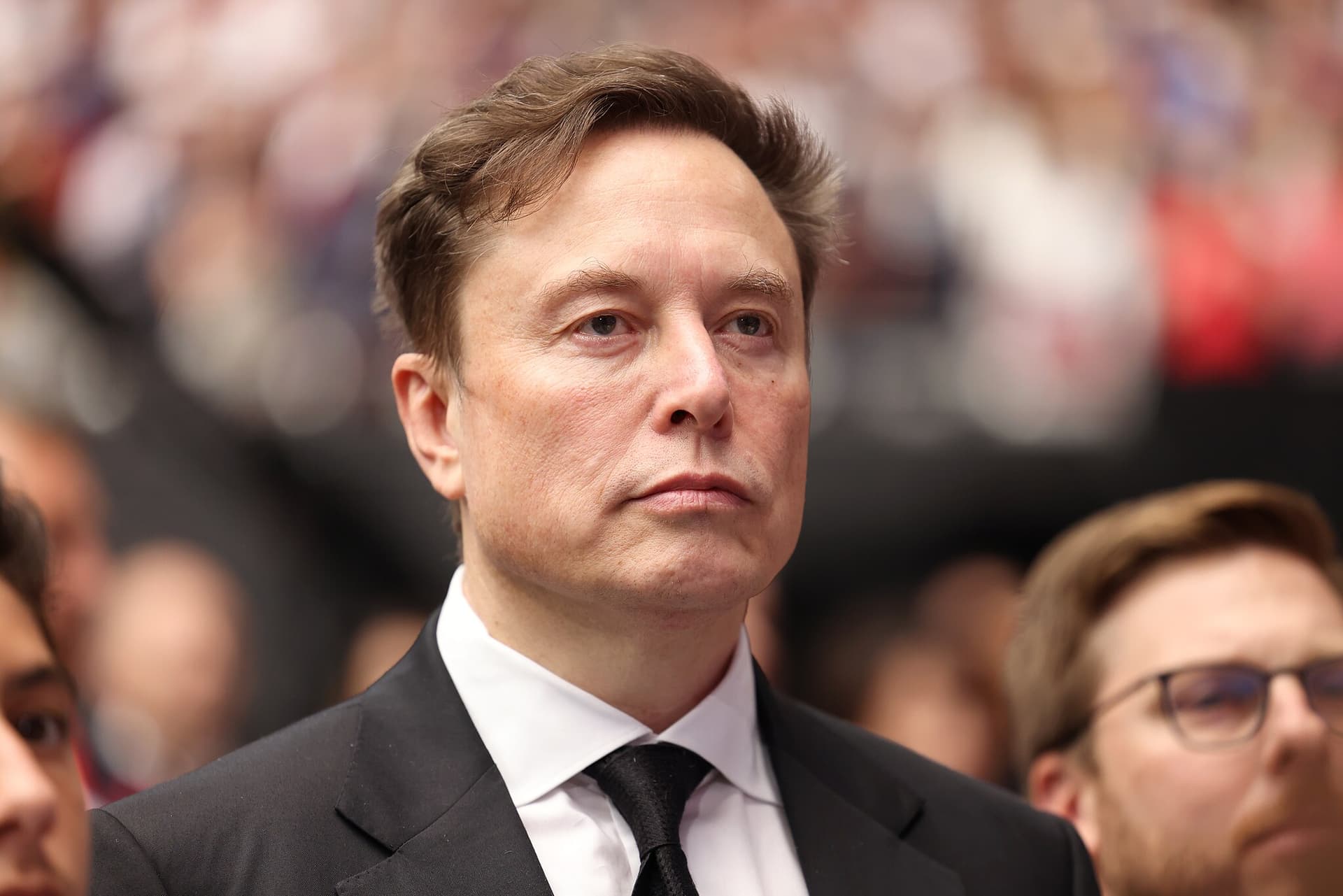
In a recent statement, Elon Musk made a definitive prediction about the future allocation of artificial intelligence resources. According to a post shared by AI researcher Rohan Paul, Musk stated: "The vast majority of AI compute is going to go to video consumption and generation. Real-time video consumption and generation."
This brief but pointed comment underscores a significant anticipated shift in the computational demands of AI systems, moving beyond the current focus on large language models (LLMs) and text-based tasks.
What Happened
The source is a retweet of a statement attributed to Elon Musk, shared by Rohan Paul, a researcher known for tracking AI developments. The core claim is that the primary consumer of AI computing power—the hardware and energy used to train and run models—will soon be applications dealing with video, specifically in real time.
This implies a future where generating, understanding, compressing, enhancing, or interacting with video streams requires more raw computational effort than all other AI applications combined, including today's dominant text and image models.
Context
The prediction aligns with observable industry trends. The development of video generation models has accelerated dramatically. In 2024, OpenAI unveiled Sora, a model capable of generating minute-long, high-fidelity video clips from text prompts. Competitors like Runway, Pika Labs, and Google's Lumiere have pushed the field forward. However, these are largely non-real-time, rendering-style generators.
Musk's emphasis on "real-time" points to a different, more demanding frontier: live video applications. This includes potential use cases like:
- Real-time video synthesis for communication (e.g., advanced telepresence, avatars).
- Live content generation and augmentation for entertainment or social media.
- AI-powered real-time analysis and annotation for autonomous vehicles (a core interest of Musk's Tesla and xAI).
- Ultra-low-latency video compression and streaming.
Processing video in real-time is computationally orders of magnitude more intensive than processing text. A single second of high-definition video contains more raw data than thousands of pages of text, requiring massive parallel processing capabilities.
The Compute Bottleneck
AI compute—primarily in the form of GPUs and specialized AI accelerators—is a scarce and strategically vital resource. The global race for NVIDIA H100, B200, and equivalent chips highlights this. Musk's prediction suggests that the already intense competition for these chips will be further exacerbated by the rise of video AI. Companies building video-first AI infrastructure, or those like Tesla relying on real-time video analysis for autonomy, would need to secure a dominant share of this finite supply.
His companies are directly involved in this landscape. xAI is developing large models (like Grok) that may evolve to handle multimodal inputs, including video. Tesla's Full Self-Driving system is fundamentally a real-time video understanding and prediction engine. Starlink could be part of the infrastructure for delivering processed video data. This statement is not just an observation but likely reflects the internal roadmap and resource planning across his ventures.
gentic.news Analysis
Musk's prediction is a direct extrapolation of current technological vectors and aligns with the strategic positioning of his own companies. It follows a pattern we've tracked closely: the sequential commoditization of AI modalities. First, image generation (DALL-E 2, Midjourney) became widely accessible. Then, long-context text models (Claude 3, GPT-4 Turbo) became the battleground. The industry is now demonstrably in the video generation phase, with Sora setting a high bar for quality. The logical next step, as Musk notes, is making these capabilities real-time and interactive, which represents a far greater computational challenge.
This aligns with our previous coverage on the AI Chip Crunch of 2025, where we detailed how hyperscalers and AI labs were locking down supply chains for next-generation hardware. If Musk is correct, this crunch will intensify, favoring vertically integrated companies that control their own silicon (like Google with TPUs, or potentially Tesla with Dojo) or have massive capital to secure supply (like Meta, Microsoft, and Amazon).
Furthermore, it connects to the ongoing debate about AI's energy consumption. Training and inferencing for real-time video models at scale would demand exponentially more power than today's LLMs, potentially straining energy grids and impacting sustainability goals—a topic we explored in "The Carbon Cost of a ChatGPT Query." Musk's statement implicitly raises the stakes for energy innovation, another sector where he has significant interests (SolarCity, Tesla Energy).
For AI practitioners, the implication is clear: expertise in efficient video representation learning, compression algorithms, and low-latency inference optimization will become increasingly critical. The research focus may shift from simply scaling parameter counts (as with text models) to designing novel architectures specifically for temporal coherence and real-time processing of high-dimensional video data.
Frequently Asked Questions
What did Elon Musk actually say about AI compute?
Elon Musk stated that "the vast majority of AI compute is going to go to video consumption and generation," specifically highlighting "real-time video consumption and generation." This means he believes most AI processing power will soon be used for tasks involving live video, surpassing the compute used for text, images, or other AI applications.
Why would video AI need so much more compute than text AI?
Video is inherently more data-dense. A one-minute HD video contains millions of pixels across hundreds of frames, each with color and positional data. An AI must understand not just static content but motion, physics, and temporal causality. Processing this in real-time (at 30+ frames per second) requires continuous, massive parallel computation, far exceeding the needs of processing a string of text tokens.
Which companies are working on real-time video AI?
Major players include OpenAI (Sora), Google (Lumiere, Veo), Runway, and Stability AI. For real-time applications, Tesla (autonomous driving vision) and NVIDIA (Omniverse, AI avatars) are key. Meta is investing heavily in AI for real-time metaverse interactions. Musk's own xAI is likely developing multimodal capabilities that include video.
How does this relate to the global shortage of AI chips?
Musk's prediction suggests the shortage of high-performance GPUs and AI accelerators will worsen. If real-time video becomes the primary workload, demand for the most powerful chips (like NVIDIA's Blackwell series) will skyrocket, intensifying competition between tech giants, AI labs, and governments for limited manufacturing output.