What Happened
A research team has introduced EpisTwin, a novel neuro-symbolic architecture designed to overcome a fundamental challenge in Personal Artificial Intelligence: the fragmentation of user data across isolated silos. Published on arXiv on March 6, 2026, the paper argues that while Retrieval-Augmented Generation (RAG) offers a partial solution, its reliance on unstructured vector similarity fails to capture the latent semantic topology and temporal dependencies essential for holistic user understanding.
EpisTwin proposes grounding generative reasoning in a verifiable, user-centric Personal Knowledge Graph (PKG). This represents a shift from treating personal data as a collection of documents or embeddings to structuring it as an interconnected semantic graph of entities, relationships, and events.
Technical Details
The EpisTwin framework operates through a multi-stage pipeline:

Knowledge Lifting: The system uses Multimodal Language Models (MLMs) to process heterogeneous, cross-application user data (e.g., emails, calendar entries, chat logs, images). The MLMs "lift" this unstructured or semi-structured data into semantic triples (subject-predicate-object). For example, a photo of a user at a store might be parsed into triples like
(User123) -> (visited) -> (StoreXYZ)and(StoreXYZ) -> (is_a) -> (LuxuryRetailer).Graph Construction & Storage: These triples are assembled into a dynamic Personal Knowledge Graph, which explicitly models relationships and temporal sequences.
Agentic Inference: At query time, an "agentic coordinator" performs complex reasoning over the graph. It employs:
- Graph Retrieval-Augmented Generation (Graph RAG): Instead of retrieving text chunks via vector similarity, the system traverses the knowledge graph to retrieve relevant subgraphs of connected facts and relationships.
- Online Deep Visual Refinement: To maintain context, the system can dynamically "re-ground" symbolic entities from the graph back into their raw visual source data (e.g., the original product image), ensuring reasoning is tied to concrete evidence.
Evaluation: The authors also introduce PersonalQA-71-100, a synthetic benchmark designed to simulate a realistic user's digital footprint with multimodal data. EpisTwin's performance was evaluated using a suite of state-of-the-art judge models (likely LLMs acting as evaluators), where it demonstrated "robust results."
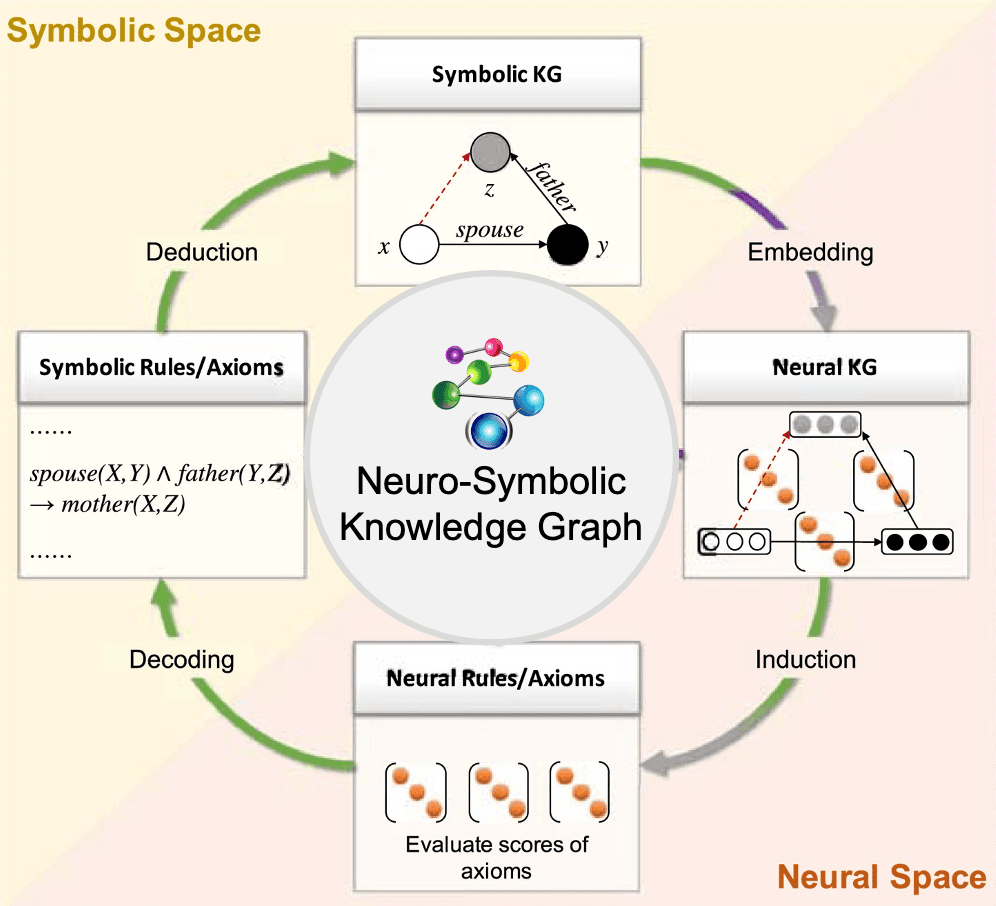
The core innovation is the neuro-symbolic integration: using neural models (MLMs) for perception and lifting, and symbolic structures (the knowledge graph) for explicit, verifiable, and logical reasoning.
Retail & Luxury Implications
The potential applications of a robust Personal AI, grounded in a comprehensive user knowledge graph, are profound for luxury and retail, though they reside firmly in the forward-looking R&D horizon.

Potential Future-State Applications:
Ultra-Personalized Concierge & CRM: A client advisor's AI assistant could be powered by a client's PKG. Instead of asking, "What did Mrs. X buy last year?" the system could answer complex, relational queries like: "Based on Mrs. X's attendance at the Fall runway show, her positive sentiment in emails about emerald green, and the fact she purchased a necklace for her daughter's graduation in May, what are three high-touch engagement strategies for the upcoming holiday season that align with her gifting patterns and aesthetic evolution?" The reasoning is traceable through the graph.
Lifetime Client Value Modeling: A PKG could unify data from in-store purchases, online browsing, customer service interactions, and social media mentions into a coherent narrative of a client's journey. This moves beyond RFM (Recency, Frequency, Monetary) segmentation to understanding motivations, life stages, and aesthetic preferences as a connected story, enabling predictive modeling of future needs.
Cross-Silo Product Discovery: A user's fragmented interactions—saving an image from a magazine, discussing a style with a friend in messages, and briefly viewing a product page—could be integrated by the PKG. An AI stylist could then infer the latent interest and proactively curate a selection, explaining the connection: "You saved imagery featuring structured shoulders, and last week you discussed 'evening separates' with Anna. This new blazer from our tailoring collection aligns with that emerging preference."
Trust and Verifiability: For high-stakes client interactions in luxury, the "black box" nature of pure LLM responses is a risk. A PKG-backed system can provide citations and evidence trails (e.g., "This recommendation is based on your purchase history from Boutique Paris in 2023 and your expressed interest in artisan techniques during your last visit"), building trust and enabling human validation.
The Critical Gap: The research is a proof-of-concept framework. The monumental challenges for real-world deployment in retail include:
- Data Integration: Legally and technically aggregating cross-application user data at the required scale.
- Privacy & Sovereignty: The very concept of a Personal Knowledge Graph raises severe privacy questions. The most likely viable model is a user-owned and agent-mediated PKG, where the user grants temporary, query-specific access to brands, not the other way around.
- Lifting Accuracy: The reliability of MLMs in consistently and accurately extracting triples from diverse, nuanced luxury communications (handwritten notes, figurative language in reviews) is unproven.
- Computational Overhead: Maintaining and performing real-time reasoning on a dynamic, multimodal knowledge graph is significantly more complex than standard RAG.