In a concise social media post, Wharton professor and AI adoption researcher Ethan Mollick has highlighted a critical problem for economists, policymakers, and business leaders: our collective understanding of how AI will impact work is based on outdated data.
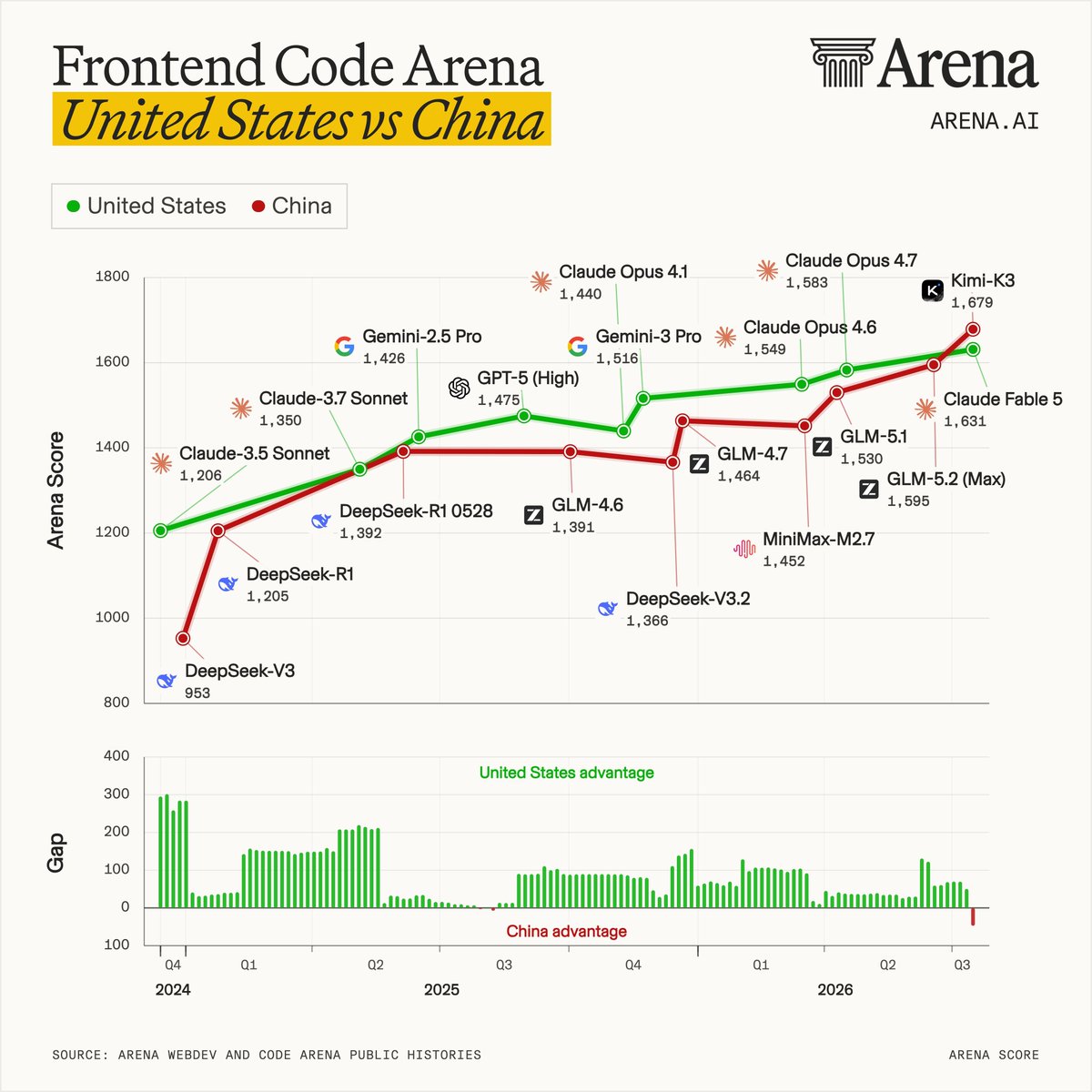
Mollick's core argument is that a "genuine discontinuity in AI ability" occurred in 2026 with "the rise of practical agentic systems." This shift was so significant that it created a break from the previous era of AI capabilities, which were largely defined by conversational chatbots like ChatGPT, Claude, and Gemini.
What Happened
Mollick's observation is straightforward but carries substantial implications. Prior to 2026, researchers were beginning to build a data-driven picture of how AI—primarily in the form of chatbots and copilots—affected productivity, job tasks, and employment patterns. These studies, including notable work from MIT, Stanford, and the National Bureau of Economic Research, measured the impact of tools that assisted human workers.
The discontinuity Mollick identifies means that this emerging picture is now incomplete or potentially obsolete. The capabilities of "practical agentic systems"—AI that can autonomously plan and execute multi-step tasks across software environments—represent a qualitatively different type of automation. Where chatbots respond to prompts, agents take goals and operate independently.
Context: The 2026 Agent Shift
The year 2026 has emerged as an inflection point in multiple industry reports and technical roadmaps. Major AI labs, including OpenAI (with its anticipated "Agent" project), Google DeepMind (building on the Gemini ecosystem), and Anthropic (with its Constitutional AI framework), have all signaled a strategic pivot toward developing reliable, generalist AI agents.
This shift is not merely about better language models. It involves fundamental advances in areas like:
- Reliable tool use and API calling: Agents that can correctly sequence actions across different software applications.
- Planning and reasoning over extended horizons: Moving beyond single-turn responses to developing and executing multi-step plans.
- Persistent memory and learning across sessions: Maintaining context and improving performance over long-term deployment.
- Robust self-correction: The ability to recognize and recover from errors without human intervention.
These technical advances, when they reached practical reliability, created the discontinuity Mollick references. The economic and workplace impact of an AI that can replace a sequence of human actions is fundamentally different from one that assists with those actions.
The Data Gap
Mollick states plainly: "We were starting to get a picture of the impact of chatbots, no real data on agents."
This creates a significant research and forecasting challenge. Key questions that were beginning to be answered with chatbot data must now be re-examined:
- Productivity studies: Does the 14-40% productivity boost observed with chatbot assistance scale linearly, exponentially, or differently with agentic systems?
- Task displacement: Which job tasks are most susceptible to full automation by agents versus partial augmentation by chatbots?
- Skill demand: How does the demand for different human skills (prompt engineering vs. agent oversight vs. strategic planning) change with practical agents?
- Implementation timelines: How rapidly can organizations integrate and scale agentic systems compared to the relatively straightforward adoption of chatbots?
Without empirical data on agent deployment in real workplace settings, policymakers are operating with outdated models, and businesses are making strategic decisions based on capabilities that have been superseded.
What This Means in Practice

For AI engineers and technical leaders building products, Mollick's observation serves as a reminder that user studies and impact assessments conducted even 12-18 months ago may not reflect current AI capabilities. Product roadmaps assuming gradual, linear improvement in AI utility need to account for this discontinuity.
For researchers, it creates both a challenge and an opportunity. The field needs new studies designed specifically around agentic systems—not just larger language models. This requires access to early deployment environments and partnerships with companies implementing these systems.
gentic.news Analysis
Mollick's identification of a 2026 discontinuity aligns with the technical trajectory we've been tracking across multiple AI labs. In November 2025, our analysis of OpenAI's developer conference pointed to their explicit shift from "ChatGPT" to an "Agent-first" framework, with demos showing AI systems completing complex software development and data analysis tasks autonomously. Similarly, Google's I/O 2025 keynote heavily emphasized the "Gemini Agent" paradigm, showcasing systems that could manage entire email workflows and conduct competitive research.
This trend represents more than just marketing—it reflects a fundamental architectural evolution. The 2024-2025 period was dominated by scaling laws and benchmark optimization on static datasets. The 2026 shift, as Mollick notes, is about practical reliability in dynamic environments. This explains why earlier economic studies, based on 2023-2025 chatbot deployments, may have limited predictive power for what comes next.
The discontinuity also helps explain recent contradictory findings in the literature. Some studies show modest AI impacts on employment, while others predict substantial disruption. Much of this divergence may stem from whether researchers are measuring chatbot assistance versus agentic replacement—a distinction that only became operationally meaningful in 2026.
For practitioners, the key takeaway is temporal specificity. When evaluating any research on AI's economic impact, check the data collection period. Studies completed before Q2 2026 are measuring a different technological phenomenon than what is now emerging. This doesn't make them worthless—they establish an important baseline—but they cannot be extrapolated forward without accounting for the agentic discontinuity.
Frequently Asked Questions
What does "practical agentic systems" mean?
"Practical agentic systems" refers to AI that can autonomously execute multi-step tasks across different software applications with reliable performance. Unlike chatbots that respond to individual prompts, these systems take high-level goals (like "prepare the quarterly marketing report") and independently plan and execute the necessary steps—gathering data from various sources, analyzing trends, creating visualizations, and drafting narratives—with minimal human intervention.
Why is 2026 specifically identified as a discontinuity point?
2026 represents when multiple technical advances converged to make AI agents reliable enough for practical deployment. Key developments included improved planning algorithms, more robust tool-use capabilities, better error recovery, and integration frameworks that allowed agents to operate across enterprise software ecosystems. Before 2026, agents were largely research demonstrations; after 2026, they became commercially viable systems.
How should companies adjust their AI strategy based on this discontinuity?
Companies should: 1) Re-evaluate automation potential beyond chatbot use cases, 2) Pilot agentic systems for complete workflow automation rather than just assistance, 3) Update skills development programs to focus on agent oversight and strategic direction rather than just prompt engineering, and 4) Reassess competitive threats and opportunities assuming competitors have access to this new capability tier.
What research is needed to fill the data gap on agent impact?
Researchers need access to real-world deployment data of agentic systems across industries, longitudinal studies tracking how job roles evolve with agent adoption, productivity measurements comparing agent-driven versus human-driven processes, and analysis of new skills that emerge in agent-managed workplaces. This requires close collaboration between AI developers, implementing companies, and research institutions.