What Happened
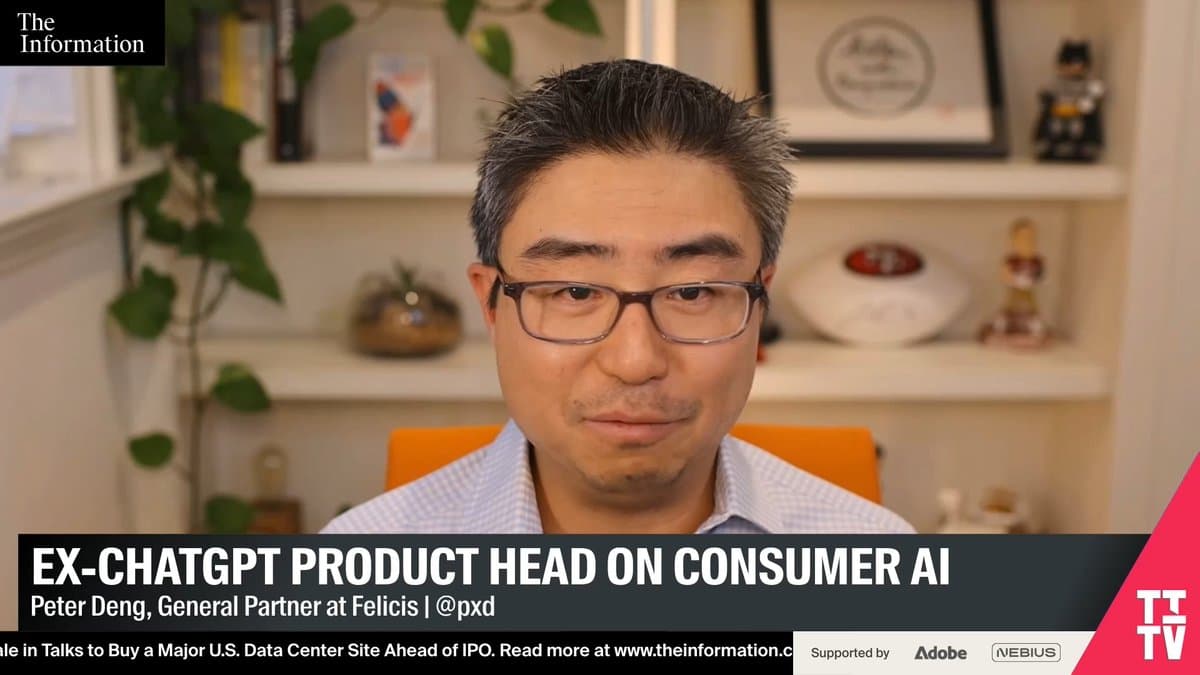
Peter Deng, the former product lead for ChatGPT at OpenAI, recently articulated a core thesis for the next phase of consumer artificial intelligence. In a discussion highlighted by AI commentator Rohan Pandey, Deng stated that "The model is not the differentiator, it's the workflow, it's the taste, and it's the choices in the product."
This perspective comes from a key architect behind one of the most successful consumer AI products to date. Deng's comment suggests a strategic shift in focus for builders in the space: away from an exclusive obsession with model scale and benchmark scores, and toward the nuances of product design and user experience.
Context
The statement reflects a maturation in the AI product landscape. For years, the primary narrative in AI has been driven by model capabilities—larger parameter counts, better scores on benchmarks like MMLU or GSM8K, and the release of new foundational models from labs like OpenAI, Anthropic, Google, and Meta. Competition was often framed as a direct race to build the most capable model.
Deng's argument implies that this era is giving way to a new one. As access to powerful foundational models (through APIs or open-source releases) becomes more widespread, the raw "intelligence" or knowledge of a model becomes a table-stakes commodity. What will separate successful applications will be how that intelligence is packaged, accessed, and integrated into a user's daily workflow.
This aligns with observable trends. Many applications now use similar or identical model backends (e.g., GPT-4, Claude 3) but offer vastly different user experiences. The differentiation lies in the interface, the pre- and post-processing of queries, the domain-specific tuning of interactions, and the overall "taste"—a product term referring to the subjective quality and judgment embedded in design decisions.
For practitioners, the takeaway is to balance technical diligence with intense product focus. The winning consumer AI product of the next few years may not be built by the lab with the best model, but by the team that most elegantly solves a real user problem with a thoughtfully crafted workflow.