Key Takeaways
- A new arXiv paper introduces FeCoSR, a federated collaboration framework for cross-market sequential recommendation.
- It tackles data isolation and market heterogeneity by enabling many-to-many collaborative training with a novel loss function, showing advantages over traditional transfer approaches.
What Happened
A research paper titled "From Transfer to Collaboration: A Federated Framework for Cross-Market Sequential Recommendation" was posted to arXiv on April 15, 2026. The paper introduces FeCoSR (Federated Collaboration for Sequential Recommendation), a novel framework designed to solve a specific problem in recommendation systems: how to improve recommendations across multiple markets (like different countries or regions) when those markets have isolated data, non-overlapping users, and different user behaviors.
The core problem the researchers identify is that existing approaches largely treat this as a "one-to-one transfer" problem—pretrain a model on a source market (e.g., France), then fine-tune it for a target market (e.g., Japan). This paradigm suffers from two critical flaws:
- Source Degradation: The source market's model performance suffers because it's optimized for transfer, not for its own users.
- Negative Transfer: The inherent differences between markets (heterogeneity) mean the transferred knowledge can actually hurt performance in the target market.
Technical Details
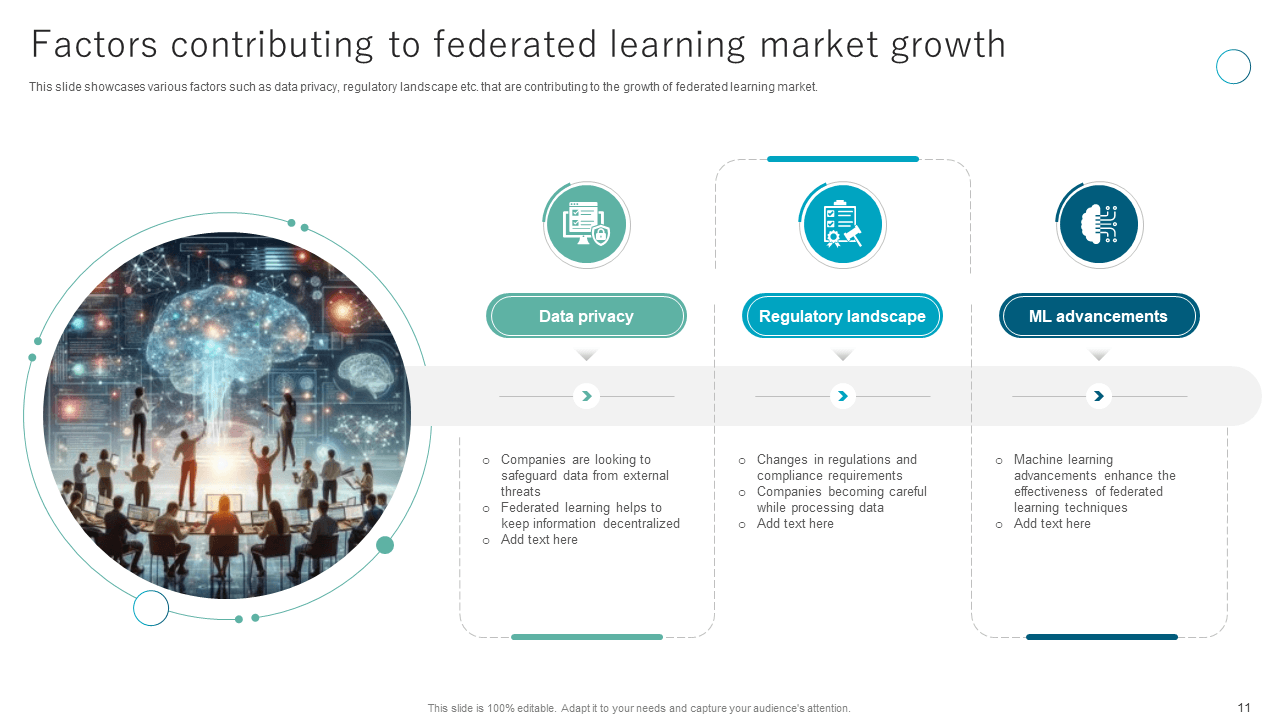
FeCoSR proposes a shift from "transfer" to "collaboration." Its architecture is built around a federated learning paradigm, meaning multiple markets train a model together without ever sharing their raw, sensitive user data. The framework has two main stages:
- Federated Pretraining: All participating markets collaborate to train a global model that captures shared behavior-level patterns. For example, this model might learn universal sequences like "browsing handbags → viewing shoes → reading reviews," regardless of the specific items involved.
- Local Fine-Tuning: Each market then takes this globally-informed model and fine-tunes it locally with a market-specific adaptation module. This stage captures local item-level preferences—the fact that a user in Milan might browse from Prada to Bottega Veneta, while a user in Seoul might browse from Acne Studios to We11done.
The key technical innovation is a new loss function designed for the federated pretraining stage. The researchers argue that the standard Cross-Entropy (CE) loss, which measures prediction error, actually exacerbates market heterogeneity in a federated setting. Instead, they propose Semantic Soft Cross-Entropy (S²CE). This loss function leverages shared semantic information (likely from item embeddings or metadata) to facilitate "collaborative behavioral learning" across markets. It helps the model focus on learning the common structure of user actions, rather than getting confused by the different items in each market's catalog.
The paper reports that extensive experiments on real-world datasets demonstrate FeCoSR's advantages over existing methods, though specific performance metrics for luxury datasets are not provided in the abstract.
Retail & Luxury Implications
This research, while academic, points directly to a significant operational and strategic challenge for global luxury retail: how to build a cohesive, intelligent recommendation engine across regions while respecting data sovereignty and local nuance.

For a group like LVMH or Kering, the problem is acute. Your data from 24s.com in Europe, your boutique CRM in Asia, and your wholesale partner data in North America are siloed due to privacy regulations (GDPR, PDPA), technical systems, and commercial agreements. Yet, a high-net-worth individual who shops in Paris, Tokyo, and New York expects a seamless, personalized experience that reflects their full journey.
FeCoSR's proposed framework suggests a potential path forward:
- Collaborative Intelligence Without Data Centralization: The federated approach means a parent company could orchestrate a global model training exercise where regional data centers contribute to learning—without ever moving raw transaction or browsing data. This is a major compliance and security advantage.
- Balancing Global Taste and Local Specificity: The two-stage process (global behavior patterns, local item tuning) mirrors the strategic tension in luxury: managing a global brand identity while catering to local tastes. The model could learn that "event dressing" is a universal sequence but adapt to whether that leads to a gown or a tailored suit based on the market.
- Solving the Cold-Start Problem for New Markets: When entering a new region, instead of starting recommendations from zero or forcing a poorly-fitting model from another market, you could initialize with the collaboratively pretrained global model, potentially accelerating time-to-value.
The Semantic Soft Cross-Entropy (S²CE) loss is particularly interesting for luxury, where item semantics are rich and carefully curated. Leveraging shared semantic information—like designer, collection, silhouette, material, or price tier—could allow the model to understand that a user interested in a Bottega Veneta Intrecciato leather tote in Italy might be interested in a Loewe Anagram puzzle bag in Spain, based on shared semantics of "craft leatherwork," "iconic branding," and "high-end accessories," even if the items themselves never co-occur in any single market's data.
Implementation & Challenges
It is crucial to note that this is a research paper, not a production-ready system. Implementing such a framework would be a major engineering undertaking, requiring:
- Federated Learning Infrastructure: Significant investment in secure, scalable federated learning platforms and protocols.
- Semantic Unification: A consistent, cross-market taxonomy and embedding system for products—a non-trivial task given variations in catalog management across brands and regions.
- Organizational Alignment: Unprecedented collaboration between regional tech teams, data governance, and legal/compliance departments to establish the protocols for federated collaboration.

The maturity of this approach is low for immediate deployment, but it represents a compelling research direction that aligns with the industry's need for both global insight and local compliance.