The Innovation — What the Source Reports
The source article, published on Medium, presents a practical implementation of a transformer-based recommendation system designed to convert user browsing history into personalized product suggestions. While the full technical details are behind a paywall, the title and snippet clearly frame the core problem: leveraging sequential user behavior data—specifically browsing history—to power personalized outreach, such as targeted email campaigns.
Transformer architectures, originally developed for natural language processing (e.g., BERT, GPT), have become a dominant force in recommendation systems. Their strength lies in understanding sequential patterns and long-range dependencies within user interaction data. Unlike traditional collaborative filtering or simple matrix factorization, a transformer model can interpret the order and context of a user's browsing session—viewing a handbag, then shoes, then abandoning the cart—to predict the next most relevant item or generate a curated set of recommendations.
The proposed system likely follows a standard encoder-based transformer design:
- Input Representation: A user's browsing session is transformed into a sequence of embedded product IDs, enriched with metadata (category, price tier, brand).
- Contextual Encoding: The transformer encoder processes this sequence, using self-attention to weigh the importance of each item relative to others, building a rich, contextual representation of the user's intent.
- Recommendation Generation: This contextual representation is used to score a candidate set of products (e.g., the full catalog or a filtered subset) to predict the next item of interest or to select a personalized set for an email.
Why This Matters for Retail & Luxury
For luxury and premium retail, where customer lifetime value is paramount and marketing must balance personalization with brand prestige, this approach addresses several critical challenges:
- Beyond the Session: Moving past simple "viewed this, also viewed that" logic to understand a customer's evolving taste journey across multiple sessions.
- High-Intent Signal Interpretation: A luxury shopper browsing a specific watch collection, then reading about craftsmanship, signals a different intent than one browsing sale items. Transformers can capture these nuanced intent shifts.
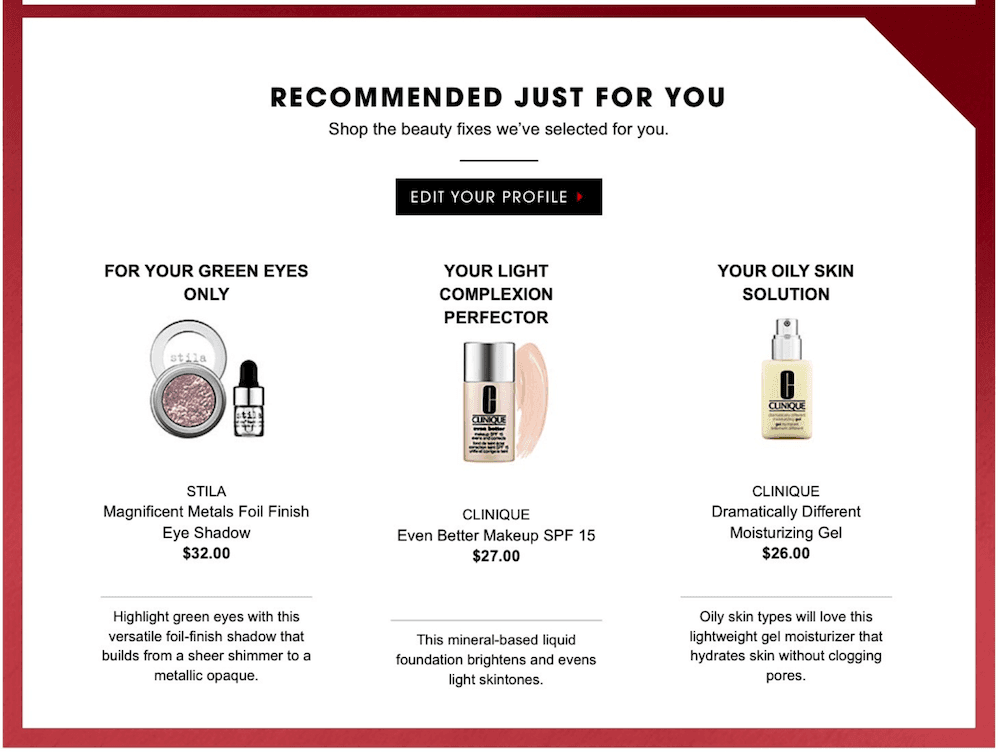
- Personalized Content at Scale: The output isn't just a list of SKUs; it's a structured recommendation that can directly fuel dynamic content in personalized emails, on-site "for you" sections, and mobile app notifications.
- Cold Start Mitigation: For new customers with limited purchase history, their browsing sequence provides a valuable initial signal to begin personalization immediately.
Business Impact
Implementing a sophisticated sequential recommender can directly impact key metrics:
- Email Marketing: Increase click-through rates (CTR) and conversion rates by moving from batch-and-blast campaigns to hyper-personalized sequences based on real-time browsing behavior.
- Average Order Value (AOV): By recommending truly complementary items (e.g., a suit after a shirt browse) or higher-value alternatives within the same aesthetic, AOV can see a lift.
- Customer Retention: Personalized experiences reduce friction and demonstrate an understanding of the customer's unique preferences, fostering loyalty.
- Inventory Turnover: Intelligently recommending specific items can help move targeted stock.
Quantifying the exact impact requires piloting, but industry benchmarks for moving from rule-based to ML-driven recommendations often show 10-30% increases in relevant engagement and conversion metrics.
Implementation Approach
Building this in-house requires a significant technical investment:
- Data Foundation: A unified, real-time capable customer data platform (CDP) is non-negotiable. You need clean, structured streams of event data (product views, adds-to-cag, time on page).
- Model Development: This involves feature engineering (product embeddings), model training (likely using a framework like PyTorch or TensorFlow), and continuous evaluation against business metrics (not just accuracy).
- Infrastructure: Serving low-latency recommendations at scale, especially for real-time website widgets, requires a robust MLOps pipeline: model serving (e.g., TensorFlow Serving, TorchServe), A/B testing frameworks, and monitoring for drift.
- Integration: The model's output must integrate seamlessly with email service providers (ESPs like Salesforce Marketing Cloud, Braze) and website front-ends via APIs.
For many brands, a phased approach is wise: start by implementing a simpler sequential model (like GRU or LSTM) to prove value, then graduate to a full transformer architecture as the data maturity and team expertise grow.
Governance & Risk Assessment
- Privacy & Compliance: Using browsing history for personalization falls under GDPR, CCPA, and other regulations. Explicit consent for data collection and use for marketing is required. All personal data must be anonymized or pseudonymized for model training where possible.
- Bias & Fairness: The model will learn from historical data, which may contain biases (e.g., over-recommending popular items or certain demographics). Regular audits for fairness across customer segments are essential.
- Brand Safety: Recommendations must align with brand image. A luxury house cannot recommend outlet items to a high-value client without context. This requires a business rule layer on top of the ML model to filter or re-rank suggestions.
- Maturity Level: Transformer-based recommenders are state-of-the-art but are more complex and resource-intensive than older methods. They represent a high-impact, high-effort investment suitable for brands with advanced data science teams and a clear personalization roadmap.