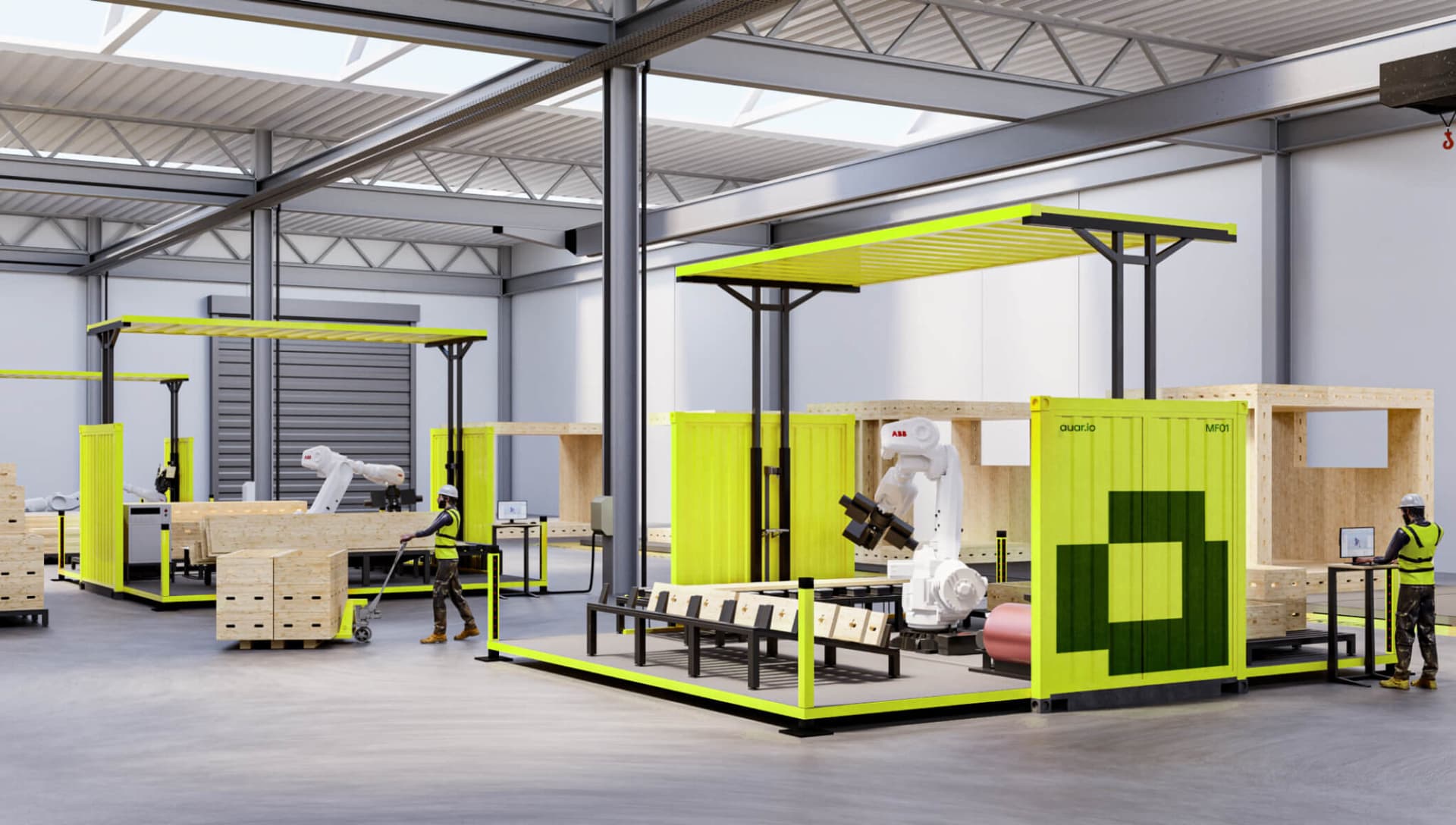
The Innovation
This research paper, "Capability Thresholds and Manufacturing Topology," introduces a new theoretical framework called Embodied Intelligence Economics. It argues that the fundamental spatial and structural logic of manufacturing—centralized megafactories located near cheap labor pools—has remained unchanged since 1913. The paper posits that this Fordist paradigm is about to be broken not by incremental efficiency gains, but by phase transitions triggered when embodied AI (robots with advanced perception, dexterity, and reasoning) crosses critical capability thresholds.
The core of the theory is the definition of a Capability Space C = (d, g, r, t), where:
- d = Dexterity: Fine motor skills for handling delicate materials.
- g = Generalization: Ability to adapt to new tasks without reprogramming.
- r = Reliability: Consistent, high-quality operation over long periods.
- t = Tactile-Vision Fusion: Integration of touch and sight for nuanced material assessment.
The research shows mathematically that when an embodied AI system's capability vector crosses a critical surface in this space, the objective function for where and how to manufacture undergoes a topological reorganization. This leads to three transformative pathways:
- Weight Inversion: The cost of transporting finished goods (high value/weight) begins to outweigh the cost of transporting raw materials (low value/weight), favoring production near the consumer.
- Batch Collapse: The economic minimum viable batch size collapses towards one, making small-scale, on-demand production viable.
- Human-Infrastructure Decoupling: Factory location is no longer tied to human labor pools, but to Machine Climate Advantage—optimal conditions for machine operation like low humidity, stable temperatures, and high solar irradiance for power.
The result is a predicted shift from globalized, concentrated manufacturing to a decentralized, demand-proximal network of micro-factories, eliminating "manufacturing deserts" and reversing geographic concentration driven by labor arbitrage.
Why This Matters for Retail & Luxury
For luxury and premium retail, this is not about automating existing factories. It's about reimagining the entire value chain from creation to client.
- Hyper-Personalization & Made-to-Order at Scale: The "Batch Collapse" pathway means a single, perfectly fitted garment, a monogrammed handbag, or a bespoke fragrance can be produced as economically as the 10,000th unit of a standard line. This turns the dream of true luxury personalization into a scalable operational model.
- Demand-Proximal Micro-Ateliers: Imagine a "Salon de Fabrication" in the heart of Paris, Milan, or Tokyo. A compact, clean, AI-driven micro-factory could produce limited-edition collections or fulfill personalized orders within 48 hours for local clientele, dramatically enhancing exclusivity and reducing carbon footprint from logistics.
- Radical Supply Chain Resilience & Sustainability: Decoupling from distant, monolithic suppliers reduces geopolitical and logistical risk. Shorter supply chains mean less inventory, less waste from overproduction, and a powerful sustainability narrative. The Machine Climate Advantage could see "lights-out" ateliers powered by renewable energy in optimal locations, furthering ESG goals.
- Creative Agility & Testing: Designers could prototype and produce micro-collections locally to test market response before any global commitment, reducing fashion's notorious guesswork and markdowns.
- Clienteling & Experience: The production process itself becomes a client experience. A client could co-design an item in-store or via VR and witness its production in a nearby transparent micro-atelier, deepening emotional connection and brand story.
Business Impact & Expected Uplift
The impact is foundational, affecting margin, revenue, and brand equity.
- Revenue Uplift (Personalization): Industry benchmarks from Bain & Company and McKinsey consistently show that effective personalization can drive a 5-15% increase in revenue and enhance customer lifetime value by 10-30%. This model makes the highest-value personalization—physical product customization—operationally feasible.
- Cost Reduction (Inventory & Logistics): Moving to a true demand-driven, made-to-order model can reduce inventory holding costs by 20-50% and virtually eliminate markdowns, which typically erode 10-20% of full-price sales in fashion retail (source: McKinsey State of Fashion report). Proximal manufacturing slashes air freight costs and import duties.
- Margin Expansion: The combination of higher full-price sell-through, reduced logistics and inventory costs, and the premium pricing power of hyper-personalization directly expands gross and operating margins.
- Brand Equity & Sustainability Value: The ability to market "locally crafted for you" and "zero inventory waste" carries immense, though non-quantified, value in brand positioning and customer loyalty, especially among younger, conscious consumers.
- Time to Value: This is a 3-5 year strategic transformation, not a quarterly project. Early benefits in pilot programs (e.g., personalized accessories) could be visible within 18-24 months of committed investment.
Implementation Approach
This requires a phased, strategic build-up of capability, not a monolithic project.
- Technical Requirements:
- Data: High-fidelity 3D design files (CAD), material property databases, and customer preference data.
- Infrastructure: Partnerships with robotics firms (e.g., Boston Dynamics, Figure, specialized cobot vendors) and AI labs focused on dexterous manipulation. On-premise or co-located secure compute for AI inference.
- Team Skills: Hybrid teams of robotics engineers, AI/ML specialists (particularly in reinforcement learning and computer vision), advanced manufacturing engineers, and luxury craftspeople to define quality benchmarks.
- Complexity Level: High (Research-to-Production). This involves integrating bleeding-edge robotics, AI, and novel manufacturing processes. It's beyond plug-and-play.
- Integration Points:
- CRM/CDP: To feed personalization preferences and order data.
- PLM (Product Lifecycle Management): As the source of truth for 3D designs and materials.
- ERP & Order Management: To trigger and fulfill made-to-order production.
- Estimated Effort: Multi-year strategic initiative (Quarters 8-12+). Start with a dedicated R&D skunkworks project (6-12 months) to identify partners and pilot a single product category (e.g., leather goods, eyewear). Scaling will take years.
Governance & Risk Assessment
- Data Privacy: Personalization data (measurements, style preferences) is highly sensitive. Governance must ensure explicit consent, anonymization for model training where possible, and secure, localized data processing aligned with GDPR/CCPA.
- Model Bias & Quality Risk: The AI must be trained on diverse materials (fine leathers, delicate silks, hard gemstones) to avoid bias towards easier-to-handle substrates. The "craftsmanship" output must meet the immaculate quality standards of luxury. Rigorous, human-in-the-loop quality gates are essential for the foreseeable future.
- Maturity Level: Research / Early Prototype. The core AI capabilities (dexterity
d, generalizationg) are advancing rapidly in labs (e.g., Google's RT-2, OpenAI's robotics research) but are not yet robust, integrated, or cost-effective for complex luxury craft. The economic geography theory is predictive. - Strategic Recommendation: Begin Strategic Exploration Now, Pilot in 18-24 Months. This is not ready for core production. However, the phase transition theory is compelling. Luxury leaders should:
- Establish an Embodied AI Watch Function: Track progress at key labs and robotics companies.
- Form Strategic Partnerships: Engage with top robotics/AI research institutions and pilot-focused startups.
- Launch a Contained Pilot: Identify one high-value, structurally simpler product line for a micro-factory proof-of-concept. The goal is not profit, but learning and IP development.
- Re-evaluate Long-term Real Estate & Supply Chain Strategy: Factor this potential geographic shift into 5-10 year planning for logistics hubs and flagship experiences.
Ignoring this trend carries the long-term risk of being locked into an outdated, inflexible, and less sustainable production topology while agile competitors capture the high ground in personalization and local resonance.