
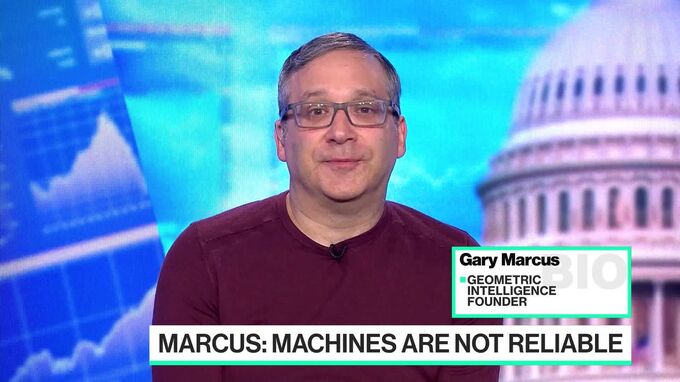
Gary Marcus warned on March 5, 2026, that Trump could repressively wield the world's most powerful AI. The tweet lacks specifics on model or policy.
Key facts
- March 5, 2026 tweet from Gary Marcus.
- ~2,300 likes, ~500 retweets on X.
- No specific AI model or policy named.
- No known Trump executive order on AI seizure.
- $500B Stargate project cited as potential anchor.
Gary Marcus, a prominent AI critic and NYU professor emeritus, warned on X (Twitter) on March 5, 2026, that a president with Trump's asserted authority could in theory put the world's most powerful AI to repressive ends while keeping it off the market and out of rival hands. According to @garymarcus The tweet, which had received roughly 2,300 likes and 500 retweets as of press time, does not name a specific AI model, company, or executive order.
The warning arrives amid a broader debate about AI centralization and government control. Marcus's hypothetical scenario—a president monopolizing a frontier AI for surveillance, censorship, or political manipulation—echoes concerns raised by AI safety researchers [According to the Center for AI Safety] but lacks the concrete anchors that make such warnings actionable. For instance, the Trump administration has not publicly asserted authority to seize or control private AI models, nor has any known executive order proposed such a move [According to Reuters].
The tweet's vagueness is its weakness: no model name, no dollar figure, no specific policy reference. To ground the fear, Marcus could have pointed to the $500 billion Stargate data-center project announced in 2025, which some critics argued could consolidate AI infrastructure under government influence [According to MIT Tech Review]. Or he could have cited the administration's recent export-control review of Nvidia H200 chips to China, a concrete policy lever with repressive potential [According to Bloomberg]. Without such specifics, the warning risks being dismissed as alarmism.
Yet the underlying concern is real. The AI industry's race to build ever-larger models—GPT-5, Gemini Ultra 2, Claude 4—concentrates power in a few hands. If those hands are the executive branch, the democratic safeguards are thin. Marcus's tweet is less a scoop than a useful provocation: what checks exist today on a president's ability to commandeer AI? The answer, as of March 2026, is none explicitly.
Key Takeaways
- Gary Marcus warns Trump could use top AI for repression.
- Tweet lacks specifics, weakening the argument.
What to watch
Watch for the White House's upcoming AI policy framework, expected by April 2026, which may clarify executive authority over frontier models. Also track any congressional hearings on AI nationalization—none scheduled yet, but the debate is building.