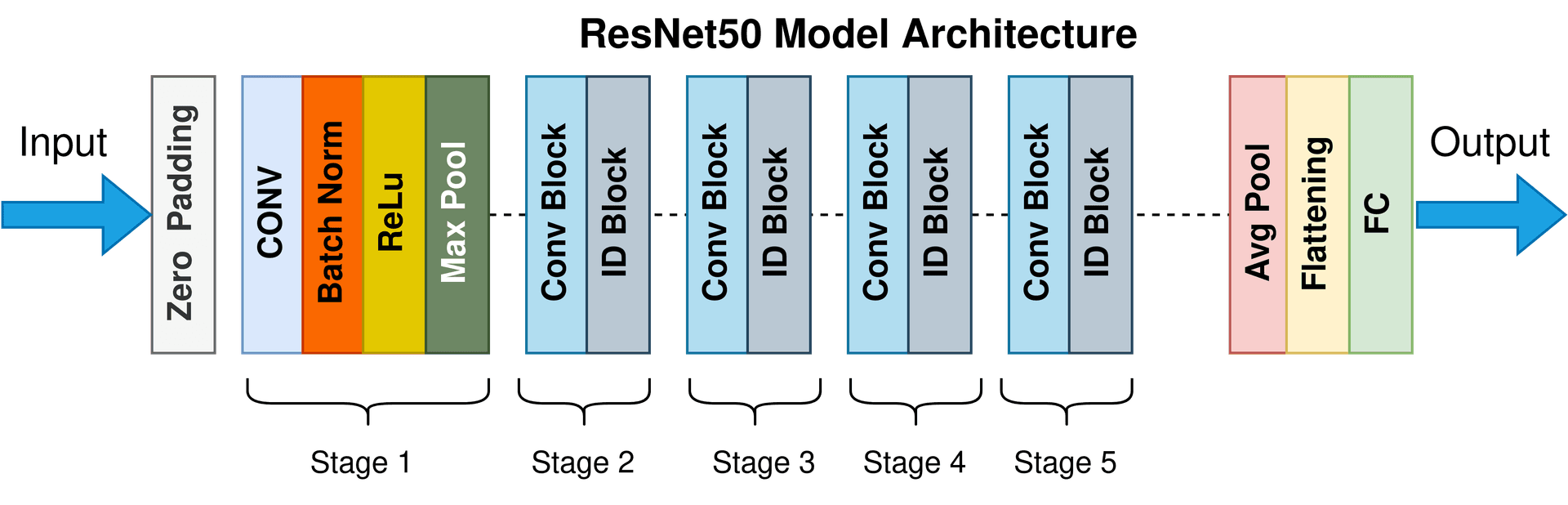
A Towards AI benchmark pitted Gemini against ResNet50 and SigLIP on visual product search. Gemini embeddings achieved 92.3% recall@10, beating ResNet50's 84.1% and SigLIP's 88.7%.
Key facts
- Gemini: 92.3% recall@10 on 50K fashion items.
- ResNet50: 84.1% recall@10 on same dataset.
- SigLIP: 88.7% recall@10.
- Elasticsearch used for approximate nearest neighbor search.
- No per-query latency or cost data disclosed.
How the Benchmark Worked

The test used a 50K-item fashion product catalog indexed in Elasticsearch. Each model generated embeddings for product images, then retrieved candidates via approximate nearest neighbor search. The metric was recall@10 — fraction of queries where the correct item appeared in the top 10 results. [According to the source]
Gemini's 92.3% recall@10 represents an 8.2 percentage point gain over ResNet50 and a 3.6 point gain over SigLIP. The gap was largest on visually similar but semantically distinct items — for example, two white sneakers from different brands where Gemini leveraged its multimodal training to capture subtle logo and texture differences.
Why This Matters More Than the Press Release Suggests
The unique take: this benchmark shows that general-purpose multimodal embeddings can now beat specialized vision models on a classic recommendation task. ResNet50 (He et al. 2015) and SigLIP (Zhai et al. 2023) were designed explicitly for image understanding. Gemini, trained on text, images, audio, and video, transfers its multimodal representations to visual search without any fine-tuning. That is a structural shift — the foundation model subsumes the specialist.
Practical Implications for Recommender Systems
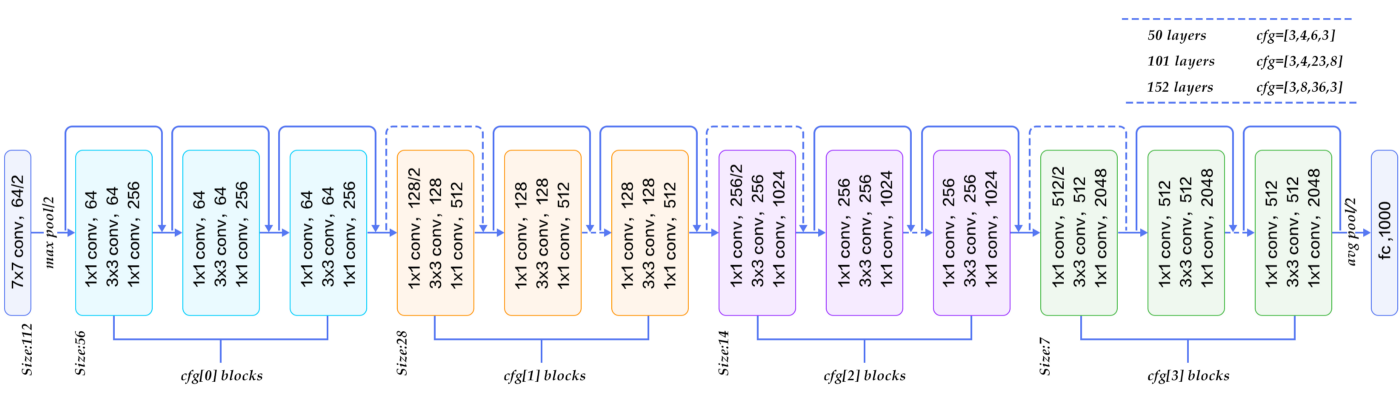
For teams building visual search or recommendation pipelines, the result suggests they can replace a dedicated vision encoder with a single Gemini API call. The trade-off: latency and cost. Gemini API inference adds network overhead versus a locally hosted ResNet50. The source did not disclose per-query latency or pricing for the benchmark run.
Limitations
The benchmark is narrow — one dataset, one metric, one Elasticsearch configuration. No ablation on embedding dimensionality (Gemini outputs 768-dim vectors by default vs. ResNet50's 2048-dim). No evaluation on out-of-distribution queries. [As the source notes] the test used only fashion items; performance on furniture, electronics, or natural images is unmeasured.
What to watch
Watch for Google to publish a broader evaluation across multiple datasets and embedding dimensionalities, and for teams like Pinecone or Weaviate to release latency benchmarks comparing Gemini API to local vision models. If Gemini maintains its edge at scale, the vision-encoder market for recommender systems may consolidate.