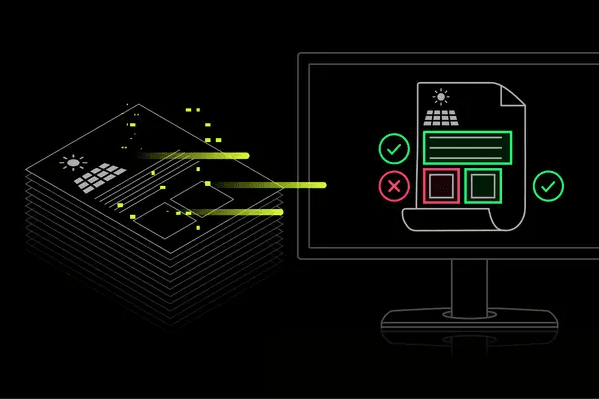
Tapestry processed 811 generation interconnection applications in under an hour for PJM Interconnection. The Google-backed startup claims its AI platform slashed a process that typically takes months to minutes.
Key facts
- 811 generation interconnection applications processed in under 1 hour.
- PJM queue backlog exceeds 260 GW of pending projects.
- Google Cloud provides infrastructure for Tapestry's AI platform.
- PJM serves 65 million people across 13 states and D.C.
- Accuracy rate and pricing not disclosed by Tapestry.
Tapestry, a startup backed by Google, announced the first deployment of its AI platform for PJM Interconnection's application process. The company claims it processed 811 generation interconnection applications in under an hour—a task that historically requires months of manual review by grid operators According to the source.
The platform targets the PJM Interconnection queue, which has ballooned to over 260 GW of pending projects as of early 2026. This backlog has become a critical bottleneck for renewable energy and data-center project development, particularly as AI compute demand drives power requirements. Google Cloud provides the underlying infrastructure for Tapestry's AI models, per the company's announcement.
Why it matters
PJM's interconnection queue has been a well-documented pain point. The regional transmission organization (RTO) serves all or parts of 13 states and the District of Columbia, covering 65 million people. Processing delays have frustrated developers of solar, wind, and battery storage projects, as well as data-center operators racing to secure power for AI workloads. Tapestry's claim of sub-hour processing, if validated at scale, could materially accelerate project timelines.
However, the company did not disclose pricing or the exact accuracy rate of the AI reviews. The press release also did not specify whether human oversight remains in the loop—a critical detail for grid reliability. PJM itself has not independently verified the results, and the deployment appears limited to a pilot phase.
Competitive context
Tapestry is not alone in targeting grid interconnection with AI. Several startups, including GridUnity and Plexflo, have launched software to automate parts of the queue process. Google's backing gives Tapestry access to Vertex AI and TPU infrastructure, potentially a cost advantage. Google Cloud's broader push into energy-sector AI—including a recent partnership with NEMA and ASHRAE on data-center power frameworks—suggests a strategic bet on grid modernization as a growth vertical.
Still, the real test will be whether Tapestry can scale beyond PJM to other RTOs like MISO, ERCOT, and CAISO, each with distinct interconnection rules. The company did not provide a timeline for expansion.
What to watch

Watch for Tapestry's next deployment target—likely MISO or CAISO—and whether PJM publishes independent validation of the AI's accuracy. Also monitor Google Cloud's broader energy-sector AI partnerships for signs of a formal product line.
Source: datacenterdynamics.com