What Happened
Google has officially launched an Agentic Sizing Protocol for retail. While the source material is a generic RSS feed link, the Knowledge Graph intelligence confirms this as a specific, recent product launch from Google, dated March 26, 2026. This protocol is not a single AI model but a framework—a set of guidelines, tools, and possibly APIs—designed to help retail businesses properly size, deploy, and scale AI agents within their operations.
This launch follows a clear pattern of Google advancing its agentic AI capabilities. Just a day prior, on March 27, Google launched the Gemini 3.1 Flash Live model in preview via the Gemini Live API, explicitly designed for real-time multimodal AI agents. The Agentic Sizing Protocol appears to be the practical, industry-specific scaffolding meant to operationalize such agent technologies for a key vertical: retail.
Technical Details: What is an "Agentic Sizing Protocol"?
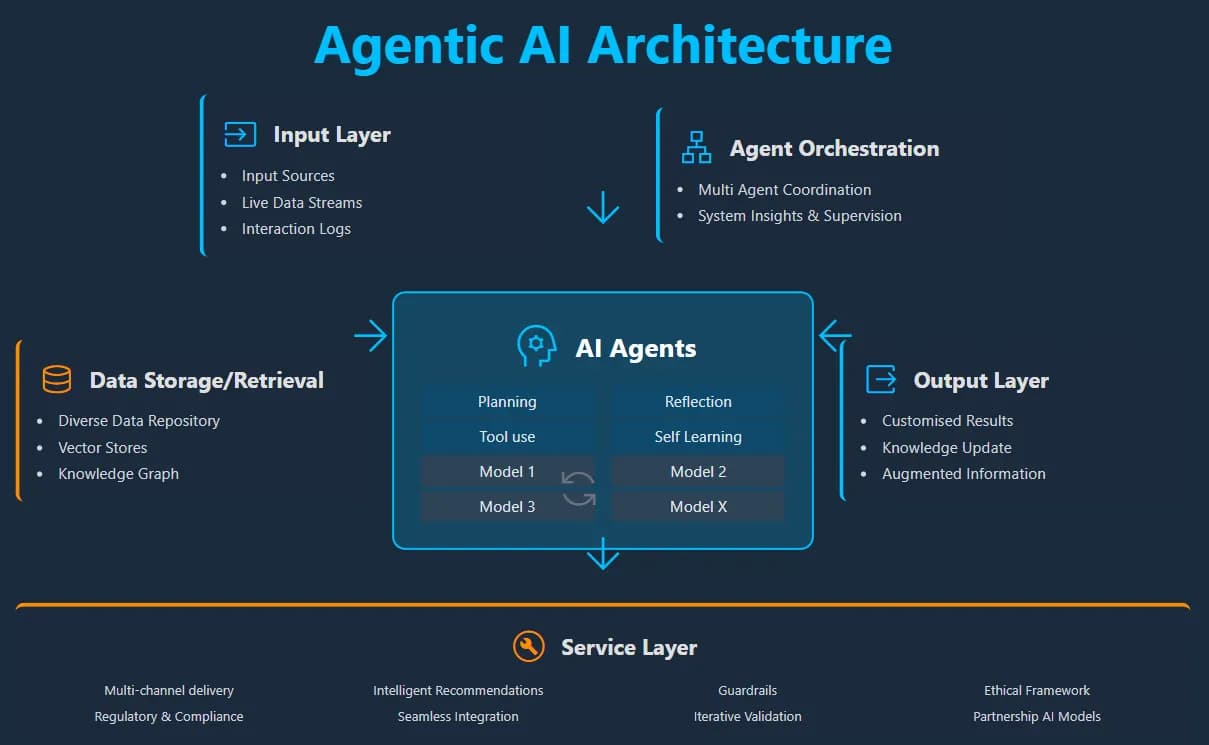
In AI, an "agent" is a system that can perceive its environment, make decisions, and take actions to achieve goals. "Agentic" refers to systems where multiple such agents can work together. The core challenge for enterprises is not just building a single clever agent, but determining:
- How many agents are needed? For a global retail chain, is it one agent per region, per store, per department, or per task?
- What is their scope of authority? Can an agent approve a markdown, or only recommend it?
- What computational resources (sizing) do they require? This ties directly to cost and latency.
- How do they interact with legacy systems and humans?
A "sizing protocol" provides a methodology to answer these questions. It likely includes:
- Assessment Tools: To audit existing retail processes (e.g., inventory replenishment, customer service escalation) and identify candidate tasks for agentification.
- Architecture Blueprints: Recommended patterns for multi-agent systems in retail contexts (e.g., a dedicated pricing agent vs. an omnipotent store manager agent).
- Performance & Cost Calculators: Models to estimate the infrastructure needed (e.g., connections to Gemini APIs) based on transaction volume and required response times.
- Integration Guidelines: Best practices for connecting agents to Retail ERP, OMS, CRM, and e-commerce platforms.
This is a move from offering raw AI models (like Gemini 3.0 Pro or Gemini Embedding 2) to offering a prescriptive solution framework for a specific industry pain point: managing the complexity of AI deployment.
Retail & Luxury Implications
For technical leaders at luxury and retail houses, Google's protocol is a signal that the industry is moving from pilot-stage chatbots and recommendation engines to systemic, orchestrated AI automation. The potential applications are profound but require careful architectural planning.
Concrete Scenarios & Departments:
- Personal Shopping & Clienteling: A protocol could help design a system where a primary "client relationship agent" orchestrates sub-agents for product discovery (using vision models), appointment scheduling, and post-purchase care, all sized appropriately for the brand's client base.
- Dynamic Inventory & Allocation: Instead of a monolithic planning system, a network of agents could be deployed: one analyzing real-time sales data in Milan, another monitoring weather forecasts affecting demand in Tokyo, and a third negotiating with logistics partners. The protocol would define how many such agents are optimal and how they communicate.
- Sustainable Supply Chain Tracking: Agents could be tasked with autonomously verifying supplier credentials and material provenance. The sizing protocol would determine the agent density needed to monitor a complex, multi-tier supply chain effectively.
- Store Operations: Agents for real-time loss prevention analysis, staff scheduling optimization, and in-store experience personalization could be sized and deployed per location based on footprint and traffic.
The Implementation Gap: The protocol provides the "how to think about it" framework, not a plug-and-play solution. The heavy lifting remains: integrating with high-value legacy systems, ensuring agent actions align with brand ethos (a critical luxury concern), and managing the change for retail staff. The promise is to reduce the risk of poorly scoped, inefficient, or unscalable AI agent projects.
Business Impact
Quantifying the impact is premature, as this is a framework launch, not a case study. However, the potential value levers are clear:
- Increased Operational Efficiency: Properly sized and orchestrated agents can automate complex, multi-step processes beyond the reach of simple scripts.
- Enhanced Responsiveness: A network of specialized agents can react to market changes (a viral social post, a competitor's sale) faster than human-led committees.
- Reduced AI Spend: A core goal of a sizing protocol is to prevent over-provisioning of expensive AI inference resources. By right-sizing agent deployments, retailers can improve ROI.
Success depends on adoption. Google will need strong reference implementations, likely starting with partners like Best Buy, with whom it has an existing partnership.
Implementation Approach & Governance
Technical Requirements: Implementation will hinge on Google Cloud infrastructure and the Gemini API ecosystem. Retailers will need mature data pipelines, well-defined APIs for their core systems, and in-house or partner expertise in agentic system design.
Complexity: High. This is not a SaaS dashboard. It's an architectural methodology for advanced automation. It requires strategic buy-in and likely a dedicated team or skilled systems integrator.
Governance & Risk: For luxury, risk is paramount. An agent making an off-brand pricing decision or client communication could damage reputation. The protocol must be paired with rigorous:
- Guardrails: Hard-coded rules and LLM-powered classifiers to vet agent decisions before execution.
- Audit Trails: Immutable logging of every agent perception, decision, and action.
- Human-in-the-Loop (HITL) Protocols: Clear escalation paths for high-stakes or high-value interactions.
The maturity level is early-adopter. This is for retailers with existing AI/ML teams ready to explore the next frontier of automation.