Key Takeaways
- WWD reports Hermès tops luxury brands in AI search visibility.
- A separate study warns LLMs misinterpret luxury brands, reducing their AI presence.
- This dual finding underscores the need for luxury houses to optimize for AI-driven discovery.
What Happened
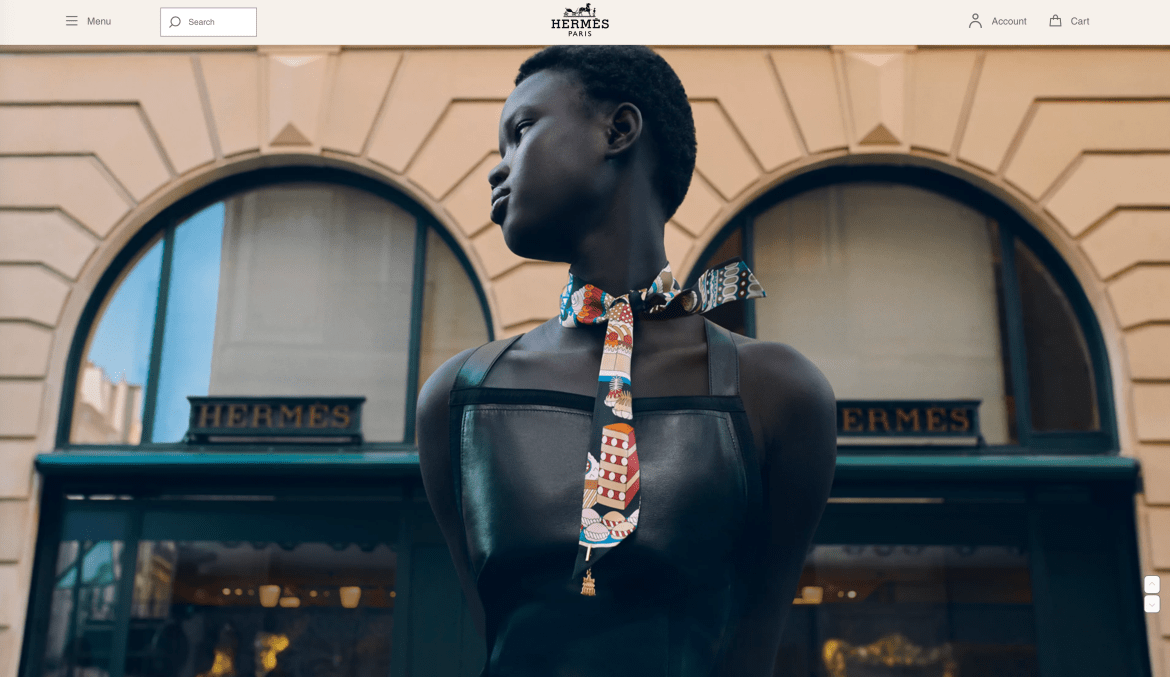
Hermès has been identified as the top luxury brand in AI search visibility, according to a report from Women's Wear Daily (WWD). The analysis evaluated how frequently major luxury names appear in responses generated by large language models (LLMs) like those powering Google's Gemini and other AI search tools.
Separately, a study from Let's Data Science warned that LLMs often misinterpret luxury brands, leading to reduced visibility in AI-generated outputs. This suggests that while Hermès leads the pack, many luxury houses may be losing ground in an increasingly important discovery channel.
Why This Matters for Retail & Luxury
The WWD report and accompanying analysis underscore a critical shift: AI search is becoming a primary gateway for brand discovery. For luxury brands that have historically relied on curated editorial coverage, exclusive events, and high-touch retail experiences, the rise of AI-generated search results introduces a new, less controllable variable.
Key implications:
- Brand discovery is moving to AI interfaces. Consumers increasingly ask chatbots for recommendations, from "What is the best luxury handbag brand?" to "Which watchmaker has the best craftsmanship?"
- LLMs can misinterpret brand positioning. The Let's Data Science study found that models may conflate luxury brands with mass-market alternatives or fail to surface them at all, especially for queries that don't explicitly name the brand.
- Hermès has an early advantage. Its top ranking suggests strong brand signals in training data—possibly from high-quality editorial mentions, consistent brand presence, and distinctive product names.
Business Impact
While WWD did not quantify the exact impact on traffic or sales, the trend is clear: brands that rank poorly in AI search risk losing mindshare among affluent, tech-savvy consumers who rely on AI assistants for purchase decisions.
For luxury groups like Kering, Richemont, and LVMH, this represents both a risk and an opportunity. A brand that can optimize its digital footprint for AI discovery—through structured data, authoritative content, and consistent brand naming—could capture significant organic traffic from AI search queries.
Implementation Approach
Luxury brands looking to improve AI search visibility should consider:
- Structured data markup – Implement schema.org markup for products, brands, and reviews to help LLMs correctly identify and rank brand assets.
- Authoritative content – Ensure that brand-owned content (product pages, heritage stories, press releases) is well-structured, factual, and linked from reputable sources.
- Brand name consistency – Use consistent brand names and avoid ambiguous abbreviations or nicknames that LLMs might misinterpret.
- Monitor AI search results – Regularly test how your brand appears in responses from ChatGPT, Gemini, Claude, and other major AI assistants.
Governance & Risk Assessment
- Maturity level: Early. AI search optimization is a nascent practice, and best practices are still emerging.
- Privacy considerations: No direct privacy risks, but brands should ensure that any data used for AI training complies with GDPR and CCPA.
- Bias risk: LLMs may exhibit brand bias based on training data distribution. Brands should monitor for unfair representation.
- Dependency risk: Over-reliance on AI search for traffic could be risky if model behavior changes or if competitors optimize more effectively.
gentic.news Analysis
The WWD report and the Let's Data Science study together paint a nuanced picture. Hermès's top ranking is a positive signal, but the broader finding that LLMs misinterpret luxury brands is a warning for the entire sector.
For AI practitioners in retail and luxury, the takeaway is twofold. First, brand teams must start treating AI search as a distinct channel—one that requires its own optimization strategy, separate from traditional SEO. Second, the technical teams building AI assistants should work with luxury brands to ensure that model outputs accurately reflect brand positioning, heritage, and exclusivity.
The gap between the top-ranked brand (Hermès) and the rest may widen as AI search becomes more prevalent. Luxury houses that invest now in AI discoverability could secure a long-term advantage, while those that ignore the trend risk becoming invisible to the next generation of luxury consumers.
This is not a short-term campaign. It is a structural shift in how consumers discover and evaluate luxury brands. The winners will be those who treat AI search with the same rigor they apply to store design, visual merchandising, and clienteling.
Source: news.google.com
[Updated 26 Jun via google_news_lvmh_ai]
The Impression's new AI Search Index, which analyzed 50 luxury brands across five major AI platforms, confirms Hermès's lead but introduces a novel metric: "brand coherence." The index measures how consistently an LLM describes a brand's identity and product categories. Hermès scored highest across coherence and visibility, while brands like Gucci and Louis Vuitton ranked lower due to inconsistent AI descriptions—sometimes being labeled as "streetwear" or "accessible luxury." The report suggests that fragmented brand signals in training data cause LLMs to dilute a brand's positioning [per The Impression].