The Technique — Pairing Claude Code with Hardware Reverse-Engineering
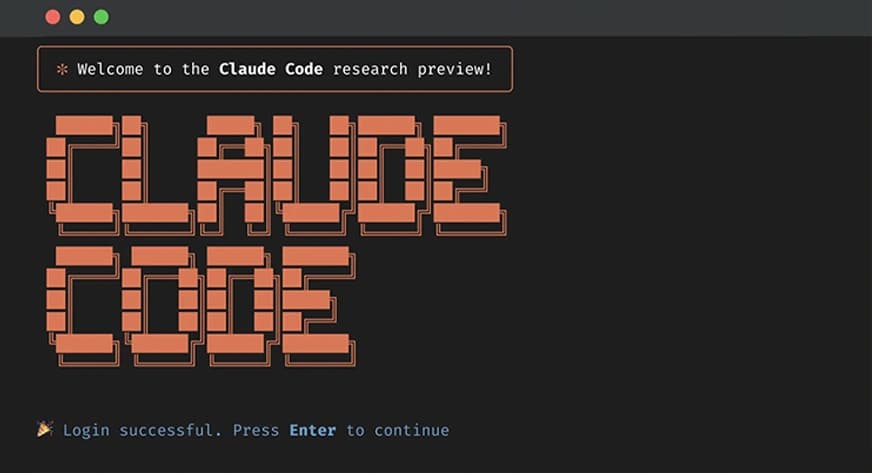
A developer, faced with a completely bricked LaMetric Time smart clock, used Claude Code not just to write code, but as an active partner in a deep hardware reverse-engineering project. The device's internal storage had failed, rendering it a paperweight. The goal was to create a system that could boot the device entirely from RAM over USB, bypassing the dead storage.
The process wasn't about writing a simple script. It was a multi-week investigative partnership:
- Week 1: Establishing Communication. With zero documentation—no schematics, no source code—they started from scratch. Online resources misidentified the System-on-Chip (SoC). Using the Allwinner FEL protocol (a bare-metal recovery mode), Claude Code helped identify the correct SoC (an Allwinner A13) and build a minimal
u-bootfrom scratch. The stock video and LED drivers crashed on the LaMetric hardware, so they had to be disabled. The first win was getting a Linux 5.15 kernel booting from RAM, even with no visible output. - Week 2: Controlling the Hardware. The real challenge was the display, driven by a separate STM32 microcontroller. The developer and Claude Code reverse-engineered the entire communication protocol. Claude disassembled both the Linux kernel driver and the STM32 firmware to understand the SPI frame format, I2C commands, and a critical GPIO pin. The breakthrough was seeing "HELLO" appear on the LED matrix.
This involved solving a complex display mapping puzzle. The 488-byte SPI frame had three physical sections with different byte layouts, including "row-shifted" columns. The developer would run checkerboard tests and report what they saw on the display; Claude Code would adjust the pixel mapping algorithm based on that feedback.
Why It Works — Claude Code as a Persistent Co-Pilot
This project highlights Claude Code's strength in persistent, context-heavy problem-solving. It wasn't a single prompt; it was an ongoing dialogue where Claude Code could:
- Analyze and reason about low-level code and disassembly.
- Propose incremental, testable hypotheses based on developer feedback (e.g., "I see a diagonal line of pixels lit up").
- Maintain context across a sprawling project involving bootloaders, kernel drivers, and microcontroller firmware.
The developer didn't need to be an expert in Allwinner chips or STM32 SPI protocols. They needed a partner who could digest technical fragments, reason about them, and propose the next logical step—exactly the agentic workflow Claude Code is built for.
How To Apply It — Using Claude Code for Your Own Deep-Dive Projects
You can adopt this collaborative, investigative style for complex debugging or exploration tasks.
- Start with a concrete, observable problem. Instead of "fix this," frame it as: "The device enters FEL mode. Here is the
lsusboutput. What's our first step to send a command?" Provide any error messages, logs, or strange outputs as raw text. - Use Claude Code iteratively as a lab partner. Structure your session like an experiment:
# Run a test and feed the output directly back to Claude claude code "I ran `sunxi-fel ver`. Here's the output: [PASTE OUTPUT]. What does this tell us about the chip?" - Leverage its analysis for binary/assembly. When dealing with proprietary hardware, you might have firmware dumps. You can ask Claude Code to analyze hex dumps or disassembly snippets for patterns.
- Document the process in a
CLAUDE.mdfile. This maintains context for both you and Claude across multiple sessions. Include:- Hypotheses: What you think is happening.
- Test Results: What actually happened.
- Open Questions: What you need to figure out next.
This case moves beyond using Claude Code for web apps or scripts. It's a blueprint for using it as a force multiplier in domains where documentation is sparse and the path forward is built through experimentation.