Key Takeaways
- A technical case study from a fintech ML engineer outlines the end-to-end design of a Retrieval-Augmented Generation pipeline built for production at extreme scale, processing over a million daily transactions.
- It provides a rare, real-world blueprint for building reliable, high-volume AI systems.
What Happened
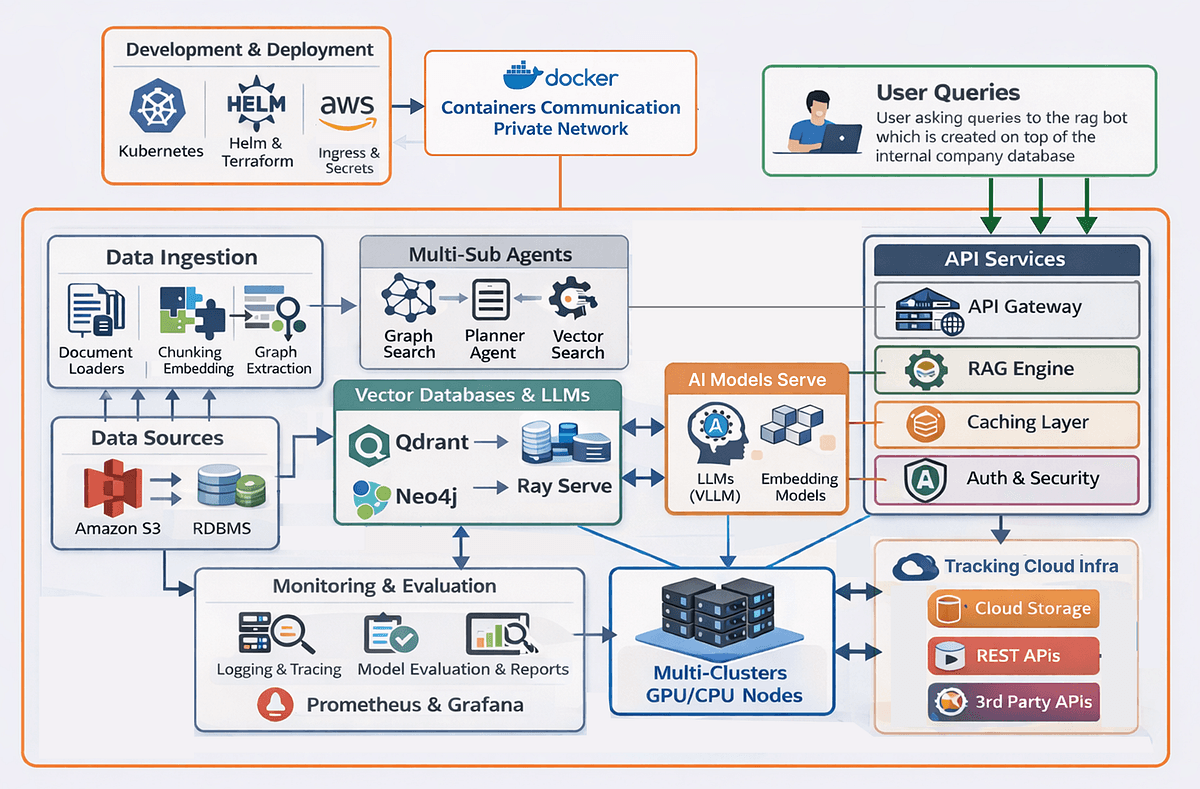
A Machine Learning Engineer specializing in fintech has published a detailed account of architecting and deploying a Retrieval-Augmented Generation (RAG) pipeline capable of handling over one million daily transactions. The article, published on Medium, serves as a technical case study focused on moving from a prototype to a robust, production-grade system. While the specific application is in the fintech domain—likely for customer support, transaction querying, or compliance—the core challenges and solutions are highly transferable to any industry requiring reliable, high-volume AI interactions with private data.
The author, Atharv Satpute, emphasizes the practical considerations of building for scale: data ingestion, embedding generation, vector search, response synthesis, and observability. The title's focus on "1M+ Daily Transactions" highlights the primary challenge: ensuring the system remains performant, accurate, and cost-effective under significant load, a concern far removed from academic or proof-of-concept RAG demonstrations.
Technical Details: A Production-First Blueprint
Although the full article is behind a Medium paywall, the premise indicates a focus on production architecture. Building a RAG system for a million daily requests involves several critical layers beyond the basic "chunk, embed, retrieve" pattern:
- Data Pipeline & Ingestion: A robust, idempotent process for continuously updating the knowledge base with new transactional data, product information, or policy documents without causing downtime or data corruption.
- Embedding at Scale: Selecting embedding models that balance accuracy with latency and cost, and implementing efficient batch processing to convert millions of text chunks into vectors. This likely involves parallelization and caching strategies.
- High-Performance Retrieval: Deploying a vector database (e.g., Pinecone, Weaviate, pgvector) configured for low-latency search under high concurrent load. This includes optimizing indexes, managing memory, and implementing query routing or filtering based on user context.
- LLM Orchestration & Guardrails: Integrating with a large language model (like GPT-4, Claude, or an open-source alternative) to generate answers, but wrapping it in logic to validate retrieved context, enforce response formats, filter harmful content, and manage fallback scenarios for failed retrievals.
- Monitoring & Observability: Implementing comprehensive logging, tracing, and metrics for every stage—from ingestion latency and embedding errors to retrieval relevance scores and final answer quality (e.g., via LLM-as-a-judge). This is non-negotiable for diagnosing issues in a live system.
The fintech context adds layers of necessity for accuracy, audit trails, and regulatory compliance, making the architectural choices particularly rigorous.
Retail & Luxury Implications

The value of this case study for retail and luxury is not in its fintech specifics, but in its production-scale blueprint. Luxury brands and retailers are increasingly deploying RAG systems for:
- Internal Knowledge Assistants: Allowing store associates and customer service agents to instantly query vast internal manuals, product catalogs (with rich attributes like materials, provenance, care instructions), and CRM data.
- Personalized Customer Chatbots: Powering high-touch, informed conversations on e-commerce sites by retrieving specific product details, inventory status, styling advice, and past customer interactions.
- Supply Chain & Operations QA: Enabling employees to ask natural language questions about logistics data, supplier contracts, or sustainability reports.
This article's primary lesson is that scaling these applications from a demo to a reliable service used by thousands of customers and employees requires a deliberate engineering focus on the entire pipeline. The "1M+ transactions" benchmark is a powerful reminder that what works for a hundred queries in a test environment will catastrophically fail under real load. For a luxury brand launching a global concierge AI, the architectural principles of resilience, observability, and cost management are identical.
AI Analysis: The Maturation of Enterprise RAG
This detailed account is a data point in the rapid maturation of RAG from a promising research concept to an enterprise-grade technology. It directly follows a clear trend identified in our Knowledge Graph: a strong enterprise preference for RAG over fine-tuning for production systems, as noted in a March 24 trend report. However, it also serves as a practical response to the cautionary tales of RAG failures at scale shared just days prior on March 25.
The engineer's focus on a full pipeline architecture aligns with the five-pillar framework for moving RAG from proof-of-concept to production that we covered on April 6. This framework emphasized moving beyond simple relevance to consider utility, integration, and governance—all concerns inherently addressed when designing for a million daily transactions.
While Ethan Mollick recently declared the end of the 'RAG era' as the dominant paradigm for future AI agents (April 3), this case study underscores that for the current era of enterprise AI implementation—where grounding LLMs in private, dynamic data is paramount—robust RAG is the foundational workhorse. It is not the end-state of AI, but it is a critical, complex, and necessary step for any brand seeking to deploy reliable AI today.
For technical leaders in retail, the takeaway is twofold. First, the core challenge is no longer if RAG works, but how to build it for your specific scale and reliability requirements. Second, the ecosystem is maturing rapidly, with best practices and anti-patterns now being documented from real-world deployments like this one. The next step is to evaluate these production patterns against your own data velocity, query load, and accuracy tolerances.