What Changed — Codex Voice's Parallel Agent Workflows
OpenAI's Nick Baumann recently demonstrated ChatGPT Codex Voice on the How I AI podcast. The headline feature: Codex Voice doesn't just answer questions — it operates your computer while you talk. Triggered by a hotkey, the "orb" reads your screen via Appshots, then spins up separate threads to handle tasks in parallel: booking a flight, filing an expense report, checking your calendar — all simultaneously.
But here's the twist for Claude Code users: you don't need Codex to get these workflows. Claude Code already supports parallel subagents, thread forking, and voice input. The question is whether you're using them.
What It Means For You — Steal These 5 Tricks
1. Run Parallel Agents with Subagents
Codex's parallel threads are impressive, but Claude Code has had subagents since 2024. Define specialized subagents in .claude/agents/ — e.g., flight-booker, expense-filer, calendar-checker — and invoke them concurrently:
claude --agents flight-booker expense-filer calendar-checker
Each subagent gets its own context window, so they don't stomp on each other. This is your version of Codex's parallel threads.
2. Fork Threads with /fork
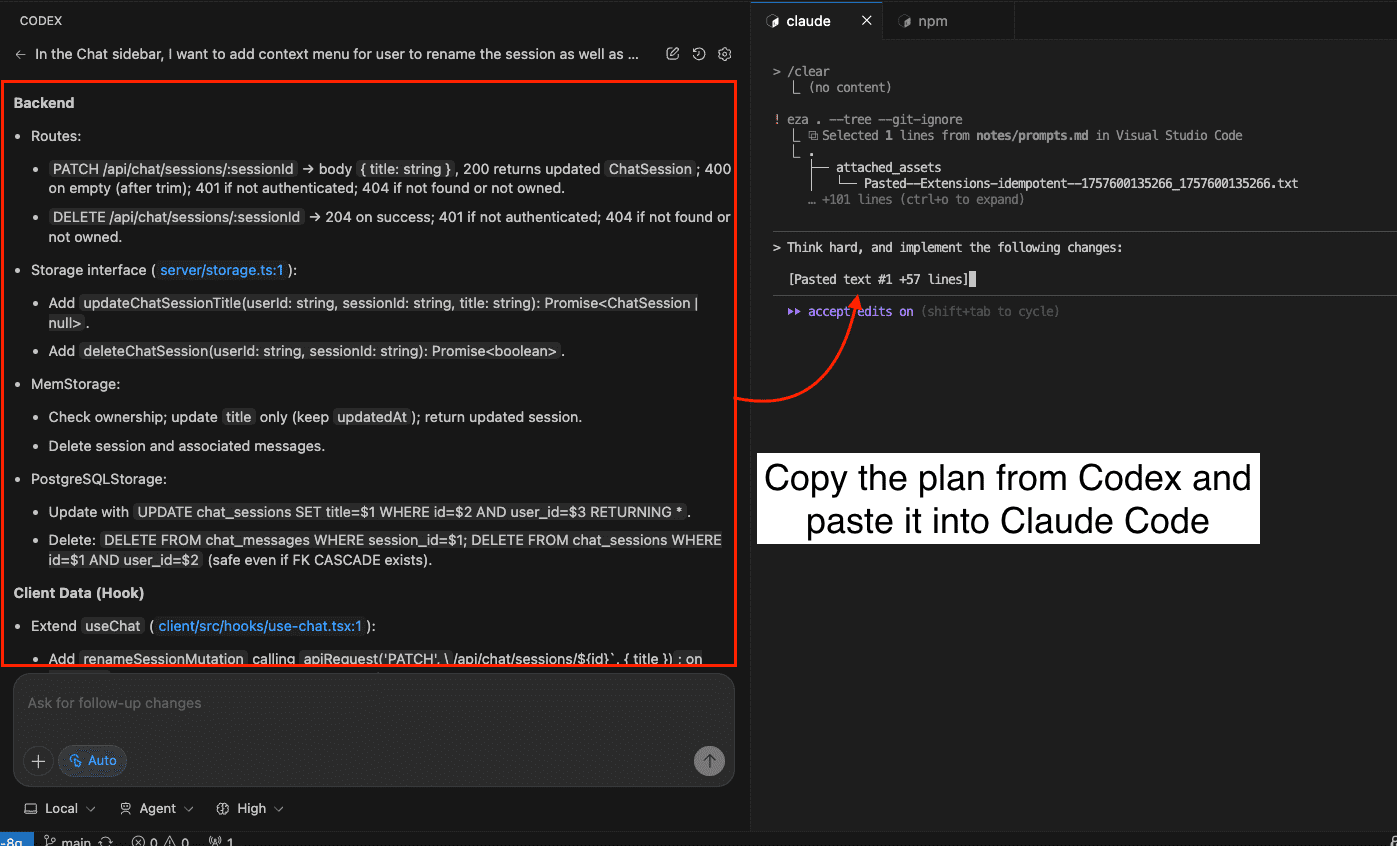
Codex's thread-forking lets it branch from an existing conversation or pull context from past chats. Claude Code has /fork — use it when a task gets complicated. Instead of starting from scratch, fork a previous session to preserve context and branch in a new direction. It's a power move for long-running projects.
3. Use Voice Input (Without Codex)
Baumann notes voice removes the "pressure of figuring out exactly what to type." Claire calls it the "yapper's API." You can get this in Claude Code by piping voice-to-text into the CLI:
# Use macOS dictation or a tool like Whisper to transcribe, then pipe to Claude Code
whisper audio.m4a --output_format txt | claude
Or use a dictation tool like SuperWhisper to transcribe directly into your terminal. The point: talk freely, get better results.
4. Let Agents Monitor with Heartbeats (Claude Code Equivalent)
Codex's "Heartbeats" — always-on agents that notify you about suspicious charges or packages — sound futuristic, but Claude Code can approximate this with cron jobs and claude -p (print mode):
# Check for suspicious charges daily at 9am
0 9 * * * claude -p "Scan my bank statement CSV for unusual transactions and alert me" >> ~/alerts.log
Not as slick as Heartbeats, but it's scriptable and free.
5. Deploy Internal Tools with ChatGPT Sites (Claude Code Equivalent)
ChatGPT Sites includes a SQL database, file storage, and env vars — basically a mini deployment platform. Claude Code users already have this with tools like claude + vercel or claude + supabase. Scaffold a full-stack app in minutes:
claude "Create a CRUD app with Next.js, Supabase, and Vercel deployment"
Claude Code can generate the entire stack — no manual CMS setup.
Try It Now — Actionable Steps
- Create subagents in
.claude/agents/for tasks you repeat (e.g.,git-cleaner,db-migrator). Run them in parallel with--agents. - Use
/forknext time you're deep in a complex task and need to branch — don't start fresh. - Install a voice-to-text tool (SuperWhisper, Whisper) and pipe dictation into Claude Code. Talk through your problem before typing.
- Set up cron jobs with
claude -pto monitor things like email or expenses while you sleep. - Scaffold internal tools with Claude Code + Vercel/Supabase instead of waiting for a CMS.

The takeaway: Codex Voice is a slick demo, but Claude Code already has the power — you just need to wire it up.
AI Analysis
Claude Code users should stop treating Codex Voice as a threat and start treating it as a blueprint. The parallel agent pattern — multiple threads working on different tasks simultaneously — is directly replicable with subagents. If you're not using .claude/agents/ yet, you're leaving efficiency on the table. Create agents for your most common tasks and run them in parallel.
The voice input insight is subtler but powerful. Baumann's point that talking freely beats staring at a prompt box is worth internalizing. Try dictating your next complex task to Claude Code via a transcription tool — you'll likely give it more context and get better results. Combine that with /fork for branching, and you've got a workflow that rivals anything OpenAI demos.
Source: lennysnewsletter.com