The Technique — Analyzing Personal Archives with Claude Code
A developer recently processed 14 years of daily journals (approximately 5,000 markdown files) using Claude Code. Instead of just asking for generic advice, they structured the analysis to extract meaningful patterns from their personal history. The key insight: Claude Code can serve as a powerful self-development tool when fed with structured personal data.
Why It Works — Pattern Recognition at Scale
Claude Code's strength lies in its ability to identify patterns across large datasets that humans might miss or refuse to acknowledge. The developer noted that while their journals reflected self-critical narratives, Claude could analyze the data from multiple perspectives (therapist, coach, relationships) and provide balanced insights when prompted appropriately.
This works because:
- Context window utilization: Claude can process thousands of files in structured batches
- Multi-perspective analysis: You can prompt Claude to analyze the same data through different lenses
- Pattern detection: AI excels at identifying trends and correlations across time that humans might overlook
How To Apply It — Step-by-Step Workflow
1. Prepare Your Data
# Structure your files for batch processing
# Example directory structure:
journals/
├── 2010/
│   ├── 01-january.md
│   ├── 02-february.md
│   └── ...
├── 2011/
│   ├── 01-january.md
│   └── ...
└── CLAUDE.md  # Your analysis instructions
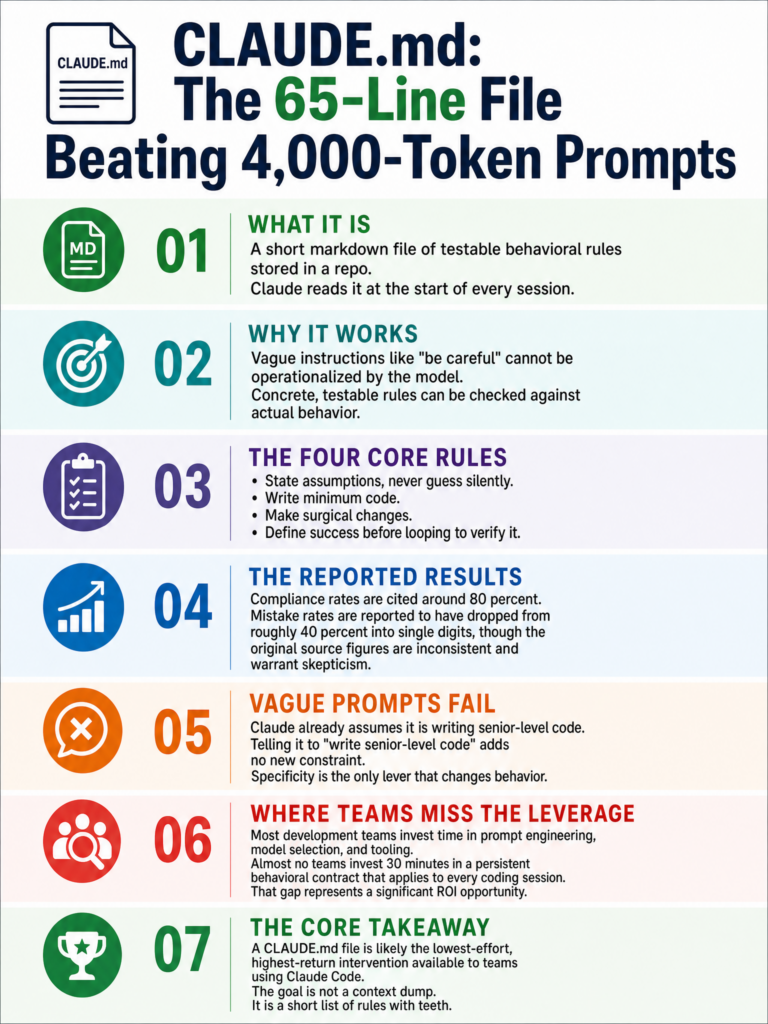
2. Create Your CLAUDE.md Analysis Instructions
# Journal Analysis Framework

## Analysis Perspectives
1. Therapist perspective: Identify emotional patterns and coping mechanisms
2. Coach perspective: Find growth opportunities and achievements
3. Relationship perspective: Track interpersonal dynamics and social patterns

## Processing Instructions
- Analyze month by month, then year by year
- Focus on both challenges AND strengths
- Identify recurring themes and evolution over time
- Generate actionable insights, not just observations

## Output Format
- Monthly summaries with key themes
- Yearly evolution reports
- Actionable recommendations for personal development
3. Process in Batches
# Process one year at a time to manage context
claude code analyze journals/2010/*.md --prompt "Analyze 2010 journals using therapist perspective"
claude code analyze journals/2010/*.md --prompt "Now analyze same year using coach perspective"

# Generate comparative reports
claude code compare journals/2010/*.md journals/2020/*.md --prompt "Show evolution in thinking patterns"
4. Steer the Narrative
The developer found success by actively steering Claude's analysis:
# Balance critical analysis with strengths perspective
claude code analyze journals/*.md --prompt "Identify 3 recurring challenges AND 3 consistent strengths across all years"

# Force different viewpoints
claude code analyze journals/*.md --prompt "If my best friend wrote these journals, what would they say about my growth?"
Practical Applications Beyond Journals
This technique works for any structured personal data:
- Code repositories: Analyze your coding evolution over years
- Project documentation: Identify patterns in your project management style
- Learning notes: Track knowledge acquisition and skill development
- Meeting notes: Analyze communication patterns and decision-making
Key Takeaways
- Structure matters: Organize files chronologically or thematically for better analysis
- Prompt diversity: Use multiple perspectives to get balanced insights
- Batch processing: Work in manageable chunks (monthly/yearly) rather than all at once
- Active steering: Don't just accept the first analysis—prompt for different angles
- Action orientation: Always ask for actionable insights, not just observations
The developer's experience shows that Claude Code can transform from a coding assistant to a personal development tool when you feed it your own data and structure the analysis properly.