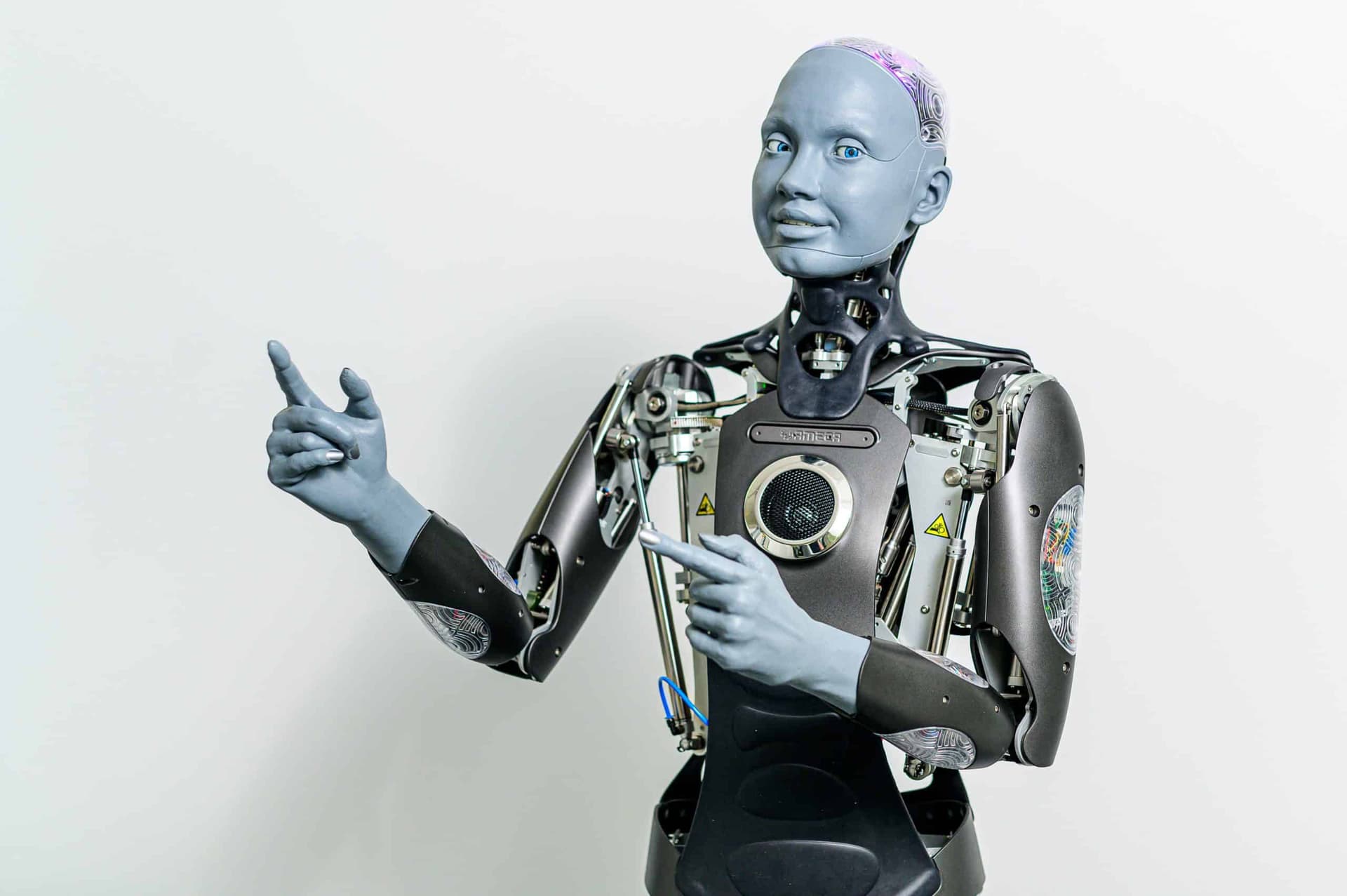
A single image, shared on social media, has captured a moment that many are calling a symbolic turning point: a humanoid robot standing beside the First Lady at an official state reception. The photo, which has sparked widespread discussion, depicts the robot positioned among dignitaries, suggesting its role is not as a demonstrative tool but as an integrated participant in a formal diplomatic setting.
What Happened
The source is a social media post from user @kimmonismus, who shared a photograph from what appears to be an official reception. The central subject of the post is not the event itself, but the presence of a humanoid robot positioned immediately next to the First Lady. The accompanying text frames this as a "turning point into the future we've always dreamed of." The robot's specific model, capabilities, or the nature of its participation (e.g., ceremonial greeter, demonstration, assistive device) are not detailed in the source material. The power of the statement lies entirely in the juxtaposition of cutting-edge robotics with one of the most traditional and protocol-heavy human environments: high-level diplomacy.
Context
The integration of robots into public life has progressed from industrial floors and research labs to customer service and healthcare. However, their presence in the rigidly codified world of state diplomacy and official ceremonies represents a significant new frontier. This event suggests a deliberate move to normalize advanced robotics at the highest levels of society, using the visibility and symbolism of the First Lady's office to confer a degree of social and political legitimacy upon the technology.
gentic.news Analysis
This event, while seemingly a singular photo op, is a data point in a clear and accelerating trend of humanoid robotics transitioning from lab prototypes to socially embedded entities. It follows a pattern of "soft launch" integrations designed to build public familiarity and acceptance. We have previously covered similar strategic appearances, such as the deployment of Boston Dynamics' Atlas robots in DARPA challenges and, more recently, the use of Tesla's Optimus prototypes in factory settings. The key difference here is the venue: moving from technical demonstrations and industrial applications to the symbolic heart of political and social ritual.
This aligns with a broader strategic push by several nations and corporations to establish leadership in the humanoid robotics space. The entity placing the robot at this event is making a powerful statement about national technological prowess and its vision for the future of human-machine collaboration. It is a form of diplomatic signaling as much as a tech demonstration. Furthermore, this act contradicts a purely utilitarian narrative for robots; it positions them as potential participants in cultural and social spheres, raising immediate questions about protocol, interaction design, and the long-term social role of such machines. Is this a one-off spectacle, or the first step toward robotic aides, companions, or even representatives in diplomatic circles? The image forces that conversation into the mainstream.
Frequently Asked Questions
What kind of robot was next to the First Lady?
The source image and post do not specify the make, model, or capabilities of the humanoid robot. It appears to be a bipedal, anthropomorphic design, but its technical specifications, autonomy level, and manufacturer are not identified in the available material. Its clean, non-industrial aesthetic suggests it is a platform designed for human interaction in structured environments.
What does this mean for the future of robotics?
Symbolically, it represents a major step in the social integration of advanced robotics. By placing a robot in a formal diplomatic setting, the organizers are attempting to normalize its presence at the highest levels of human society. Practically, it indicates that certain stakeholders believe the technology is sufficiently reliable and presentable for high-stakes, public-facing roles beyond manual labor. It is a signal that the next battleground for robotics may be social and service-oriented, not just physical.
Has this ever happened before?
While robots have been presented to heads of state or displayed at international forums like the World Economic Forum, the specific scenario of a humanoid robot integrated into the social fabric of an official state reception—standing beside a principal figure like the First Lady—appears to be a novel and highly staged first. It is a deliberate escalation from demonstration to implied participation.
Why is this significant for AI and diplomacy?
The event blurs the line between a tool and a participant. In diplomacy, every gesture, position, and attendee carries meaning. The inclusion of a robot is therefore a diplomatic act in itself, communicating a nation's technological priorities and its stance on the future of automation. It also immediately introduces new questions for diplomatic protocol: how are such entities acknowledged, and what status do they hold?