Rack densities driven by AI workloads are pushing power densities beyond air cooling limits. Predictions indicate over half of new hyperscale data centers will be liquid-cooled by 2027.
Key facts
- Over 50% of new hyperscale data centers predicted to use liquid cooling by 2027.
- AI rack densities exceed 40KW, beyond air cooling limits.
- Lenovo RDHX handles 30KW racks in tight spaces.
- Cost and expertise are top barriers to adoption.
- GRC immersion tanks face layout challenges.
The rise of AI is forcing a fundamental shift in data center cooling. Rack densities have soared as GPU clusters for training and inference draw tens of kilowatts per rack—far exceeding the 10-20KW range that traditional air cooling handles efficiently. According to a Reddit discussion in r/datacenter, operators are now confronting whether liquid cooling, long a niche solution, must become standard.
The Density Threshold
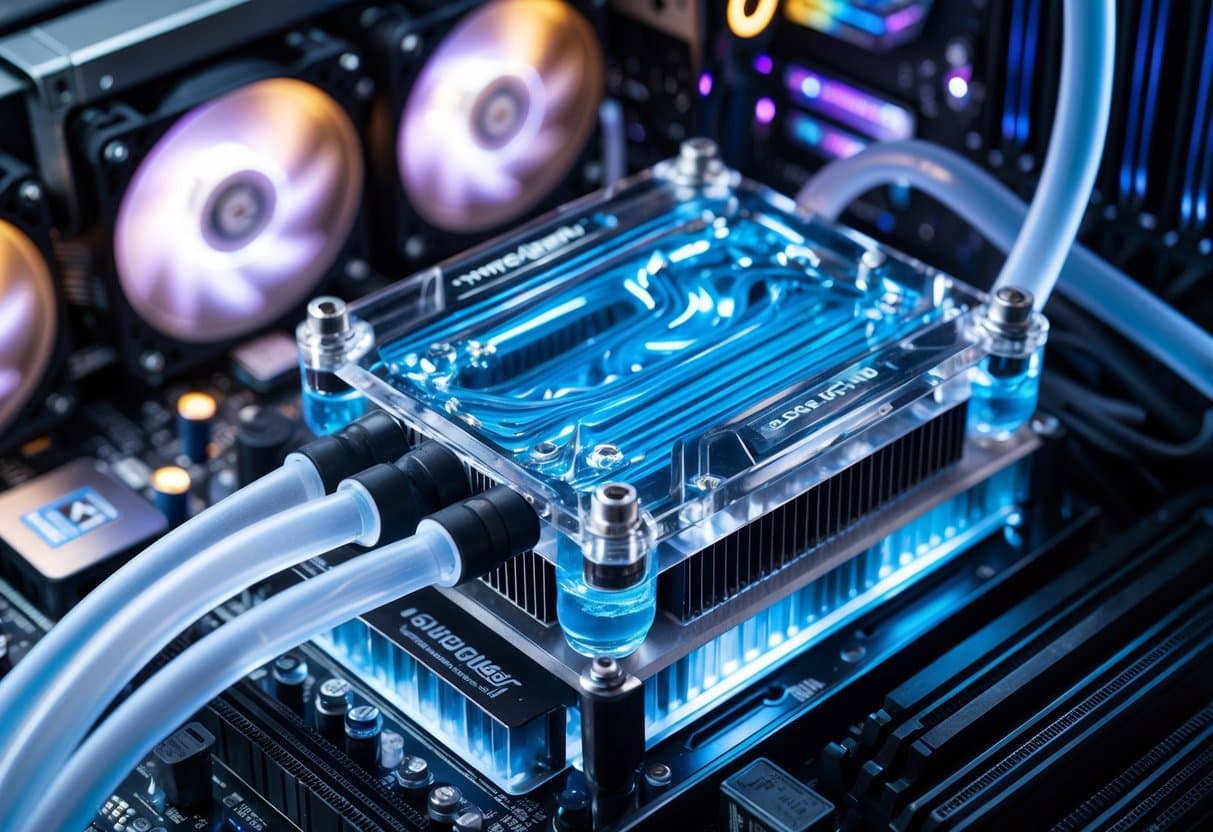
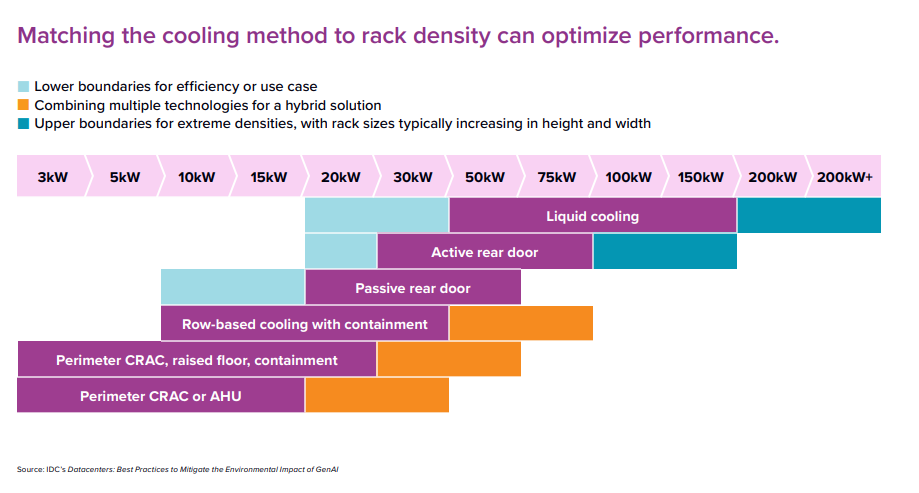
Air cooling works well for racks up to roughly 20-30KW, but AI clusters routinely demand 40KW or more per rack. At these densities, air cooling requires massive airflow, higher fan power, and larger floor space—defeating the purpose of dense compute. Liquid cooling, either direct-to-chip or immersion, can handle 100KW+ per rack with lower energy overhead. The tipping point is here: predictions suggest over 50% of new hyperscale builds will adopt liquid cooling by 2027.
Hurdles: Cost, Expertise, and Retrofits
Operators in the discussion point to cost and expertise as the primary barriers. Retrofitting existing air-cooled facilities for liquid cooling is expensive and often impractical. New builds can integrate liquid cooling from the start, but the upfront capital is higher. [According to the same Reddit thread], Lenovo rear door passive heat exchangers (RDHX) handle 30KW racks in space-constrained environments, but these are hybrid solutions, not full liquid loops. Motivair, APC, and Vertiv offer active cooling systems for high density, while GRC immersion tanks are noted as cool but face layout challenges.
Another hurdle: expertise. Liquid cooling requires plumbing, leak detection, and maintenance training that most facilities teams lack. The industry is still building the talent pool.
Air Cooling Isn't Dead Yet
Despite the push, air cooling remains dominant for the vast majority of data centers. The 50% figure applies only to new hyperscale builds—a fraction of total capacity. Most enterprise data centers operate well below the density threshold, and air cooling will remain viable there for years. The real story is the bifurcation: hyperscale goes liquid; everyone else stays air. This mirrors the compute divergence between AI and traditional workloads.
What to watch
Watch for hyperscaler procurement announcements—Microsoft, Google, and AWS all have liquid cooling deployments in progress. Also track supplier earnings: Vertiv and Schneider Electric will report liquid cooling revenue growth. The 2027 prediction will be tested by 2026 buildout numbers.
Source: reddit.com
[Updated 05 Jun via hpcwire]
CoolIT Systems has developed a 15kW coldplate, nearly quadrupling the performance of earlier single-phase direct liquid cooling designs [per HPCwire]. This breakthrough demonstrates that single-phase DLC can scale to meet the thermal demands of future ultra-high-density GPUs and AI accelerators, extending the technology's viability far beyond 2030.