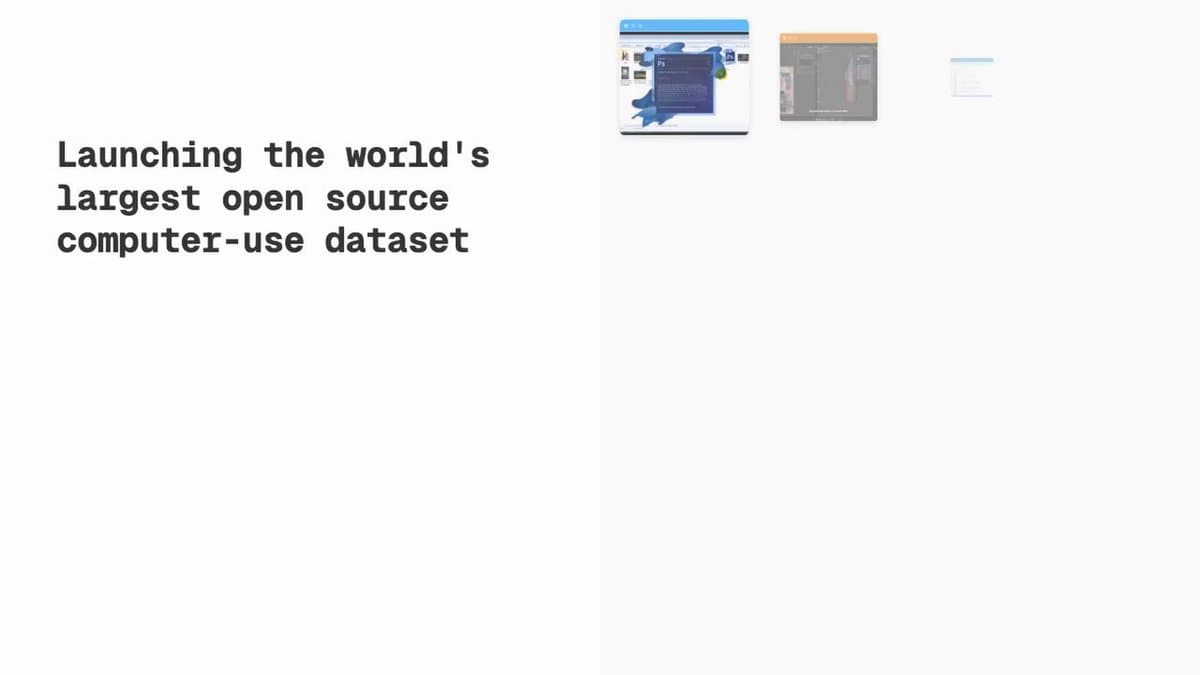
In a significant development for artificial intelligence research, the world's largest open-source dataset of computer-use recordings has been made publicly available on Hugging Face. This massive collection represents a breakthrough resource for training and evaluating computer-use AI agents, providing researchers with unprecedented access to real-world human-computer interaction data.
The Dataset Details
The newly released dataset contains 48,478 screen recording videos capturing approximately 12,300 hours of professional software being used in real-world scenarios. This represents the most extensive publicly available collection of computer-use recordings to date, dwarfing previous datasets in both scale and scope.
All recordings are licensed under CC-BY-4.0, a permissive Creative Commons license that allows for broad use, modification, and distribution with proper attribution. This licensing choice ensures maximum accessibility for researchers, developers, and organizations working on AI systems that interact with computer interfaces.
The dataset has been specifically curated for training and evaluating "computer use agents"—AI systems designed to understand and interact with software interfaces, potentially automating complex digital tasks that currently require human intervention.
Implications for AI Research
This dataset release addresses a critical bottleneck in AI development: the scarcity of high-quality, diverse training data for systems that need to understand and navigate computer interfaces. Previous approaches to training such agents often relied on synthetic data or limited real-world examples, which could fail to capture the complexity and variability of actual human-computer interactions.
The 12,300 hours of recordings provide a rich tapestry of professional software usage patterns, including how users navigate menus, interact with dialog boxes, switch between applications, and perform complex sequences of actions. This data is invaluable for training AI systems to understand not just what actions to take, but when and why to take them in the context of real workflows.
Potential Applications and Research Directions
The availability of this dataset could accelerate several important research areas:
1. General Computer-Use Agents: Systems that can understand and execute tasks across various software applications, potentially serving as digital assistants that can perform complex computer-based work.
2. Accessibility Technology: AI systems that could help users with disabilities navigate computer interfaces more effectively by understanding typical usage patterns and providing intelligent assistance.
3. Workflow Automation: Agents capable of learning and replicating complex digital workflows, potentially transforming how repetitive computer-based tasks are performed in professional settings.
4. Human-Computer Interaction Research: New insights into how people actually use software, which could inform better interface design and user experience improvements.
Challenges and Considerations
While the dataset represents a major advance, researchers will need to address several challenges. The recordings likely contain sensitive information that has been anonymized or redacted, but ensuring complete privacy protection remains an ongoing concern with such large-scale real-world data collections.
Additionally, the dataset's focus on "professional software" usage means it may not capture the full spectrum of computer interactions, potentially limiting its applicability for training agents meant to work with consumer applications or specialized tools not represented in the collection.
The Broader Trend in AI Data Availability
This release continues a growing trend of major AI research resources being made openly available to the broader community. By choosing Hugging Face as the distribution platform and CC-BY-4.0 as the license, the creators have maximized the dataset's potential impact, allowing researchers worldwide to build upon this foundation without restrictive licensing barriers.
The timing is particularly significant as AI companies and research institutions increasingly compete to develop capable AI agents. This open approach could help level the playing field, allowing smaller research groups and organizations to contribute to advances in computer-use AI systems.
Looking Forward
As researchers begin working with this dataset, we can expect to see rapid progress in computer-use AI capabilities. The next few months will likely bring new papers, models, and demonstrations of what's possible when AI systems are trained on such extensive real-world interaction data.
The dataset's release represents not just a technical resource but a philosophical statement about open science in AI development. By making this valuable resource freely available, the creators have potentially accelerated progress toward more capable, useful AI systems that can understand and navigate the digital tools that define modern work and life.
Source: Rohan Paul AI via X/Twitter announcement of dataset release on Hugging Face