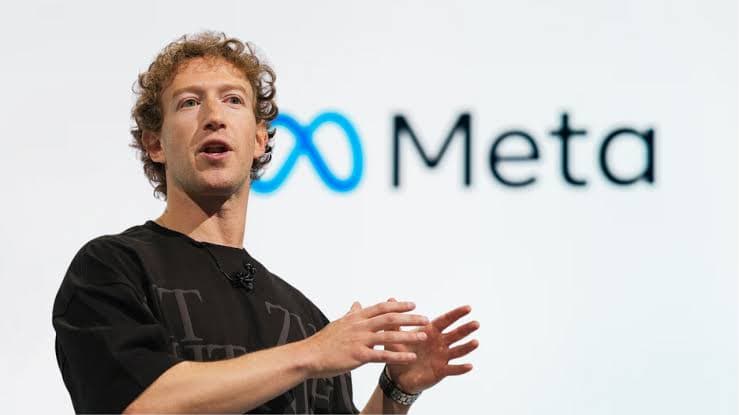
A report from inside Meta reveals a seismic shift in the company's software development strategy. CEO Mark Zuckerberg, who hasn't written code professionally in two decades, has moved his desk into Meta's AI research lab and resumed hands-on coding work. This symbolic move coincides with a concrete, aggressive mandate: Meta is requiring that 65-80% of its developers' code be written by AI tools by mid-2026—just two months from now.
Key Takeaways
- Meta is mandating that 65-80% of its developers' code be written by AI by mid-2026.
- CEO Mark Zuckerberg has moved his desk into the company's AI lab and resumed hands-on coding after a 20-year hiatus.
What Happened: The CEO's Return and the AI Mandate

According to the report, Zuckerberg's return to the keyboard is not a nostalgic hobby. The context is a top-down corporate directive pushing for unprecedented automation in software development. The mandate targets a 65-80% AI-generated code ratio across Meta's engineering teams by the middle of this year. This figure represents the percentage of total code produced that must be authored or significantly assisted by AI coding tools, likely Meta's own Code Llama models or internal variants.
The timing is immediate. With the deadline set for mid-2026, engineering managers and developers are now under pressure to integrate AI code generation into their daily workflows at a scale never before attempted in a major tech company.
The Technical and Organizational Implications
A mandate of this scale suggests Meta has moved beyond experimental phases with AI coding assistants like Code Llama. To enforce a 65-80% target, the company must have:
- Integrated, Enterprise-Grade Tools: A mature, internal AI coding platform deeply embedded into IDEs and code review systems, likely surpassing the capabilities of the publicly released Code Llama.
- Metrics and Tracking: Systems to measure the "AI-generated" percentage of code, implying sophisticated attribution and logging at the commit level.
- Retraining and Workflow Redesign: A massive shift in developer responsibilities from writing raw code to reviewing, editing, and prompting AI-generated code. This changes the fundamental skill set required of engineers.
Zuckerberg's physical move into the AI lab is a clear signal of priority. It indicates that the push for AI-generated code is not just an engineering efficiency program but a core strategic bet on AI's role in the future of the company's product development velocity and cost structure.
The Competitive and Industry Context
Meta is not alone in aggressively adopting AI for code. Microsoft (with GitHub Copilot), Google (with its internal tools and Gemini Code Assist), and Amazon (with CodeWhisperer) have all invested heavily. However, a public, quantified mandate of 65-80% is a first. It moves the goalpost from "adoption" to "dominant production method."
This follows a broader industry trend where AI is shifting from a research topic to a primary productivity lever. For Meta, which maintains massive codebases for Facebook, Instagram, WhatsApp, Reality Labs, and its AI infrastructure, even a single-digit percentage increase in developer output could translate to billions in saved engineering costs or accelerated feature development.
Potential Challenges and Risks
Such an aggressive mandate carries significant risks:
- Code Quality and Security: AI-generated code can contain subtle bugs, security vulnerabilities, or licensing issues. Ensuring robust review processes is critical.
- Developer Morale and Skill Erosion: Mandating AI use could be perceived as devaluing core programming skills, potentially impacting engineer satisfaction and long-term talent development.
- Tool Reliability: The AI systems must be exceptionally reliable and consistent to avoid becoming a bottleneck in critical development sprints.
Zuckerberg's hands-on involvement suggests he is personally stress-testing these systems and workflows, likely to understand the practical limits and opportunities firsthand before the mandate rolls out company-wide.
gentic.news Analysis
This move is a definitive escalation in the AI-powered software development arms race. Meta's 65-80% target is a bold, quantifiable bet that AI coding is mature enough to become the primary, not auxiliary, method of production. Zuckerberg's return to coding is the ultimate dogfooding exercise—a CEO personally validating the core tool he expects thousands of engineers to use for most of their work.
This aligns with Meta's established pattern of aggressive, top-down platform shifts. Historically, the company mandated moving its backend to React Native and later to its own mobile infrastructure. This AI coding mandate is of the same magnitude but targets the fundamental act of creation itself. It also follows Meta's heavy investment in open-source AI models like Llama and Code Llama; this internal mandate is the ultimate test bed for those technologies before potentially influencing broader industry standards.
The two-month deadline is extraordinarily aggressive. It suggests Meta's internal tools are already performing at a level that gives leadership high confidence. The real story isn't that a CEO is coding again; it's that he's coding to personally oversee the partial automation of his company's engineering corps. The success or failure of this mandate will be a landmark case study for the entire software industry on the viability of AI-driven development at scale.
Frequently Asked Questions
What does "65-80% AI-generated code" mean?
It likely means that, by volume, 65 to 80 percent of the new code committed to Meta's repositories must be initially drafted or substantially authored by an AI coding assistant. Developers would then review, edit, and integrate this code. The exact measurement methodology (lines of code, number of commits, etc.) is not specified.
What AI tools is Meta using for this?
While not confirmed in this report, Meta almost certainly uses advanced, internal versions of its own Code Llama models. These would be fine-tuned on Meta's massive, proprietary codebases and integrated directly into their development environments, far surpassing the capabilities of the public Code Llama releases.
Will this lead to layoffs for software engineers at Meta?
The mandate focuses on the source of code, not necessarily a reduction in headcount. In the short term, the goal is likely increased productivity and velocity. However, if successful, it could change the composition of engineering teams long-term, potentially requiring fewer pure coders and more AI-savvy engineers who specialize in prompt engineering, code review, and system design.
How does this compare to other tech companies' use of AI coding?
Companies like Microsoft and Google promote widespread AI coding tool adoption but have not announced similar, specific percentage mandates. Meta's move is the most public and aggressive quantification of the shift, turning a best practice into a measurable performance target with a hard deadline.