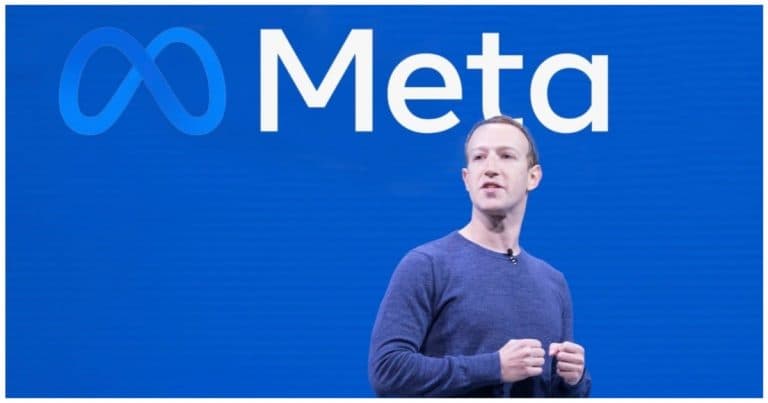
A report from The Wall Street Journal, highlighted by AI researcher Rohan Paul, indicates a significant strategic shift within Meta's AI division. The company is reportedly moving its focus on AI agents from a public product concept to an internal management system. Furthermore, CEO Mark Zuckerberg is personally involved in building an AI agent to assist with his own workload management.
What Happened
According to the report, Meta's exploration of AI agents—autonomous or semi-autonomous software that can perform tasks—is undergoing a pivot. Initially conceived as potential future products for Meta's billions of users, the development effort is now being directed inward. The goal is to create AI systems that can manage internal operations, workflows, and executive functions.
The most notable detail is that Mark Zuckerberg is reportedly spearheading the development of a personal AI agent designed to help him manage his work. This suggests a "dogfooding" approach, where the CEO uses the technology internally to refine it before any potential broader release.
Context
This internal shift occurs against a backdrop of intense competition in the consumer-facing AI assistant space. Companies like OpenAI (with ChatGPT), Google (Gemini), and Microsoft (Copilot) have launched widely available conversational agents. Apple is also expected to unveil its own AI strategy at WWDC in June 2024.
Meta has publicly released several large language models (LLMs) as part of its Llama family, most recently the Llama 3 series in April 2024. These open-weight models are foundational technology that could power sophisticated AI agents. However, Meta has not yet released a flagship, general-purpose AI assistant product to rival ChatGPT or Gemini for end-users, despite having the underlying models and massive distribution channels like Facebook, Instagram, and WhatsApp.
gentic.news Analysis
This strategic pivot is a pragmatic move that reflects the current state of the AI market and Meta's unique position. While Meta possesses world-class AI research talent and has democratized access to powerful models via Llama, the consumer assistant space is already crowded and monetization paths are unclear. Turning this capability inward is a logical way to derive immediate, tangible value. It allows Meta to streamline its own colossal operations—a company with over 67,000 employees—and test agent reliability in a controlled environment.
This follows a pattern of Meta leveraging AI internally before externalizing it. Its recommendation algorithms for Facebook and Instagram feeds were refined internally for years before becoming the core of its business. The development of a personal agent for Zuckerberg himself is particularly telling. It mirrors a trend among tech leaders, such as Microsoft CEO Satya Nadella's noted use of Copilot, and serves as the ultimate stress test. If an AI can effectively manage the complex, multifaceted schedule and decision-making load of a Fortune 50 CEO, it validates the technology for broader enterprise management applications.
This internal focus does not mean Meta has abandoned the consumer AI agent market. As we covered in our analysis of Llama 3's release, the model's performance makes it a strong contender for agentic workflows. This internal deployment is likely a development phase. The insights gained from building robust management agents for a complex organization like Meta could eventually inform a more powerful, reliable, and scalable consumer or business product, potentially integrated directly into its family of apps. For now, it represents a shift from speculative product development to solving concrete, internal efficiency problems.
Frequently Asked Questions
What are AI agents?
AI agents are software programs that use artificial intelligence, often large language models, to perceive their environment, make decisions, and take actions to achieve specific goals. Unlike simple chatbots that only converse, true agents can execute tasks across software systems, such as scheduling meetings, managing data, or controlling smart devices.
Is Meta releasing an AI assistant like ChatGPT?
Meta has not announced a general-purpose consumer AI assistant product to directly compete with ChatGPT or Gemini. It has released the Llama series of open-source large language models which others can use to build assistants. The recent report suggests Meta is currently focusing its advanced agent development on internal management tools rather than a public-facing chat product.
Why would Mark Zuckerberg use a personal AI agent?
As the CEO of a massive, complex company like Meta, Zuckerberg's workflow involves processing vast amounts of information, managing a dense schedule, and making high-stakes decisions. A personal AI agent could act as an intelligent executive assistant, prioritizing communications, summarizing reports, preparing briefs, and managing logistics, thereby augmenting his productivity and decision-making bandwidth.
Does this mean Meta is behind in the AI race?
Not necessarily. The "AI race" has multiple fronts: model capability (where Llama 3 is highly competitive), platform integration, and practical application. Meta's shift to internal management systems is a bet on a different, highly valuable application of AI—enterprise productivity and operations. Success here could give it a dominant position in the business automation sector, even if it doesn't have the most popular consumer chatbot.