In the rapidly evolving landscape of artificial intelligence, efficiency has become as crucial as capability. Meta's latest research contribution, REFRAG (Retrieval-Augmented Generation with Fragmented Embeddings), represents a significant step forward in optimizing one of the most important architectures in modern AI: Retrieval-Augmented Generation (RAG). This innovative approach promises to make RAG systems dramatically more efficient without sacrificing performance, potentially unlocking new applications and scaling possibilities.
Understanding the RAG Challenge
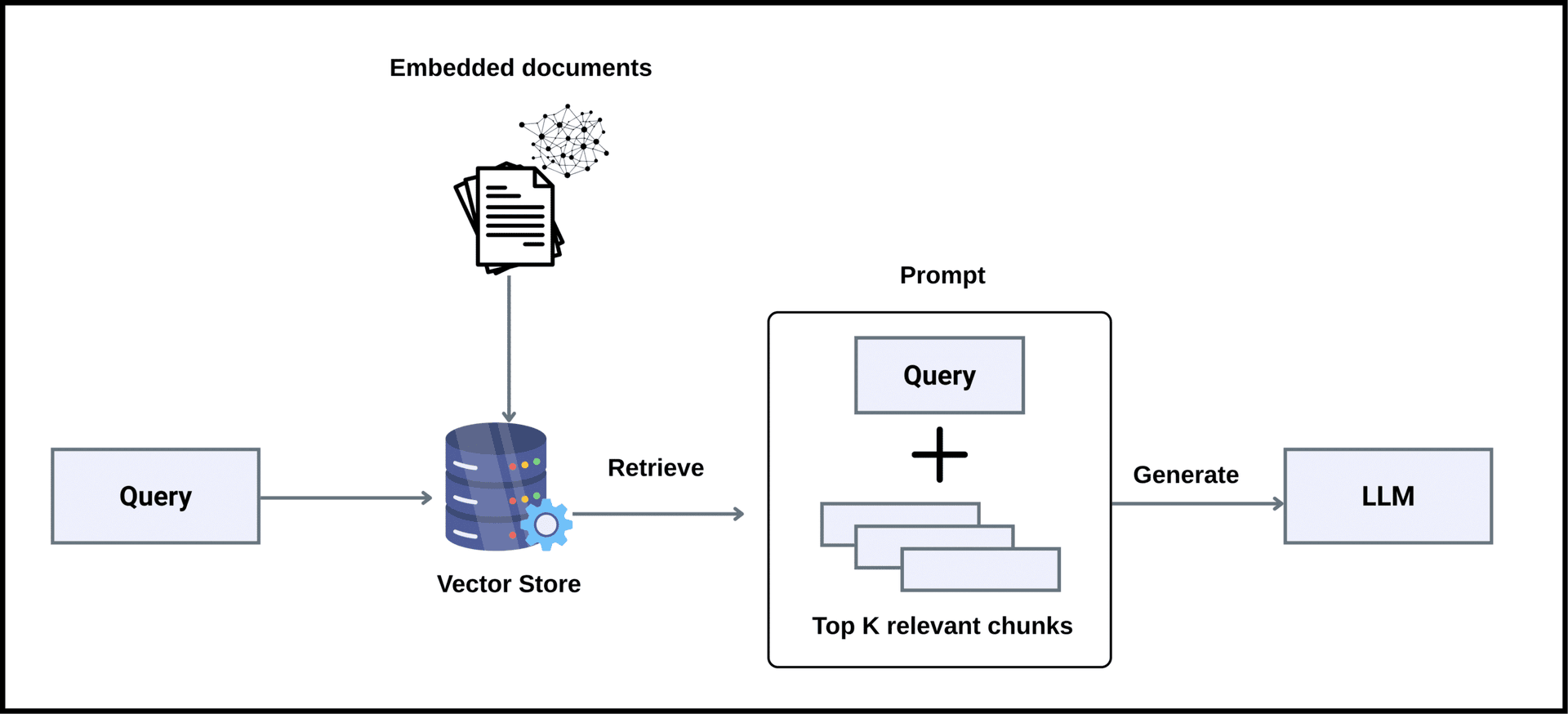
Retrieval-Augmented Generation has emerged as a cornerstone technique for enhancing large language models with external knowledge. By retrieving relevant information from external sources before generating responses, RAG systems can provide more accurate, up-to-date, and contextually relevant answers than standalone LLMs. However, this power comes at a computational cost.
Traditional RAG architectures typically tokenize all retrieved document chunks before feeding them to the language model decoder. This process, while effective, creates significant computational overhead, especially when dealing with large retrieval sets or high-volume applications. Each tokenization operation consumes processing power and time, creating bottlenecks that limit scalability and increase operational costs.
How REFRAG Works: A Paradigm Shift in Optimization
Meta's REFRAG introduces a fundamentally different approach to this problem. Instead of tokenizing all retrieved chunks, the system compresses most of them into embeddings that can be fed directly to the decoder. A reinforcement learning (RL) policy then selectively expands only the most relevant compressed embeddings back into full token sequences when necessary.
This selective expansion mechanism represents the core innovation of REFRAG. The RL policy learns to identify which compressed embeddings contain information crucial to answering the current query, expanding only those while leaving less relevant information in their compressed form. This creates a dynamic, query-adaptive processing pipeline that dramatically reduces unnecessary computation.
Technical Architecture and Implementation
The REFRAG system consists of several key components working in concert:
Embedding Compression Module: This component transforms retrieved document chunks into compact embeddings that preserve semantic information while reducing dimensionality.
RL Expansion Policy: A trained reinforcement learning model that evaluates which compressed embeddings should be expanded based on their relevance to the current query and generation context.
Selective Expansion Mechanism: The system that converts selected compressed embeddings back into token sequences for the decoder.
Integration Layer: The component that seamlessly integrates REFRAG with existing RAG architectures, making it applicable to a wide range of implementations.
What makes REFRAG particularly powerful is its position as an optimization layer that works on top of any existing RAG architecture. This means organizations can potentially retrofit their current RAG systems with REFRAG optimizations without completely rebuilding their infrastructure.
Performance Implications and Benchmarks
Early indications suggest that REFRAG could deliver substantial efficiency gains. By avoiding unnecessary tokenization of irrelevant retrieved content, the system reduces computational overhead while maintaining response quality. The selective expansion mechanism ensures that critical information is still available in full detail when needed, preserving the accuracy and relevance that make RAG systems valuable.
While specific benchmark data from Meta's research isn't fully available in the initial announcement, the theoretical framework suggests potential reductions in processing time and computational resource requirements that could range from significant to dramatic, depending on the specific application and retrieval characteristics.
Practical Applications and Industry Impact
The implications of REFRAG extend across multiple domains:
Enterprise Search and Knowledge Management: Organizations maintaining large internal knowledge bases could deploy more responsive and cost-effective RAG systems for employee queries.
Customer Support Automation: High-volume customer service applications could benefit from reduced computational costs while maintaining accurate, context-aware responses.
Research and Academic Applications: Large-scale literature review and analysis tools could process more documents with the same computational resources.
Content Generation and Creative Applications: Writers, marketers, and content creators using RAG-enhanced tools could experience faster response times and lower operational costs.
Challenges and Considerations
Despite its promising approach, REFRAG faces several challenges that will need to be addressed:
Training Complexity: The RL policy requires sophisticated training to accurately identify which embeddings need expansion, potentially increasing development complexity.
Latency Trade-offs: While reducing overall computation, the decision-making process for selective expansion adds its own computational overhead that must be optimized.
Quality Assurance: Ensuring that the selective expansion doesn't miss critical information requires robust testing and validation frameworks.
Integration Challenges: While designed as an overlay, integrating REFRAG with existing RAG systems may still present technical hurdles.
The Future of Efficient AI Systems
Meta's REFRAG represents more than just another optimization technique—it signals a shift in how we approach AI system design. As models grow larger and more capable, efficiency innovations like REFRAG become increasingly critical for practical deployment and scaling.
The approach also highlights the growing importance of hybrid architectures that combine different AI techniques. By blending retrieval mechanisms with selective processing policies, REFRAG creates a more intelligent, adaptive system that allocates computational resources where they're most needed.
Looking forward, we can expect to see similar optimization approaches applied across different AI architectures. The principles behind REFRAG—selective processing, dynamic resource allocation, and layered optimization—could inspire efficiency improvements in various AI systems beyond RAG.
Conclusion
Meta's REFRAG optimization layer represents a significant advancement in making RAG systems more practical for real-world deployment. By addressing one of the fundamental inefficiencies in traditional RAG architectures, REFRAG opens the door to more scalable, cost-effective implementations that maintain the accuracy and relevance benefits of retrieval-augmented generation.
As organizations increasingly rely on RAG systems to enhance their AI capabilities, innovations like REFRAG will play a crucial role in determining which applications move from experimental prototypes to production-scale deployments. The research community and industry practitioners will be watching closely as more details emerge about REFRAG's performance characteristics and implementation requirements.
Source: Based on analysis of Meta's REFRAG research announcement and technical framework as discussed by AI researchers including Akshay Pachaar and Avi Chawla.