What Happened
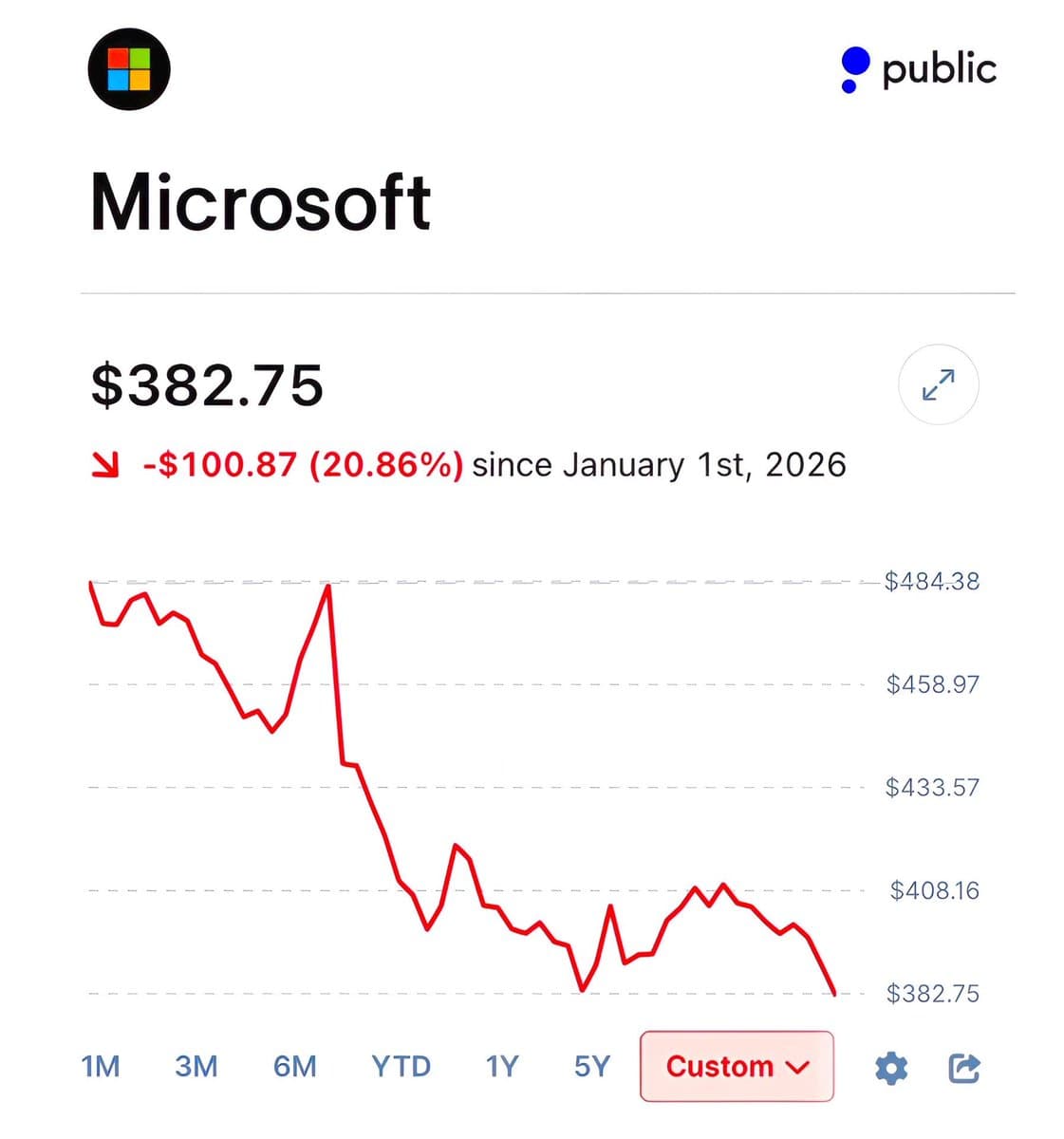
Microsoft's market capitalization has declined by approximately $700 billion in 2026, according to analysis shared by AI commentator Rohan Paul. This drop has pushed Microsoft's price-to-earnings (P/E) multiple to its lowest level in a decade, indicating that investors are valuing the company's earnings at a significant discount compared to recent years.
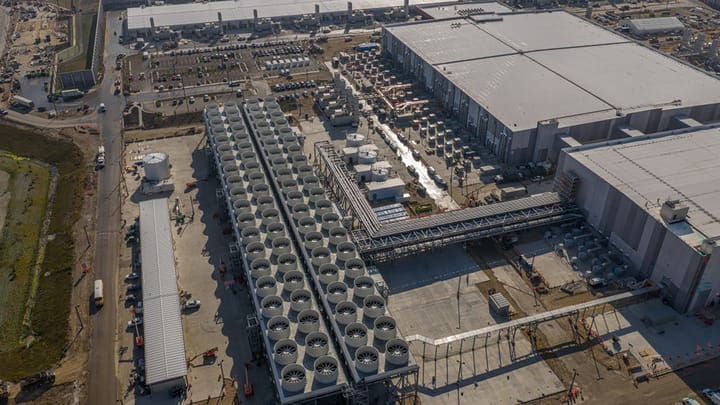
The primary driver of investor concern appears to be Microsoft's aggressive capital expenditure strategy, particularly around artificial intelligence infrastructure. The company recently signed up for $50 billion in new leases, matching a similar commitment by Meta. These substantial financial commitments are directed toward expanding data center capacity, acquiring AI chips, and building out the computational infrastructure necessary to support AI services like Azure AI, Copilot, and other generative AI offerings.
Context
Despite the market cap decline, Microsoft continues to report revenue growth and expanding market reach. The company's fundamental business performance remains strong, with cloud services (Azure) and AI products driving significant portions of its revenue. However, investors are adopting a more cautious stance due to several factors:
Capital Intensity: The $50 billion lease commitment represents a massive upfront investment with long-term financial obligations. Investors are weighing whether future AI revenue will justify this level of spending.
Profit Margin Pressure: Building out AI infrastructure requires substantial investment in hardware (GPUs, specialized processors), data centers, and energy resources. These costs can compress profit margins in the short to medium term.
Regulatory and Competitive Risks: The AI landscape faces increasing regulatory scrutiny globally, while competition from Google, Amazon, and well-funded startups continues to intensify. Investors are evaluating whether Microsoft can maintain its competitive advantage given these headwinds.
The market reaction suggests that while investors acknowledge Microsoft's strategic positioning in AI, they are demanding clearer evidence that these massive investments will translate into sustainable profitability and returns that exceed the cost of capital.
The Broader AI Infrastructure Trend
Microsoft's $50 billion commitment mirrors similar moves across the industry. Meta's parallel $50 billion lease signing indicates that major tech companies are engaging in an infrastructure arms race to secure the computational resources needed for training and deploying increasingly large AI models. This trend highlights the enormous capital requirements for remaining competitive in the generative AI era, where model scale and computational power have become primary differentiators.
These infrastructure investments come amid rising costs for AI chips (particularly NVIDIA GPUs), increasing energy demands for data centers, and growing concerns about the environmental impact of large-scale AI operations. Companies must balance these substantial costs against the revenue potential of AI services, which while growing rapidly, still represent a relatively small portion of overall tech industry revenue.